ZTE Proposes "2+4" Key Technology Framework for 6G at GTI Conference
en.Wedoany.com Reported - At the 2026 GTI International Industry Conference, ZTE proposed a "2+4" key technology framework for 6G in the Mobile AI era, and outlined four joint innovation directions. On June 24, the conference, themed "Mobile AI, Enabling the 6G Future," was held in Shanghai, where ZTE Chief Development Officer Cui Li delivered a speech titled "Building an Intelligent Ubiquitous 6G Future."
Cui Li believes that as AI capabilities continue to improve and applications deepen, the proportion of agent connections will grow exponentially, and network value is shifting from "connectivity reachable" to "intelligence reachable, experience guaranteed, and services monetizable." To serve intelligent agents, networks need to achieve capability leaps in dimensions such as stronger uplink, more deterministic latency and experience assurance, and more ubiquitous coverage. To this end, ZTE has formed a "2+4" 6G key technology framework: two strategic directions—AI integration and space-air-ground integration—and four continuous evolution directions—extreme spectral efficiency, new intelligent IoT, integrated sensing-communication-intelligence, and trusted security.

Cui Li stated that 6G development should be driven by value scenarios, and through deep integration of technology and industry, key technologies should be transformed into replicable and scalable industrial value. ZTE has achieved multiple innovations and is advancing scenario validation and ecosystem collaboration to help the 6G industry mature.

ZTE has long participated in the GTI platform, supporting the large-scale promotion of 5G-A, urban demonstration projects, and OpenLab joint validation. Facing the new phase of Mobile AI and 6G integration, the company proposes joint innovation in four major directions: research on new network capabilities, exploring protocol architecture and resource management mechanisms for the AI-native era to meet demands such as agent communication, token flow scheduling, and cross-domain experience continuity; optimal cost-performance AI and RAN integration, with decoupled design and co-evolution of "AI for RAN" and "RAN for AI," using AI ASIC plus xPU to balance performance, energy efficiency, and deployment costs; NTN and terrestrial network integration trials, promoting scenarios such as direct satellite-to-phone connectivity, low-altitude drone networking, and emergency communications; and scenario-based application validation, conducting pilot projects in areas such as embodied intelligence, AI glasses, in-vehicle AI, and industrial agents.
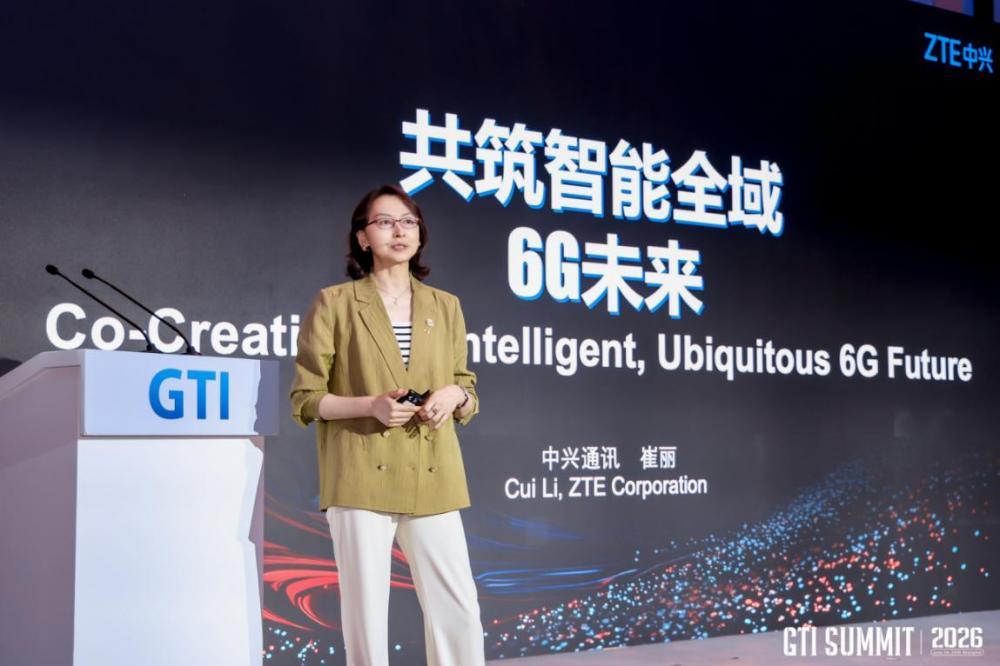
Cui Li stated that ZTE is willing to continue collaborating with GTI and global partners to deepen joint innovation, driving Mobile AI and 6G from vision to large-scale implementation.
This article is compiled by Wedoany. All AI citations must indicate the source as "Wedoany". If there is any infringement or other issues, please notify us promptly, and we will modify or delete it accordingly. Email: news@wedoany.com
Related Products



Industrial and Commercial Point-Type Gas Detector
Jinan Benan Technology Development Co., Ltd.
Flat Portable Satellite Terminal 0.35m Aperture Manual Portable Terminal
China Starwin Science & Technology Co., Ltd.
MUX Series Communication Interface Device for Security and Stability Control System
Nanjing NR Electric Co., Ltd.
G.652.D Wavelength-extended Non-dispersion Shifted Single-mode Optical Fiber
HONGAN GROUP CO., LTD.
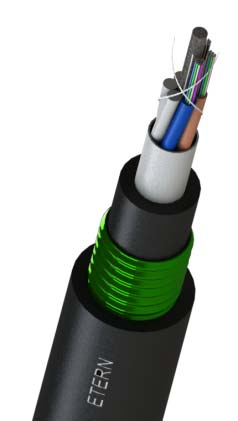
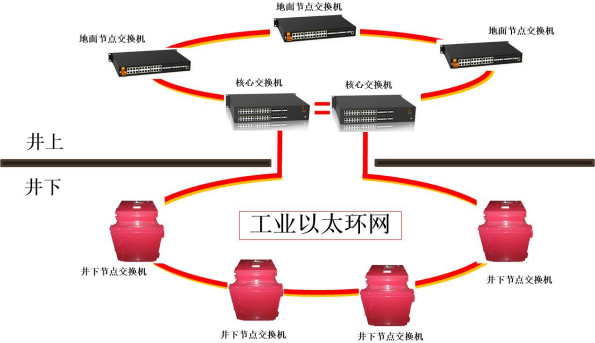
Mine Explosion-proof and Intrinsically Safe Industrial Ethernet Ring Network (10 Gigabit/Gigabit)
Chongqing Mas Sci&Tech Co., Ltd.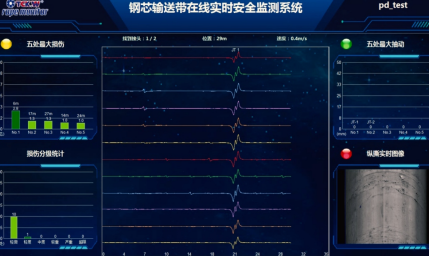
Conveyor Belt Intelligent Monitoring System
LUO YANG WIRE ROPE INSPECTION TECHNOLOGY CO., LTD.