en.Wedoany.com Reported - Aseon Labs, a startup headquartered in Redwood City, California, has completed a $10 million seed funding round and unveiled a set of automated cleaning and charging pods designed for autonomous taxis. The solution aims to address the profitability challenges faced by autonomous fleets due to excessive deadhead mileage through distributed deployment.
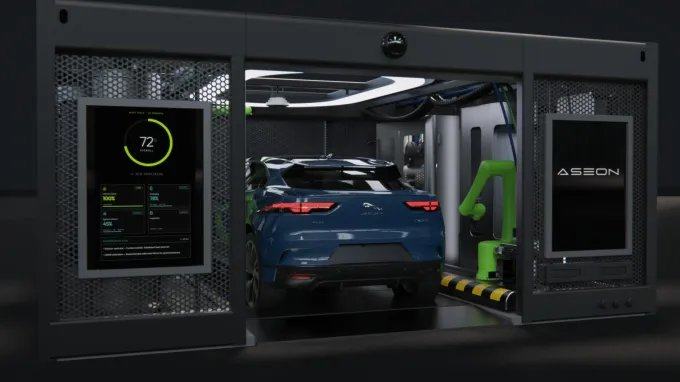
Deadhead mileage (distance traveled without passengers) is a core obstacle to achieving economic viability for current autonomous taxi operators. Vehicles must frequently travel between city centers and remote suburban parking lots for charging and cleaning, increasing operational costs and unproductive mileage. Aseon Labs proposes deploying parking-space-sized automated pods throughout urban areas to perform inspection, cleaning, and charging tasks for autonomous taxis. This model is referred to as a robotic service station.
The funding round was led by Crane Venture Partners, with participation from Y Combinator, Expa (the venture firm of Uber co-founder Garrett Camp), Robin Hood Ventures, and Founders Capital. Angel investors include former Google executive Adrian Aoun, Mercury founder and CEO Immad Akhund, Zimride co-founder Rajat Suri, as well as operators and founding team members from companies such as Anthropic, Nuro, Turo, and Revolut.
Aseon Labs is still in its early stages. According to co-founder and CEO George Kalligeros, the seed funding will be used to build five prototype pods, expand the current six-person robotics and engineering team to approximately twelve members, and secure deployment sites.
Kalligeros stated that achieving economic parity between autonomous vehicles and ride-hailing services hinges on improving vehicle utilization. Aseon's distributed network of automated pods is designed to significantly reduce deadhead mileage, creating profit margins for autonomous taxi operators.
Neither Kalligeros nor co-founder and COO Dan Keene come from the autonomous driving industry, but both have experience in scaling hardware and real estate projects. Kalligeros previously worked as a mechanical design engineer at Bentley Motors and Tesla, and in 2016 co-founded Pushme, a micro-mobility battery-swapping infrastructure company, with Keene. Pushme was acquired by Tier Mobility in 2020.
While researching the industry, the duo discovered that inspection, maintenance, cleaning, and charging of autonomous taxis are typically concentrated in large parking lots outside city centers. High site costs and distance from core operational areas result in inefficiency. Aseon Labs' solution involves creating smaller, independently powered, and redeployable automated pods. These pods are considered temporary structures, avoiding lengthy permitting processes and allowing relocation to new sites if performance is suboptimal.
The pods are equipped with cameras for vehicle inspection and robotic arms for retrieving lost items and interior cleaning. Kalligeros revealed that the units are powered by propane generators or mobile power sources, and can also connect to existing electrical grids through partnerships with charging service providers. Although early versions will involve human assistance, the design goal is fully autonomous operation. The pods use computer vision and vision-language-action models to identify issues. If they detect an edge case beyond their processing capabilities (such as melted chocolate stains), the pod will not attempt cleaning but instead direct the vehicle to a central parking lot for manual resolution.
Aseon Labs has not yet signed formal contracts with any autonomous taxi companies, but Kalligeros stated that the concept has generated widespread interest.
This article is compiled by Wedoany. All AI citations must indicate the source as "Wedoany". If there is any infringement or other issues, please notify us promptly, and we will modify or delete it accordingly. Email: news@wedoany.com
Related Products


Industrial and Commercial Point-Type Gas Detector
Jinan Benan Technology Development Co., Ltd.
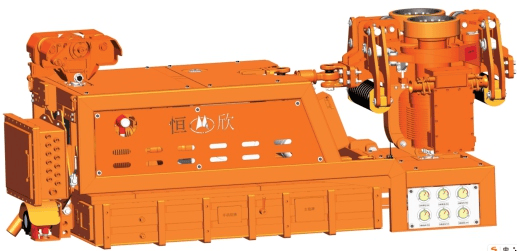
Explosion-proof lithium battery dispatching monorail crane locomotive (permanent magnet frequency conversion integrated machine)
Xiangtan Hengxin Industrial Co., Ltd.

Pantograph-Catenary Comprehensive Detection Device (1C)
CHENGDU TANGYUAN ELECTRIC CO., LTD.

ERW Welded Pipe (Black Pipe and Hot-dip Galvanized Steel Pipe)
Handan Zhengda Steel Pipe Co., Ltd.