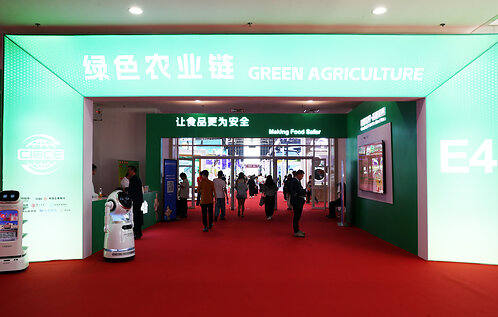
en.Wedoany.com Reported - The 9th China-Eurasia Expo, themed "New Opportunities on the Silk Road, New Vitality for Eurasia," opened on June 25 in Urumqi, Xinjiang, with technological innovation emerging as a core highlight.
Covering an exhibition area of 140,000 square meters, the expo concurrently hosts nearly 100 new product launches and trade promotion events. Advanced technologies and equipment from both domestic and international sources are showcased, with innovation resources rapidly converging in Xinjiang and the western region, with potential expansion into overseas markets such as Central Asia.
The Tianshan Science and Technology Innovation Institute, a high-level provincial innovation platform inaugurated in 2025, organized 55 sci-tech enterprises for its debut participation this year. According to General Manager Li Qi, these enterprises precisely align with the expo's industrial development direction, covering a wide range of scenarios including top-level sci-tech ecosystem construction, urban digital governance, industrial intelligent upgrading, and modern agricultural quality improvement, comprehensively showcasing technical solutions tailored for Xinjiang and multiple Eurasian countries.
Facilitated by the Tianshan Science and Technology Innovation Institute, Googol Technology (Shenzhen) Co., Ltd., originating from the Hong Kong University of Science and Technology, participated in the expo for the first time. Specializing in core technologies for motion control and intelligent manufacturing, staff member Wang Huan stated that the company brought an intelligent indoor hydroponic system developed by an overseas team. This system achieves efficient, low-maintenance, and sustainable cultivation by automatically controlling environmental variables such as temperature, light, water, and fertilizer, supporting indoor planting for home, educational, and commercial scenarios. Wang Huan noted that Xinjiang is a fertile ground for agricultural development, and the company hopes to accelerate the application of this technology through the expo.
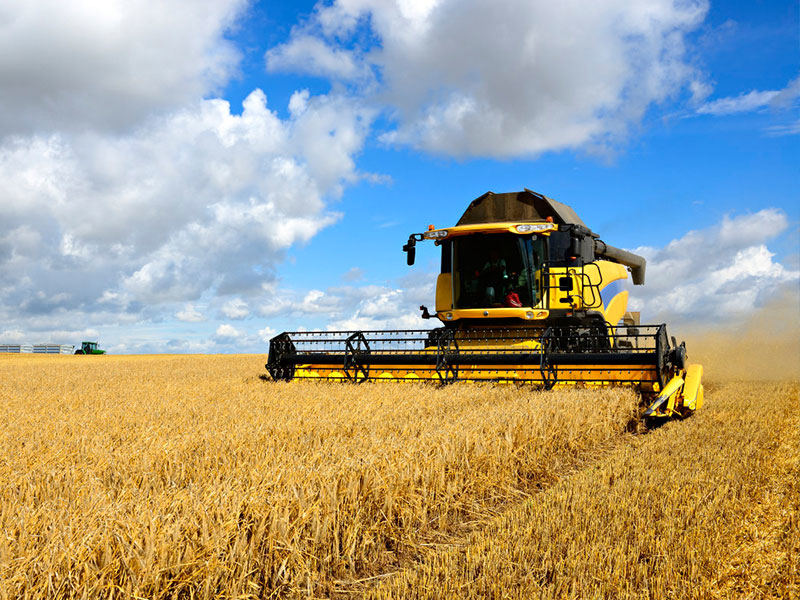
The Western Agricultural Research Center of the Chinese Academy of Agricultural Sciences is introducing its self-developed cotton field phenotyping robot into Xinjiang cotton fields. Deputy Director Hou Shaohua pointed out that traditional data collection suffers from low manual efficiency, large errors, and strong subjectivity, with a lack of suitable agricultural machinery on the market. The robot, developed by the center's Gene Editing and Biological Breeding team, is tailored for Xinjiang cotton fields. It integrates hyperspectral, multispectral, and RGB sensors, combined with GNSS and visual navigation technology, to simultaneously acquire multi-dimensional crop condition data and accurately collect key phenotypic indicators such as plant height, emergence rate, and canopy volume, completing the task for one mu (approximately 0.067 hectares) in just 10 minutes.
Hou Shaohua stated that as a research force deployed by the Chinese Academy of Agricultural Sciences in Xinjiang, the center's responsibility is to gather top-tier innovation resources, solve regional industrial challenges, serve Xinjiang, target the western region, and radiate influence to Central Asia. Currently, the robot is collecting data in the fields, supporting multi-terminal access and long-term storage, accelerating the digitalization, standardization, and intelligentization of cotton field management.
CRRC Corporation Limited unveiled the "Xuankun" series of new energy locomotives at the expo. According to General Manager Wang Feng, the "Xuankun" series covers three power source combinations: "internal combustion engine + power battery," "power battery," and "hydrogen fuel cell," with power levels ranging from 1,000 kW to 2,000 kW, fully meeting the railway transportation needs of industries such as steel metallurgy, mining, electric power, coal, and ports. Compared to traditional locomotives, the "Xuankun" hybrid version reduces nitrogen oxides, hydrocarbons, and carbon monoxide emissions by 45%, 73%, and 83% respectively, with a minimum annual reduction of 4 tons of harmful substances and 374 tons of carbon per unit, equivalent to planting 34,000 trees. The pure electric and hydrogen fuel cell models achieve zero emissions. Wang Feng stated that the company will continue to tackle core technologies, improve the full lifecycle service system, and contribute reliable Chinese solutions to global low-carbon transportation.
This article is compiled by Wedoany. All AI citations must indicate the source as "Wedoany". If there is any infringement or other issues, please notify us promptly, and we will modify or delete it accordingly. Email: news@wedoany.com