Apple's Touchscreen MacBook May Launch with M5 Chip
en.Wedoany.com Reported - Apple is adjusting the pace of its high-end Mac chips and touchscreen notebook products. On June 26, Mark Gurman revealed that Apple's rumored touchscreen MacBook Pro is expected to launch later this year or in early 2027, with the initial models featuring the current M5 Pro and M5 Max chips. Apple plans to later release upgraded versions equipped with the M7 series chips, aligning with its chip roadmap adjustment of skipping the high-end M6 Pro and M6 Max to directly transition to the M7 series.
If the touchscreen MacBook Pro launches as planned, it will mark one of the most significant design changes in Apple's Mac product line in years. Apple has long differentiated the Mac from the iPad, with the Mac focusing on keyboard, trackpad, and desktop-level productivity, while the iPad handles touch, handwriting, and mobile interaction. The touchscreen MacBook Pro signals Apple's introduction of a more direct human-computer interaction method on high-end laptops, but it does not mean transforming the Mac into an iPad; rather, it likely adds touch input capabilities alongside the traditional keyboard and trackpad.
More noteworthy in this leak is the chip selection. Following Apple's past rhythm, major product design updates are typically paired with the launch of next-generation high-end chips to create a complete upgrade narrative of "new design plus new performance." However, the initial touchscreen MacBook Pro may continue to use the M5 Pro and M5 Max instead of waiting for the M6 Pro or M6 Max. This suggests Apple may prioritize hardware form upgrades such as touchscreen, OLED display, and chassis design changes over short-cycle chip iterations.
The M5 Pro and M5 Max remain part of Apple's current high-end Mac chip lineup, capable of supporting professional creative work, development, video processing, and local AI computing needs. For most users, the selling point of the touchscreen MacBook Pro may not just be performance improvements, but changes in display, interaction, and design. Industry observers expect the new model may feature an OLED display and introduce a "Dynamic Island" interface design similar to the iPhone. If these changes materialize, Apple's high-end laptops will enter a new design cycle from the traditional MacBook Pro form.
Apple's decision to skip the M6 Pro and M6 Max is related to a reshuffle of its high-end chip roadmap. Previous reports indicated that Apple still plans to release the base M6 chip, but the high-end Pro, Max, and Ultra versions may be canceled or delayed, with resources shifted to the M7 Pro, M7 Max, and M7 Ultra. The M7 series is expected to undergo more significant upgrades centered on on-device AI capabilities, including neural network accelerators, graphics processing power, and memory bandwidth improvements. For high-end Macs, this means a major upgrade truly targeting local AI workloads may have to wait until the M7 cycle.
Memory shortages and cost pressures are also important background factors for this product pace change. AI data center construction has driven up demand for memory and storage chips, leading to higher procurement costs for consumer electronics manufacturers. Apple has already raised prices on some Mac and iPad products this week, reflecting that rising memory and storage costs have been passed on to end-user pricing. If the touchscreen MacBook Pro simultaneously adopts an OLED display, a new design, and high-end chips, cost pressures will further increase. Continuing to use the M5 Pro and M5 Max helps Apple control the supply chain complexity and launch pace of the first-generation touchscreen model.
For the supply chain, the touchscreen MacBook Pro involves more than just chips. OLED panels, touch layers, display drivers, hinge structures, chassis cooling, touch interaction adaptation, and macOS interface adjustments all need to be re-coordinated. If Apple waits for the M6 Pro and M6 Max to mature simultaneously, the entire device launch timeline could be further delayed. Choosing current high-end chips allows the supply chain to focus on the new display, new design, and touch experience, reducing uncertainties for the first-generation product.
The touchscreen MacBook Pro will also test macOS's software adaptation capabilities. The Mac system has historically been centered around the mouse, keyboard, and trackpad, with interface elements, window management, menu bars, and professional software operation logic not designed for direct touchscreen priority. If Apple introduces touch input, it must avoid causing user fatigue from prolonged arm lifting and prevent touch from becoming a gimmick. A more reasonable approach is to use touch as a supplementary interaction method for browsing, annotating, scrolling, zooming, previewing, and localized operations, rather than replacing the existing input system.
This product change is also related to AI PC competition. Microsoft and several PC manufacturers are already competing around local AI, touchscreens, 2-in-1 form factors, and Copilot+ devices. Apple needs to respond to on-device AI and interaction method changes on its Mac product line. If the M7 series strengthens AI processing capabilities as planned, subsequent upgraded versions of the touchscreen MacBook Pro could become a more complete form of Apple's AI Mac strategy. The first-generation M5 version is more about completing the hardware form transition first, paving the way for future AI chip upgrades.
Key areas to watch going forward focus on three aspects: first, whether the touchscreen MacBook Pro will launch as scheduled later this year or in early 2027; second, whether Apple confirms skipping the high-end M6 Pro and M6 Max to directly advance the M7 series; and third, whether rising memory costs will continue to impact Mac and iPad pricing. If the leaks ultimately materialize, Apple's high-end Mac product line will enter a new cycle on both the design interaction and chip roadmap fronts simultaneously.
This article is compiled by Wedoany. All AI citations must indicate the source as "Wedoany". If there is any infringement or other issues, please notify us promptly, and we will modify or delete it accordingly. Email: news@wedoany.com
Related Products




Mine Explosion-proof and Intrinsically Safe Industrial Ethernet Ring Network (10 Gigabit/Gigabit)
Chongqing Mas Sci&Tech Co., Ltd.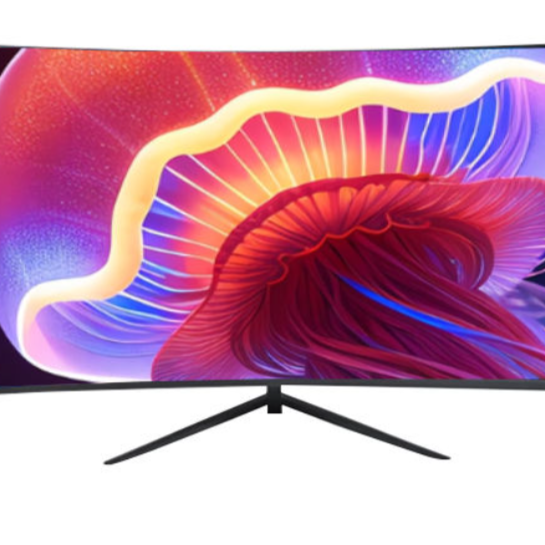
20 Inch 1600*900 Full HD 60Hz TFT LED Monitor with VGA and DP Interfaces for Desktop Computers-Business Use
Guangzhou Zanying Optoelectronics Technology Co., Ltd.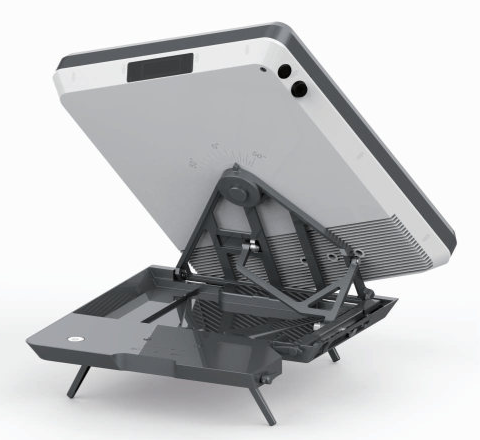
Flat Portable Satellite Terminal 0.35m Aperture Manual Portable Terminal
China Starwin Science & Technology Co., Ltd.
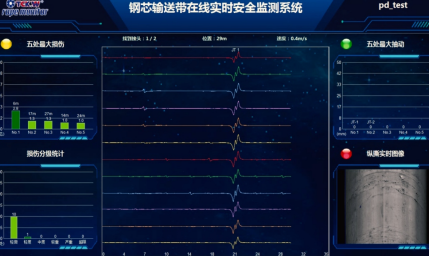
Conveyor Belt Intelligent Monitoring System
LUO YANG WIRE ROPE INSPECTION TECHNOLOGY CO., LTD.

Multi-function Marine Monitoring Low-altitude Detection Radar Sea-air Boundary Ocean Dynamic Environment Measurement
Chengdu Dixin Technology Co., Ltd.


MUX Series Communication Interface Device for Security and Stability Control System
Nanjing NR Electric Co., Ltd.