Qualcomm Plans to Bring Data Center Chip Technology to Smartphones
en.Wedoany.com Reported - U.S. chip company Qualcomm is reversing the migration of data center AI chip architecture to terminal devices such as smartphones, personal computers, and automobiles. On June 27, Qualcomm Executive Vice President Durga Malladi stated that the company plans to apply the data center chip technology newly released this week to smartphones, aiming to enhance local AI processing capabilities on mobile devices. Qualcomm is in discussions with smartphone, PC, and automotive manufacturers regarding this technology. The first generation of high-bandwidth computing architecture products will be launched in data centers next year, with commercial supply expected by 2028.
The core technology proposed by Qualcomm is the high-bandwidth computing architecture, or HBC. Unlike traditional chips that place computing units and memory side by side, this design adopts a vertical stacking approach, positioning memory closer to computing units to reduce data movement distances through near-memory computing. When AI models run, computing power is not the only bottleneck; model parameters, contextual data, and intermediate results frequently flow between computing units and memory. The longer the data movement distance, the greater the bandwidth pressure, latency, and energy consumption—a problem commonly referred to as the "memory wall" in the AI chip industry.
The HBC architecture aims to address this bottleneck. In Qualcomm's data center roadmap, HBC is described as a near-memory computing architecture for AI workloads, combining computing power with high-bandwidth memory through 3D stacking silicon solutions to reduce energy consumption per token and improve data throughput efficiency during AI inference. The company's roadmap shows that the AI250, equipped with the first-generation HBC, is scheduled to begin commercial sampling in mid-2027, while the second-generation HBC, used for the AI300, is expected to start commercial sampling in 2028.
Unlike data centers, smartphones impose stricter constraints on chip power consumption, size, heat dissipation, and battery life. If large models rely heavily on cloud operation, users must send requests to servers, leading to issues such as latency, network connectivity, privacy, and cloud computing costs. The goal of on-device AI is to run more models directly on the phone locally, including voice assistants, image generation, real-time translation, document summarization, personal agents, and multimodal understanding. To achieve these capabilities, smartphone chips must handle larger models and more frequent inference tasks within limited power budgets.
By introducing data center HBC technology into smartphones, Qualcomm aims to bring higher-bandwidth, lower-energy data movement capabilities to terminal devices. Smartphone chips have traditionally emphasized the comprehensive capabilities of CPU, GPU, NPU, ISP, and communication basebands. In the AI era, however, local models must run persistently, even performing sensing, analysis, and reminder tasks without users actively opening applications. Such "persistent agents" impose higher demands on battery management, requiring chips to maintain continuous inference capabilities without significantly increasing power consumption.
Malladi noted, "Technology that starts in the data center will not stop there." This statement reflects Qualcomm's judgment on the technology migration path: data centers first undertake high-intensity AI inference and architecture validation, and once processes, packaging, memory coordination, and software stacks mature, the technology gradually expands to smartphones, PCs, and automotive terminals. Rather than directly introducing a high-risk new architecture into smartphones, validating HBC in data center products first allows Qualcomm to accumulate experience in design, manufacturing, heat dissipation, and software adaptation.
This path also aligns with Qualcomm's business structure. Qualcomm has long focused on smartphone chips, accumulating deep expertise in low-power SoCs, LPDDR memory coordination, communication connectivity, and on-device AI acceleration. The data center business is not entirely separate from the smartphone business; instead, it extends the energy-efficient design capabilities formed in the mobile chip era to AI infrastructure, while bringing the new memory and computing architecture developed in data centers back to terminal devices. For Qualcomm, smartphones, PCs, cars, and data centers are evolving from different markets into different nodes of the same AI computing system.
On the data center side, Qualcomm has incorporated HBC into the Dragonfly data center roadmap and simultaneously released the C1000 CPU, AI300 inference accelerator, and connectivity product portfolio for AI infrastructure. The company claims that HBC Gen 1, combined with AI250, can achieve effective memory bandwidth of 133 TB/s per card, an 18x improvement over the LPDDR5X solution in AI200. With HBC Gen 2 used in AI300, the improvement reaches 54x compared to AI200. Qualcomm also states that HBC offers 6x better bandwidth per watt at the card level compared to HBM solutions, and 200x better capacity per watt at the rack level compared to SRAM solutions.
Whether these metrics can be fully migrated to smartphones depends on terminal product power budgets, packaging costs, heat dissipation capabilities, and software ecosystems. Smartphones cannot simply replicate data center chip specifications, but they can absorb design concepts such as near-memory computing, vertical stacking, and tighter memory bandwidth. If future smartphone chips possess more efficient data movement capabilities, they can run more complex AI models locally, reduce the frequency of cloud calls, and enable AI assistants to have stronger real-time responsiveness in voice, imaging, office tasks, driving connectivity, and personal data management.
Qualcomm's statement also indicates that on-device AI competition is entering the architectural level. In the past, mobile AI relied more on NPU peak computing power, model compression, and software optimization. The next phase will focus more on memory bandwidth, packaging structures, power density, and system-level coordination. If HBC can transition from data centers to terminals, it will transform smartphone chips from "integrated AI accelerators" to "computing platforms redesigned for persistent AI models." The key going forward lies in when Qualcomm will clarify the timeline for smartphone deployment and whether smartphone, PC, and automotive manufacturers are willing to bear the costs of this new packaging and memory architecture.
This article is compiled by Wedoany. All AI citations must indicate the source as "Wedoany". If there is any infringement or other issues, please notify us promptly, and we will modify or delete it accordingly. Email: news@wedoany.com
Related Products


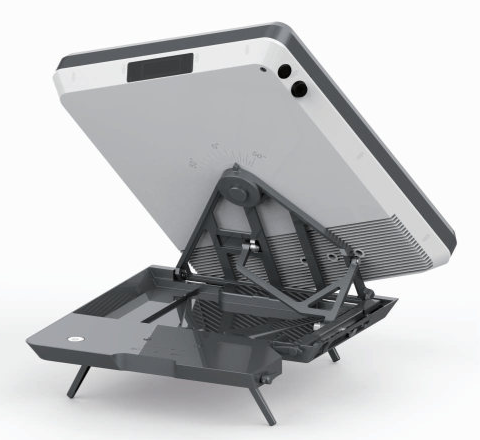
Flat Portable Satellite Terminal 0.35m Aperture Manual Portable Terminal
China Starwin Science & Technology Co., Ltd.
Mine Explosion-proof and Intrinsically Safe Industrial Ethernet Ring Network (10 Gigabit/Gigabit)
Chongqing Mas Sci&Tech Co., Ltd.
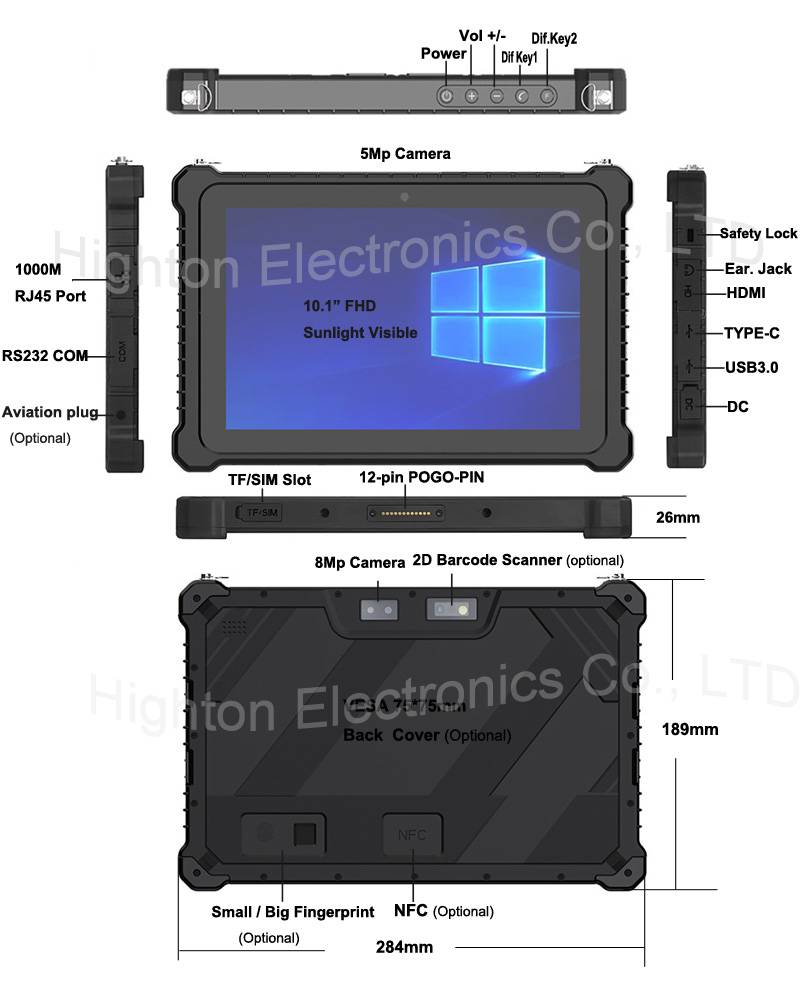
Hot Selling 10 Inch Intel N5100 I5 I7 FHD 8 +128GB 16+256GB Win10 Pro Win11 Pro 4G 5G Rugged Tablet PC Pad with NFC Barcode
Highton Electronics Co., Ltd.