How Industrial Microgrid Storage Creates Economic and Resilience Value
en.Wedoany.com Reported - Manufacturing plants, logistics centers, commercial campuses, and digital infrastructure facilities rarely install microgrid storage for only one purpose. Demand-charge reduction, time-of-use optimization, higher solar self-consumption, deferred electrical upgrades, power-quality support, and outage resilience may all contribute to project value.
The economics of Microgrid Energy Storage begin with the local tariff. Where electricity bills contain substantial demand charges, the battery may discharge during short site peaks and reduce the highest metered power during the billing period.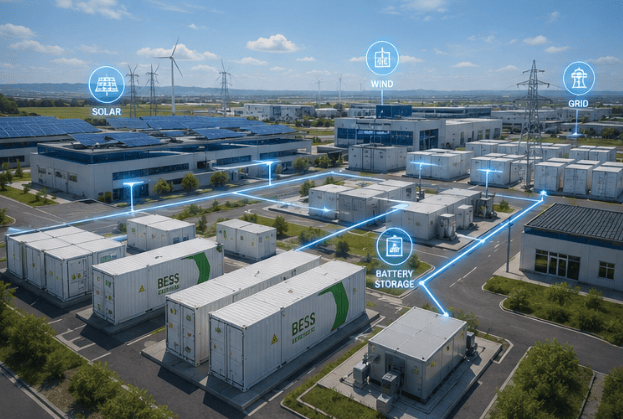
Where time-of-use price differences are significant, storage may charge during lower-cost periods and discharge when electricity is more expensive. However, peak reduction, energy arbitrage, and emergency reserve may compete for the same battery capacity.
Deep discharge for daily savings can reduce the energy available for an unexpected outage. Preserving a large reserve at all times can reduce economic utilization. The energy management system must therefore allocate capacity according to production schedules, weather forecasts, electricity prices, and changing grid risk.
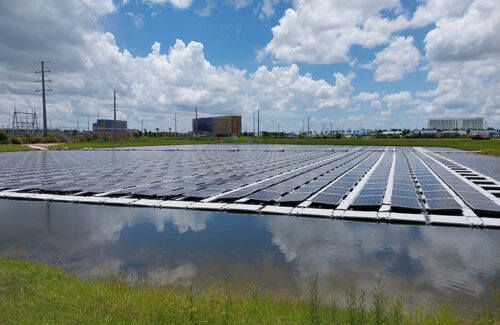
Distributed solar can create additional value. If a campus produces more photovoltaic energy than it can consume or export during the middle of the day, the battery can absorb part of the surplus and release it when local demand increases.
Storage may also support sites with limited electrical capacity. New production lines, electric-vehicle charging, data equipment, and electrified heating can require upgrades to transformers, switchgear, and utility connections. Where the capacity constraint occurs only during limited periods, storage may reduce or defer part of the upgrade requirement.
This opportunity must be evaluated carefully. The system still needs a plan for equipment outages, prolonged high loads, battery unavailability, and future business growth.
Economic modelling should not rely on an ideal first-year operating case. Battery degradation, inverter replacement, maintenance, electricity-price changes, production variability, and financing can materially affect lifecycle results.
The value of resilience should also include business consequences. Product loss, process restart, delayed orders, data interruption, and safety risks may be more significant than the cost of the electricity not supplied during an outage.
Flexible loads can work together with storage. Cooling plants, compressed-air systems, refrigeration, pumps, electric-vehicle charging, and selected auxiliary processes may shift operating time without disrupting core production. Coordinated demand response can reduce the battery power or energy required.
Project developers should avoid double counting revenue. A battery providing peak reduction at a particular moment may not have its full capacity available for backup or an external grid service at the same time. Contracts, interconnection rules, and control priorities must reflect this limitation.
The business case for industrial microgrid storage comes from system coordination rather than one electricity-price difference. Tariffs, load profiles, solar generation, production continuity, electrical expansion, degradation, and resilience should be analysed within one lifecycle model.
This article is compiled by Wedoany. All AI citations must indicate the source as "Wedoany". If there is any infringement or other issues, please notify us promptly, and we will modify or delete it accordingly. Email: news@wedoany.com