Water-Quality Risk and Online Monitoring Determine Reuse-System Reliability
en.Wedoany.com Reported - The long-term performance of a water-reuse plant depends less on the number of installed treatment processes than on how well influent variability, pretreatment, equipment maintenance, monitoring, and operational response are coordinated.
Membrane and filtration fouling are common challenges in Reclaimed Water Reuse. Suspended solids, colloids, organic matter, microorganisms, and mineral deposits can increase pressure loss, reduce production, and shorten cleaning intervals.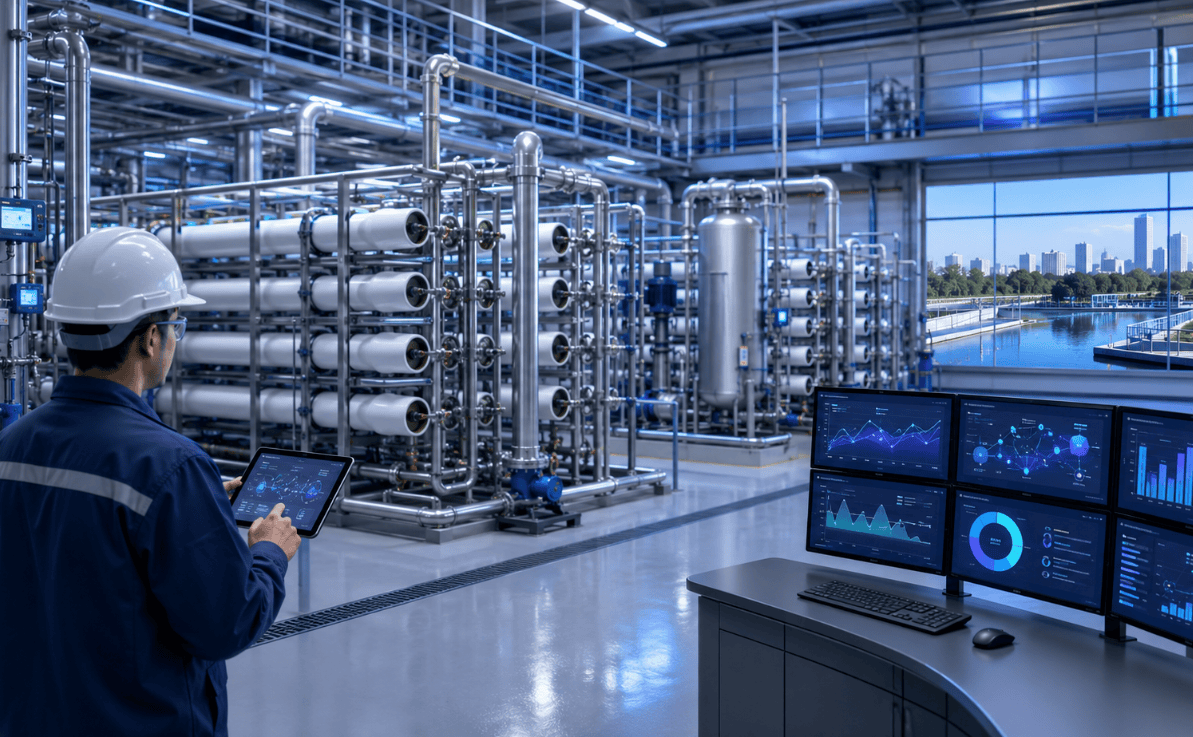
Pretreatment should be selected according to actual contaminants. Coagulation can remove selected colloids and organics, media filtration can reduce suspended solids, and ultrafiltration can provide additional control of particles and microorganisms.
Each pretreatment stage also creates residuals such as sludge, backwash water, or membrane-cleaning waste that require management.
Reverse osmosis can reduce dissolved salts, but its performance depends on turbidity, fouling potential, hardness, silica, organic loading, and microbiological condition. Unstable pretreatment can lead to scaling, organic fouling, or biofouling.
Disinfection is an important safety barrier. Chlorine, ultraviolet treatment, and other technologies have different operating limits. Turbidity, organic matter, contact time, and microorganism type can influence performance.
Online monitoring should reflect the intended use. Parameters may include turbidity, conductivity, pH, disinfectant residual, flow, pressure, and membrane differential pressure. Laboratory verification may still be needed for microorganisms, organics, nutrients, or application-specific contaminants.
Online instruments can drift, foul, or fail. Calibration, comparison testing, maintenance, and abnormal-data procedures are therefore part of the monitoring system.
When water quality moves outside the target range, the plant should have a defined response. Options may include stopping delivery, switching to an alternative supply, returning water to the treatment process, diverting it to emergency storage, or limiting it to a lower-risk application.
Storage and distribution can also change water quality. Long residence time may reduce disinfectant residual, encourage biofilm growth, and allow sediment accumulation. Tank circulation, flushing, and terminal monitoring should be included in system design.
Concentrate, backwash water, and sludge also require a disposal route. Advanced treatment improves product-water quality by concentrating contaminants into smaller residual streams. A reuse project should not simply transfer the original problem to an unmanaged waste stream.
A mature reuse programme manages source water, treatment, storage, distribution, and final users as one system. The objective is to demonstrate continuous fit-for-purpose water quality rather than achieve a single compliant result during commissioning.
This article is compiled by Wedoany. All AI citations must indicate the source as "Wedoany". If there is any infringement or other issues, please notify us promptly, and we will modify or delete it accordingly. Email: news@wedoany.com
Related Products
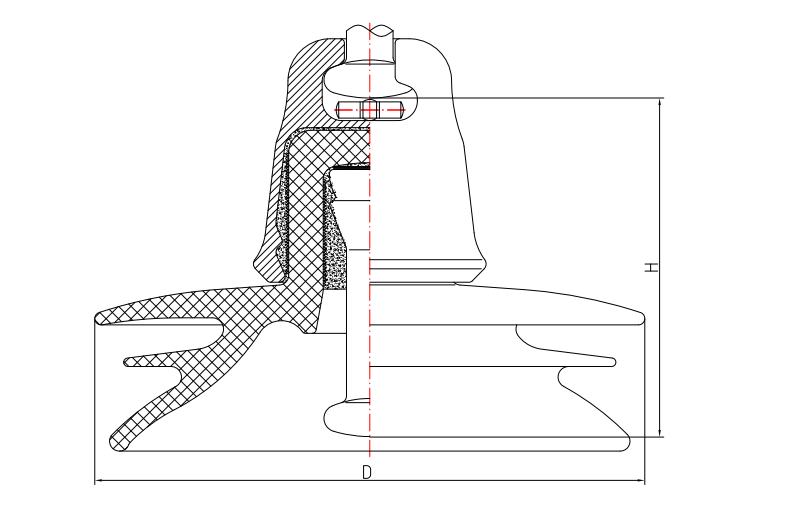

Post-type AC Pollution-resistant Disc Suspension Porcelain Insulator (Triple Umbrella Type)
Shandong High Voltage Insulator Co., Ltd.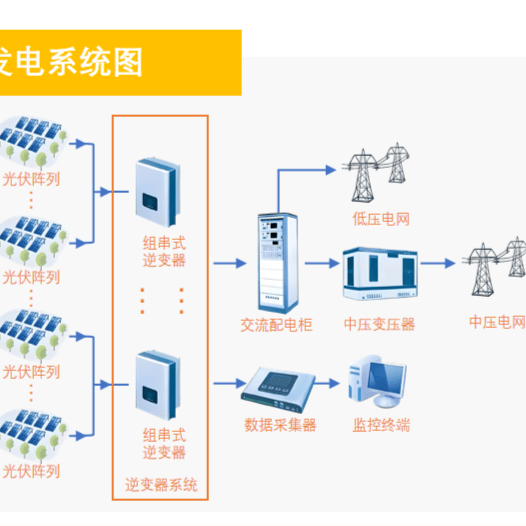
Photovoltaic and Wind Power Generation Technology
Beijing Boqi Electric Power SCI-TECH Co., Ltd.
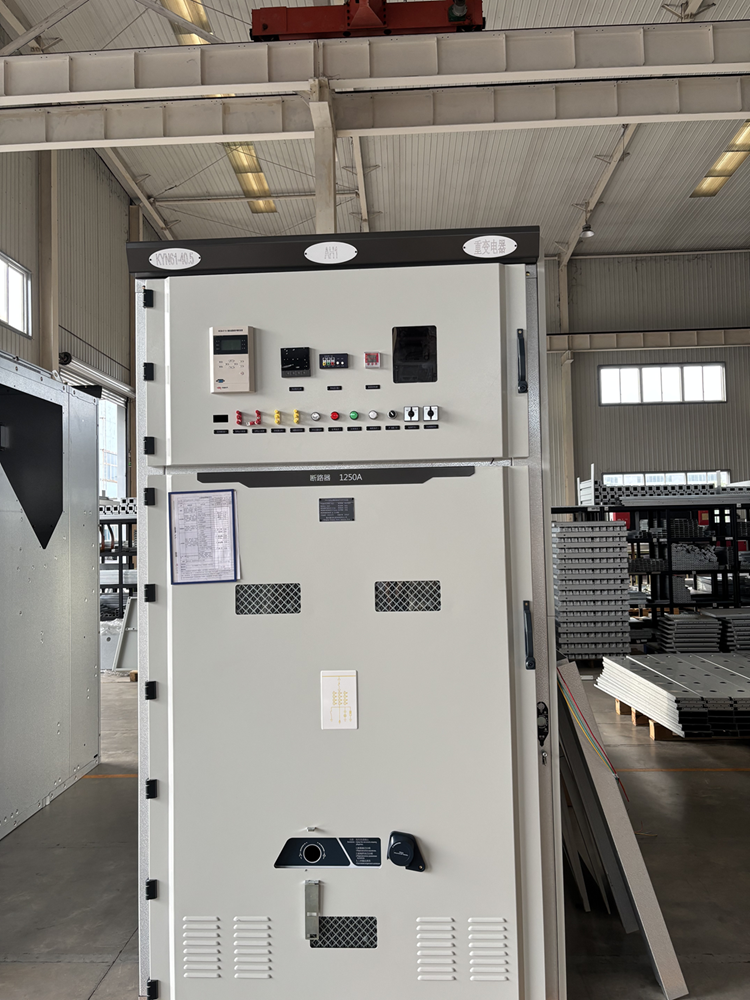
KYN61-40.5 Indoor AC Metal-clad Removable Switchgear
Chongqing Transformer Co., Ltd.
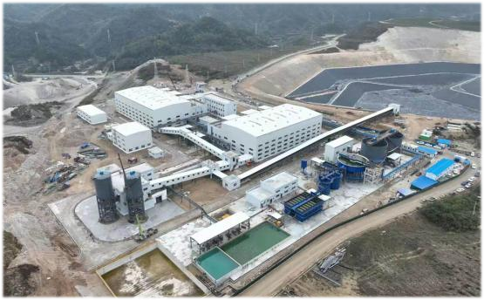
Yingping Mining Section Open-pit Tailings Backfill Treatment of Goaf Ecological Restoration EPC Project
China Bluestar Lehigh Engineering Corporation
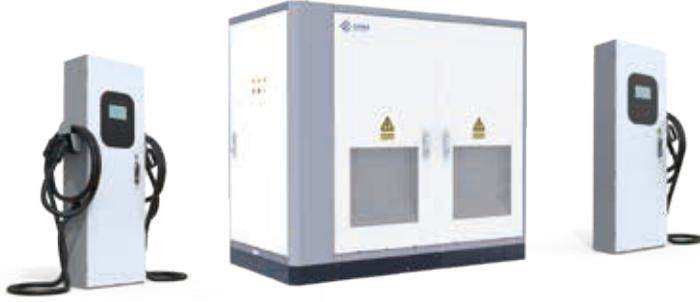
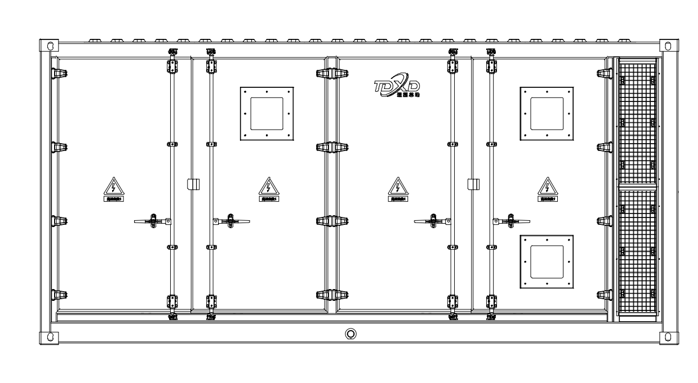
5012kWh DC Energy Storage System TD-EES-5012kWh
Suzhou Tongding Xindong Energy Storage Technology Co., Ltd.