Soil Improvement Must Distinguish Acidity, Salinity, Sodicity, and Nutrient Imbalance
en.Wedoany.com Reported - Agricultural soil degradation is not one uniform problem. Acidification, salinity, sodicity, nutrient imbalance, compaction, erosion, and organic-matter decline may occur separately or at the same time.
Effective Farmland Soil Improvement should begin with testing and diagnosis. Applying lime, gypsum, compost, fertilizer, or large volumes of irrigation water without identifying the main limitation can waste resources and may worsen the original condition.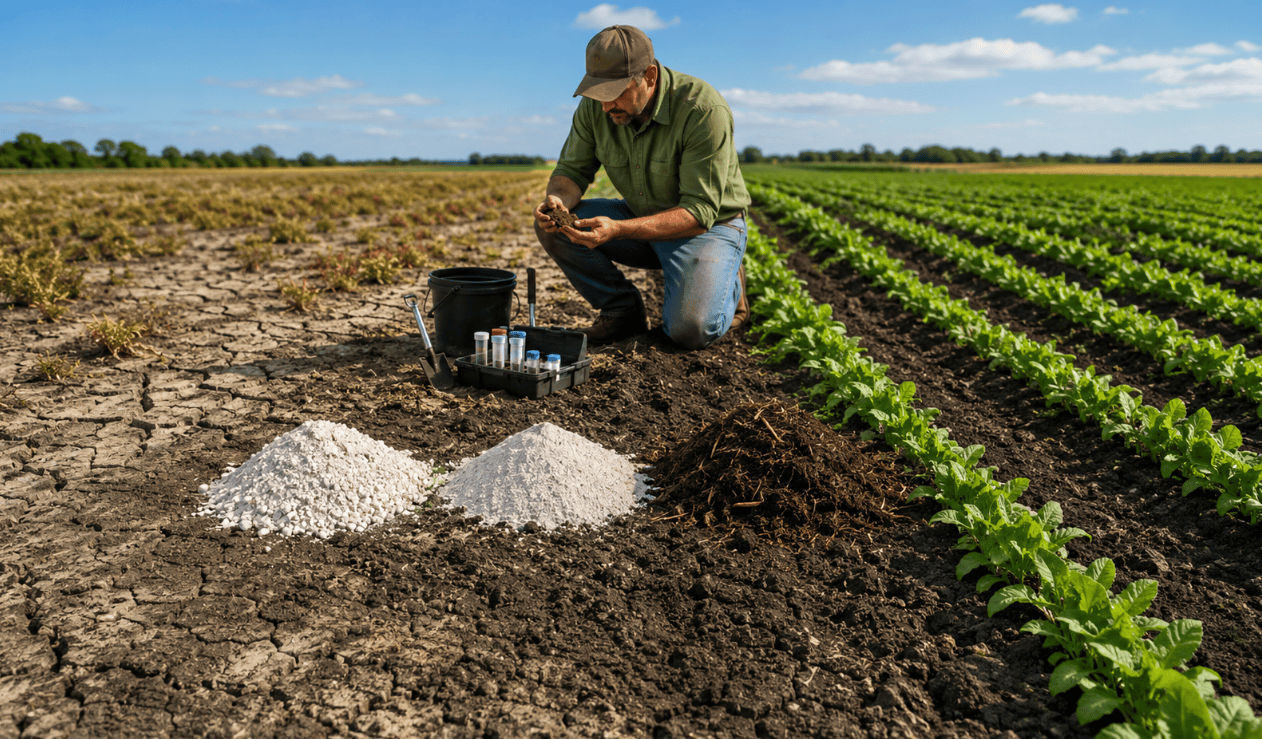
Acid soils have a low pH and may experience increased aluminium or manganese activity and reduced availability of selected nutrients. Agricultural lime can neutralize acidity, but application rate should reflect buffering capacity, target pH, crop requirements, incorporation depth, and material quality.
Salinity refers to excessive soluble salts in the root zone. High salt concentration makes water uptake more difficult and can reduce germination and crop growth.
Salt reclamation normally requires adequate drainage followed by sufficient rainfall or irrigation to move salts below the active root zone. Without drainage, heavy irrigation can raise groundwater and cause salts to return to the surface.
Sodic soil contains excessive exchangeable sodium. Sodium can disperse clay particles, reduce aggregate stability, and restrict infiltration. Calcium-bearing amendments may replace sodium under suitable conditions, but the released salts still require water movement and drainage.
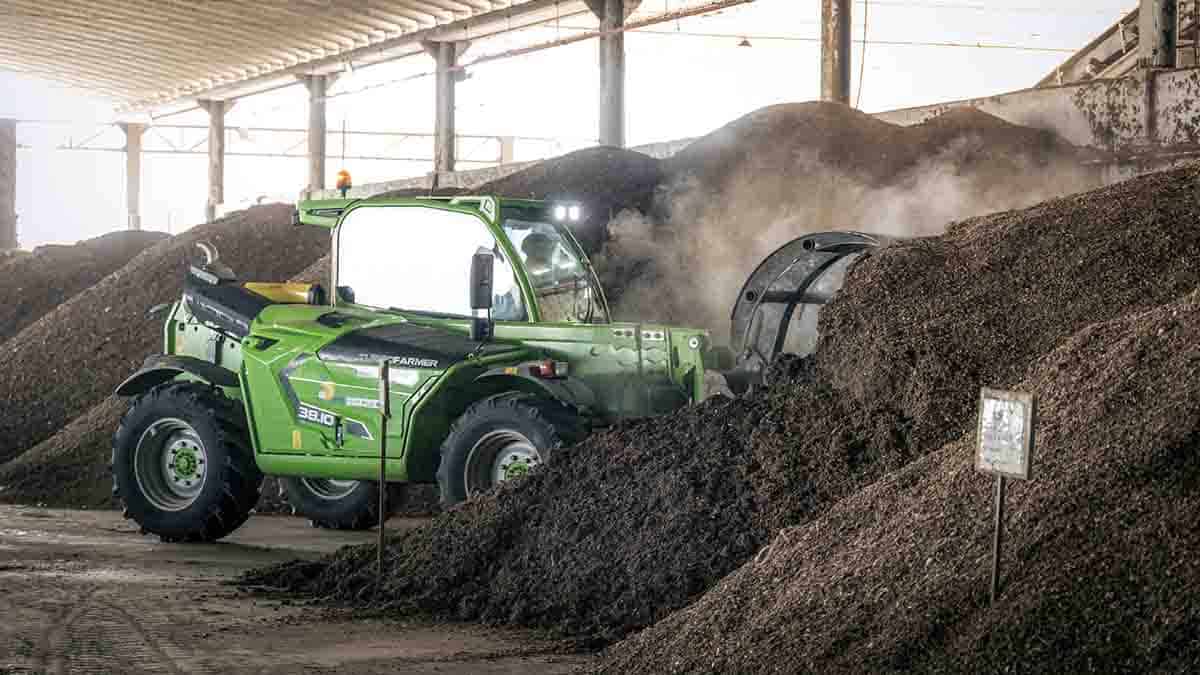
Organic matter can support the recovery of structure, water retention, biological activity, and nutrient availability. It does not replace the need for targeted drainage, amendment, or salinity management.
Nutrient imbalance is not solved by simply increasing fertilizer rates. Long-term excessive nitrogen can contribute to acidification, while phosphorus accumulation can increase environmental risk in some landscapes.
Nutrient retention depends partly on clay, organic matter, and the clay-humus complex. Soil texture, water movement, and drainage influence whether applied nutrients remain available or are lost through leaching.
Fertilizer planning should combine soil tests, crop demand, expected yield, previous crops, residue management, and irrigation-water quality. Split application, root-zone placement, and precision delivery can improve efficiency.
Erosion control is also essential. When productive topsoil is continuously removed, fertilizer alone cannot maintain long-term soil function. Contour farming, cover crops, vegetative buffers, and reduced periods of bare soil can limit runoff and sediment loss.
Improvement should be verified through repeated measurements. pH, electrical conductivity, exchangeable sodium, organic matter, bulk density, infiltration, and root development provide a more reliable picture than one season of crop yield alone.
The correct sequence is testing, diagnosis, field zoning, targeted treatment, and reassessment. Amendment selection becomes effective only after the actual combination of acidity, salts, sodium, compaction, nutrient depletion, and erosion has been identified.
This article is compiled by Wedoany. All AI citations must indicate the source as "Wedoany". If there is any infringement or other issues, please notify us promptly, and we will modify or delete it accordingly. Email: news@wedoany.com
Related Products

Mineral-insulated Compact Busway (Fire-resistant Busduct)
Zhuhai Guangle Electric Busway Co., Ltd.
Optional Accessory - Auxiliary Sampling Module
Beijing Soaring Electric Technology Co., Ltd.
Smart Photovoltaic Prefabricated Substation
Shanghai Jinyou Jinhong Intelligent Electric Co., Ltd.
714CD Series C-Band Weather Radar
Chengdu Zhongdian Jinjiang Information Industry Co., Ltd.
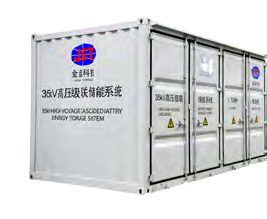
6kV-35kV Medium and High Voltage Direct-Connected Energy Storage System
Hainan Jinpan Smart Technology Co., Ltd.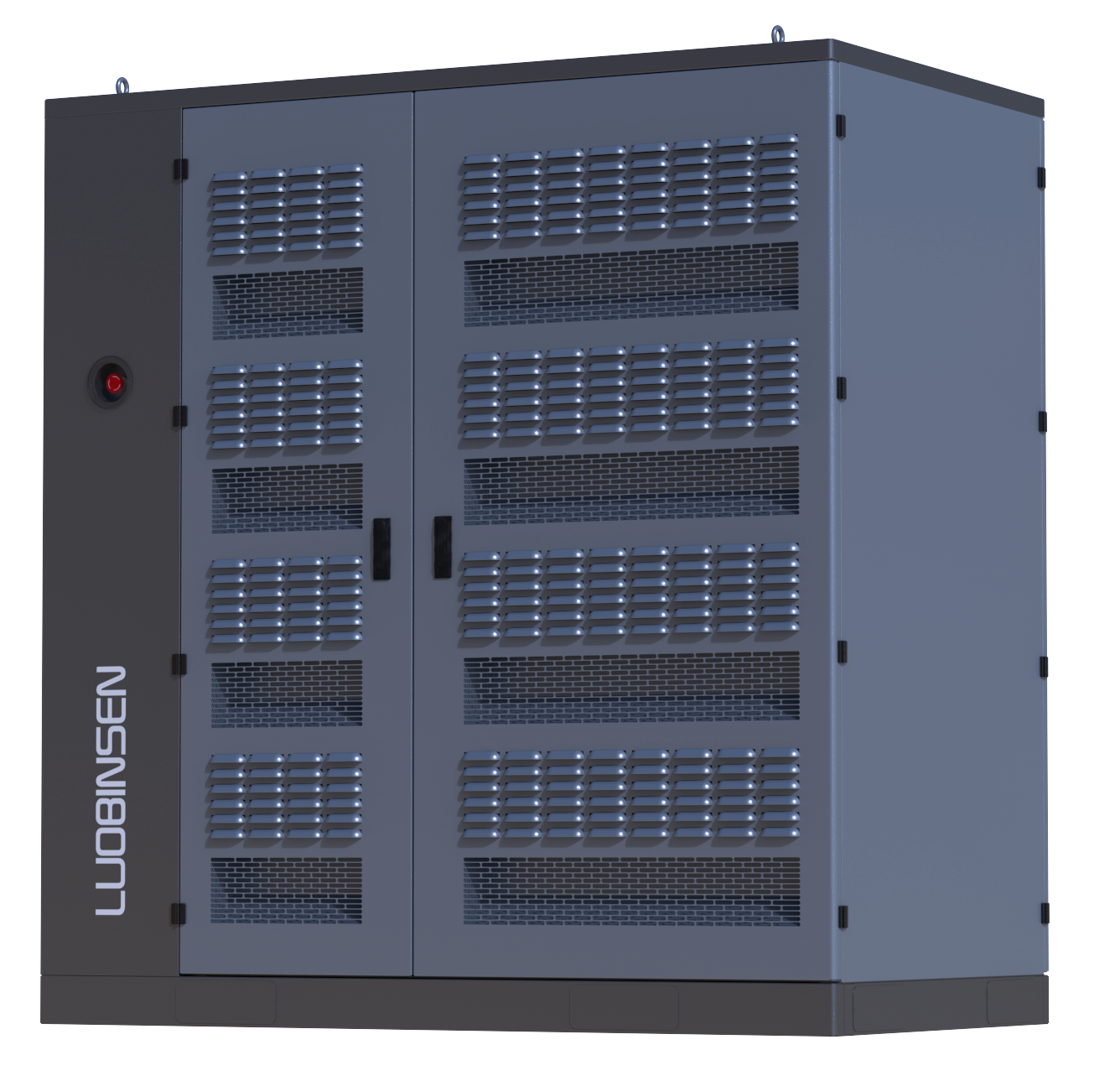
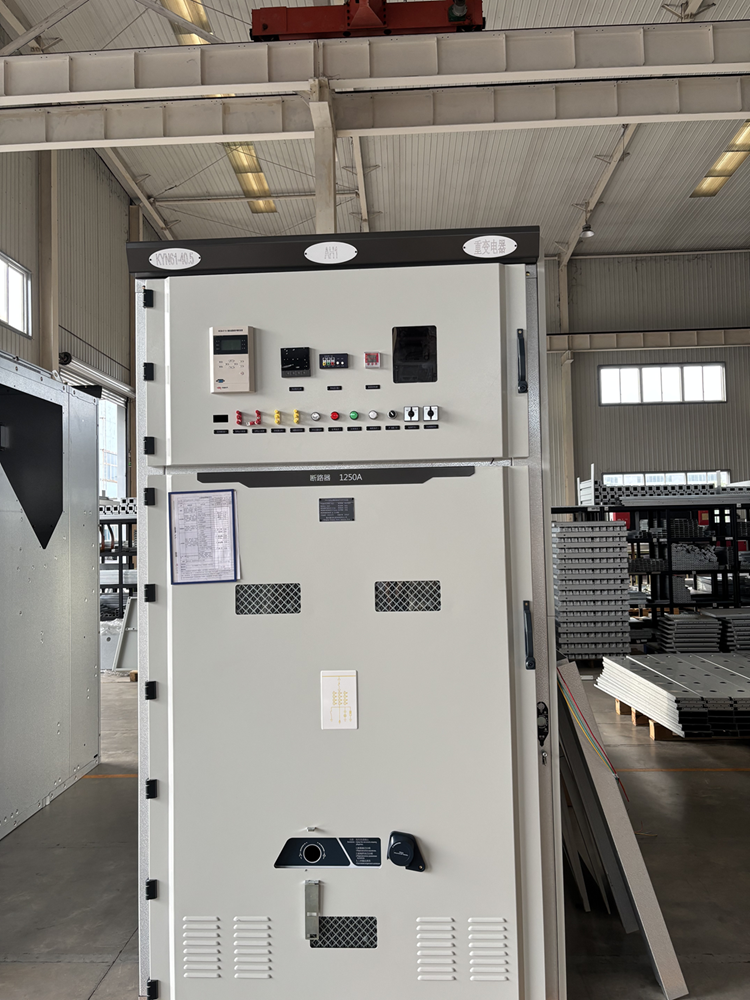
KYN61-40.5 Indoor AC Metal-clad Removable Switchgear
Chongqing Transformer Co., Ltd.
Perfluorinated Ionic Membrane-CM-10N Series Membrane
Guizhou Juneng Century Technology Co., Ltd