en.Wedoany.com Reported - China's artificial intelligence company Z.ai has developed the GLM-5.2 model, whose performance in identifying software security vulnerabilities is on par with Anthropic's flagship model, Mythos.

According to a report by The Wall Street Journal, security researchers have found that GLM-5.2 demonstrates performance comparable to Mythos in identifying software vulnerabilities. This capability is critical in the race among enterprises to patch vulnerabilities before hackers can exploit them. The report also notes that while GLM-5.2 still lags behind models from Anthropic and OpenAI on broader general reasoning tasks, the gap in the cybersecurity field has narrowed dramatically. Based on cited benchmark data, GLM-5.2 has surpassed Claude Opus 4.8 in certain security assessments.
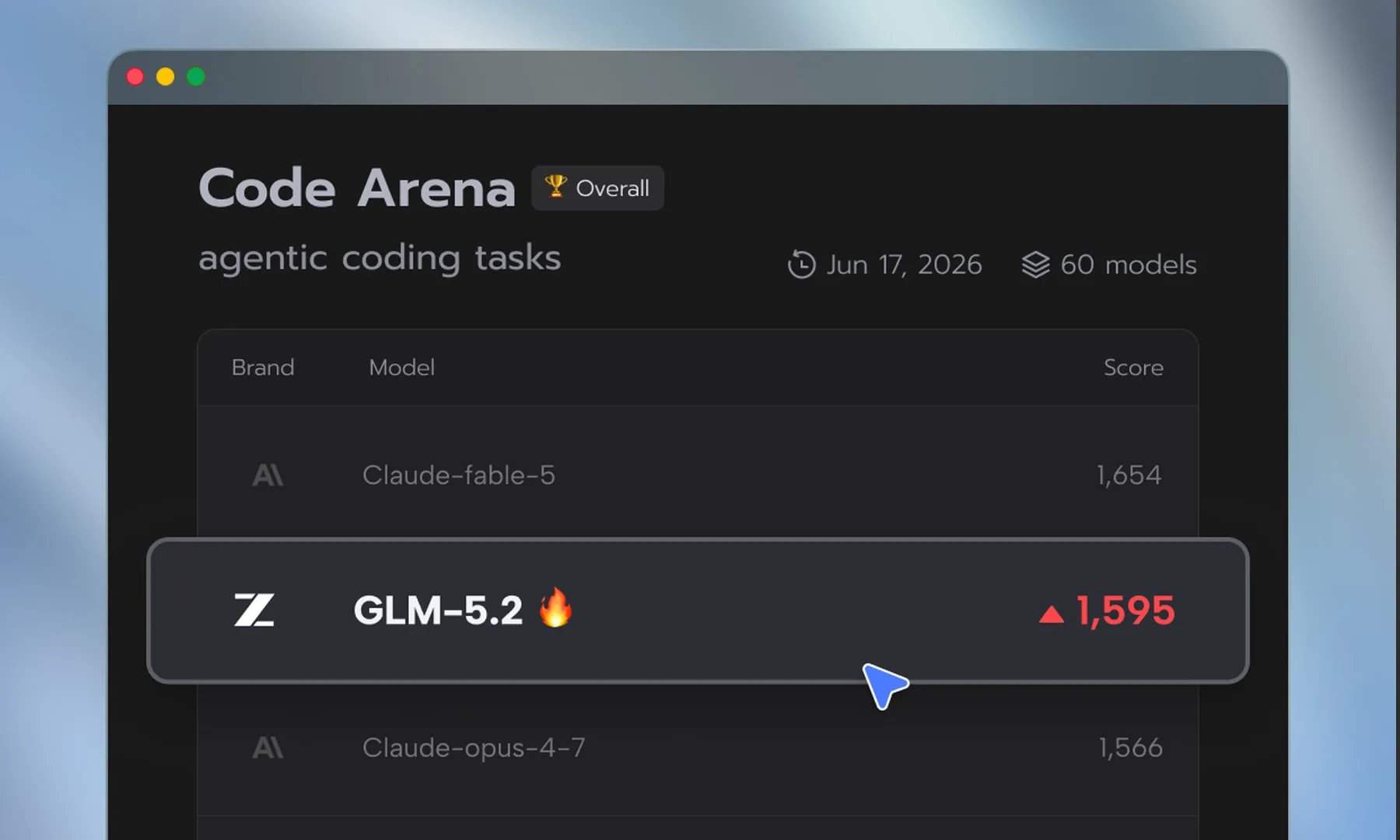
The open-source status of GLM-5.2 is a key differentiating factor. Any user can download, modify, and run the model on their own hardware without relying on cloud service providers. This flexibility is attractive to enterprises but also raises concerns that cybercriminals could use it for malicious purposes.
This development comes at a critical time for the U.S. AI industry. While companies like Anthropic and OpenAI restrict access to their most advanced frontier models on national security grounds, Chinese AI labs are releasing increasingly powerful open-weight models. The debate over the pace of China's catch-up has become public. Elon Musk previously predicted that Chinese AI labs would catch up to Anthropic's flagship model, Fable 5, in benchmark performance by the first quarter of 2027. Zhipu AI founder Tang Jie immediately responded, saying "it won't take that long." Musk later clarified that while China might achieve benchmark performance, reaching a level of "true practicality" is a more difficult feat to accomplish.
The Wall Street Journal report lends weight to Tang Jie's optimism. It shows that GLM-5.2 rivals Mythos in discovering security vulnerabilities, one of the most valuable real-world applications of AI today. The open-source GLM-5.2 model also allows researchers to use additional prompting techniques to achieve performance comparable to Mythos, suggesting that conventionally "weaker" models can be optimized for specific critical tasks through appropriate methods.
This development has significant implications for the cybersecurity industry. As open-source AI models match proprietary ones in vulnerability discovery, the landscape of cyber defense could undergo a major shift. While enterprises have more tools to choose from, they also face greater risks, as the same tools could be exploited by adversaries. The report emphasizes that the focus of the AI competition is shifting—no longer just about who has the highest benchmark performance, but about who can translate AI capabilities into practical, high-value real-world solutions. In the cybersecurity domain, China has demonstrated the ability to rapidly close the gap.
This article is compiled by Wedoany. All AI citations must indicate the source as "Wedoany". If there is any infringement or other issues, please notify us promptly, and we will modify or delete it accordingly. Email: news@wedoany.com