en.Wedoany.com Reported - After nearly a decade, China has returned to the top of the TOP500 list of the world's fastest supercomputers. The supercomputer, named LineShine, outperforms the U.S. system El Capitan by more than 20% in computing power.
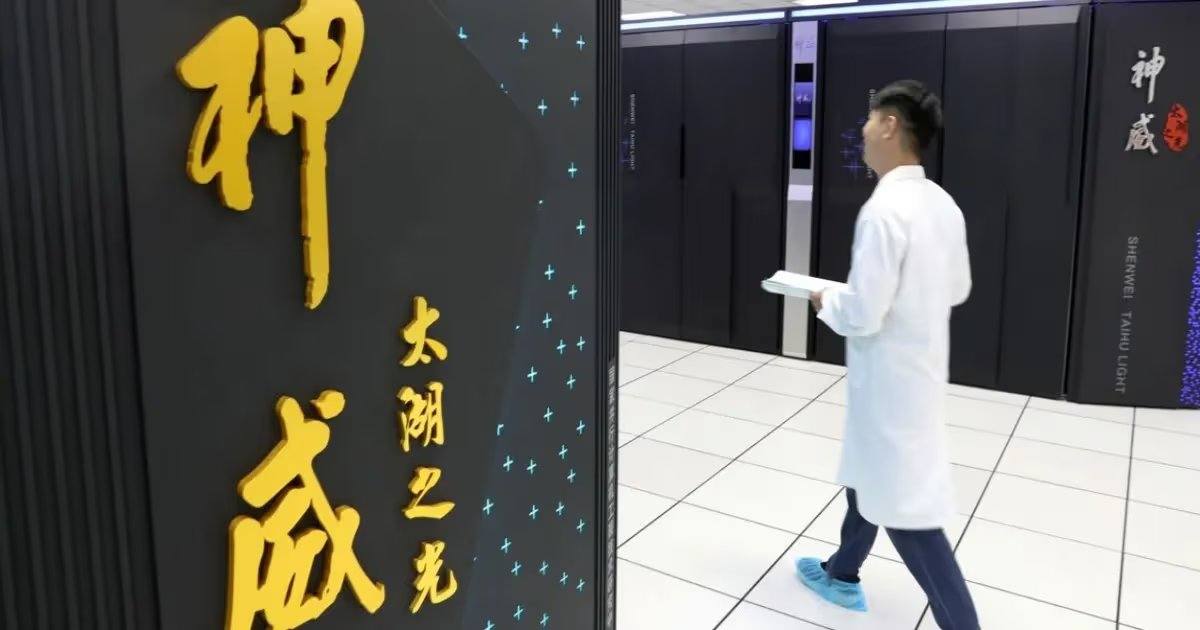
LineShine consumes approximately 42.2 megawatts of power and achieves a performance of 2.198 exaflops, meaning it can execute over 2 quintillion operations per second, surpassing El Capitan, which has held the top spot since 2024. Its unique feature lies in its architecture, which does not use graphics processing units (GPUs) but relies solely on central processing units (CPUs). The entire infrastructure is built on China-made hardware and software, utilizing the LingKun platform, consisting of approximately 45,000 LX2 processors, each with 304 cores running at 1.55 GHz. These nodes are connected via a high-speed network called LingQi, and the operating system is based on Linux, using Kylin OS.
During the first term of Donald Trump and the presidency of Joe Biden, the United States imposed strict export controls on components, software, and platforms related to advanced computing to slow China's technological progress. These restrictions have been further intensified under the current Trump administration, particularly through tariffs and import restrictions on GPUs, advanced chips, and other components related to artificial intelligence (AI). In response, Beijing has also taken similar measures. Affected by these restrictions, China has increased investment in new architectures and technologies, shifting to develop computing systems that can compete with the U.S. In this context, U.S. technology restrictions have become a major catalyst driving China's independent innovation.
LineShine's return to the top not only means possessing the world's fastest supercomputer but also demonstrates that China's tech industry can still develop without access to U.S. key technologies. This achievement is interpreted as a milestone beyond benchmark numbers—a geopolitical statement. It has reshaped the competitive landscape, with a CPU-based architecture proving the feasibility of achieving exascale performance. The LingQi network plays a critical role in reducing latency and accelerating data exchange between processors, while the use of a self-developed operating system ensures security and technological independence. International technology competition is driving faster innovation, and faster supercomputers will provide greater capabilities for scientific research, climate modeling, drug discovery, and artificial intelligence. Looking ahead, competition between China and the U.S. in high-performance computing is expected to intensify further, with both countries continuing to invest in research and development to build faster, more efficient, and more advanced systems.
This article is compiled by Wedoany. All AI citations must indicate the source as "Wedoany". If there is any infringement or other issues, please notify us promptly, and we will modify or delete it accordingly. Email: news@wedoany.com