Metropolitan Bank of Chicago Evaluates Google Cloud Solutions to Advance AI, Data, and Hybrid Security
en.Wedoany.com Reported - Data friction is the first common challenge encountered by Metropolitan Bank of Chicago. Many banks still rely on on-premises legacy hardware to run core systems and use batch data feeds for customer analysis. This approach slows down decision-making and limits the practical application of generative AI. A 2023 Google Cloud survey of U.S. banking executives found that 49% of respondents believe the greatest benefit of AI is improving operational efficiency and cost savings, while 45% cite better data and predictive analytics as key outcomes. However, project progress often stalls whenever a new model requires extracting customized data from COBOL-based core systems or SQL Server instances in suburban data centers.
Security complexity presents another challenge. A hybrid topology connecting branches with multiple data centers can lead to inconsistent firewall policies. Teams often need to manually review each new application, introducing delays. Meanwhile, regulators such as the Federal Reserve, the Office of the Comptroller of the Currency (OCC), and the Federal Deposit Insurance Corporation (FDIC) collectively emphasize that banks using public cloud must demonstrate strong operational resilience and third-party risk management. Therefore, banks considering cloud services seek a path that allows gradual migration while maintaining full auditability.
Cost predictability has become a board-level focus. Leadership teams want to shift from a capital expenditure model tied to hardware refresh cycles to an operational expenditure model aligned with usage, yet they still expect clear cost forecasts. This is particularly important for analytics sandboxes, where resource consumption can grow rapidly as data scientists experiment with large language models.
Banks in the region typically evaluate cloud modernization options by focusing on data infrastructure, artificial intelligence capabilities, and security architecture. Each domain requires different decisions. Data evaluation often begins with reviewing existing data warehouse and data lake architectures. Teams examine whether their SQL Server, Teradata, or Oracle environments support real-time data feeds or rely on nightly ETL batch processing. IDC reports that over 65% of banks globally plan to prioritize cloud-based data platforms by 2025 to support real-time risk, personalization, and regulatory reporting. Consequently, buyers build evaluation frameworks around long-term scalability rather than direct migration.
The AI evaluation phase centers on whether the organization prioritizes customer-facing capabilities, internal productivity tools, or risk scoring models. Wells Fargo expanded its strategic partnership with Google Cloud to provide employees with AI tools that automate routine tasks and improve customer service, offering a reference template for promoting such initiatives across retail and investment banking. Banks evaluating similar models typically compare model hosting options, data isolation implementation methods, and whether vector search capabilities integrate with existing document archives across different cloud providers.
Security evaluation is often driven by controls required for audits. Some teams map their architecture to the National Institute of Standards and Technology (NIST) Cybersecurity Framework and SP 800-53 controls, while others prefer structures aligned with ISO 27001. Buyers focus on how logging, packet capture, and IAM structures integrate with their Security Information and Event Management (SIEM) systems or compliance tools. They also assess how hybrid connectivity works, as several Chicago banks still run check processing or card systems on on-premises mainframes.
Sogeti US addresses these issues by guiding technology teams toward a deployment model combining on-premises data centers with cloud-hosted services. Once a bank chooses a direction, a phased deployment is typically adopted rather than a large-scale migration. The initial phase usually focuses on establishing secure network connectivity. Some institutions start with IPSec VPN tunnels and then transition to dedicated interconnects once throughput and reliability requirements are clearer. Routing architecture, NAT policies, and overlapping IP ranges often become early obstacles.
Data migration typically follows next. Teams prioritize migrating analytics workloads, as these systems are less tied to daily transactions. This phase includes refactoring ETL pipelines, establishing a governance layer, and configuring role-based access within the cloud IAM structure. Banks under strict regulatory scrutiny often integrate cloud audit logs directly into their compliance dashboards before moving any sensitive data.
AI services usually appear in later stages. Financial institutions may first test internal use cases, such as document summarization or call center transcription analysis. This helps refine human-in-the-loop workflows and bias control mechanisms before introducing customer-facing systems. Many institutions emphasize that processes must align with internal model risk management policies, including input sanitization and output monitoring procedures.
Cross-functional coordination is critical throughout all phases. Infrastructure teams handle connectivity, data teams manage data ingestion and transformation, and governance teams ensure compliance with regulatory expectations at every step. Partners like Sogeti US can help normalize these workflows and accelerate architectural decisions.
Banks evaluating outcomes track improvements directly tied to business objectives. In the data domain, teams seek more timely access to customer attributes, reduced manual data stitching, and the ability to run cross-product analyses without multiple extractions. Many banks expect these capabilities to support smarter marketing and risk decisions, aligning with McKinsey's 2023 estimate that advanced analytics and AI can boost retail banking operating profits by up to 25%.
In AI, leaders measure the speed of deploying new models, the frequency of business units using AI assistants, and the internal team's ability to manage prompt controls. They also consider whether generative tools significantly reduce manual review cycles in loan or compliance processes. For security, progress is assessed by the degree of log and IAM policy integration, reduction in policy exceptions across branches, and improved visibility in resilience reporting. Regulators emphasize that banks need traceability for cloud workloads, so buyers focus on how well cloud logs integrate with internal audit tools.
As Chicago banks explore adopting Google Cloud solutions, buyers generally find that incremental movement reduces risk, especially when data governance systems are still being refined. Early investment in network architecture saves time when transactional systems later need connectivity. Aligning deployment with NIST or ISO frameworks simplifies audit conversations, as regulators already expect these control structures. Evaluators also find that clearly defining which workloads will migrate first and which will remain on-premises long-term prevents sprawling hybrid topologies. A structured roadmap keeps migration predictable and minimizes rework.
Banks outside Chicago and community banks face similar constraints. The same evaluation path applies, especially as core banking service providers like Jack Henry partner with Google Cloud to support next-generation technology stack modernization for financial institutions. Buyers generally need to clarify data objectives, define an AI vision, align with regulatory frameworks, and purposefully design hybrid connectivity. Most banks deploy in sequential phases. Establishing the network foundation typically comes first and requires internal review. Data migration follows, taking longer due to the coordination of governance and lineage checks. AI services are added after security and data structures are stable.
This article is compiled by Wedoany. All AI citations must indicate the source as "Wedoany". If there is any infringement or other issues, please notify us promptly, and we will modify or delete it accordingly. Email: news@wedoany.com
Related Products


Multi-function Marine Monitoring Low-altitude Detection Radar Sea-air Boundary Ocean Dynamic Environment Measurement
Chengdu Dixin Technology Co., Ltd.

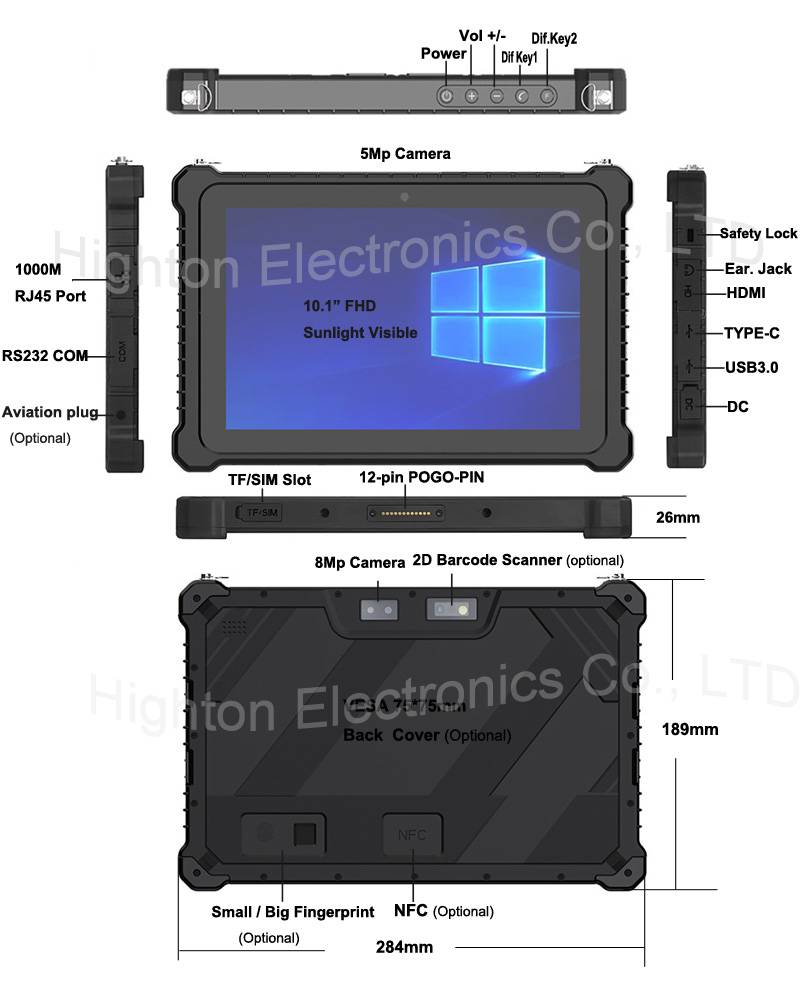
Hot Selling 10 Inch Intel N5100 I5 I7 FHD 8 +128GB 16+256GB Win10 Pro Win11 Pro 4G 5G Rugged Tablet PC Pad with NFC Barcode
Highton Electronics Co., Ltd.
GYTA Type Non-Self-Supporting Aerial/Duct Optical Cable
TONGDING INTERCONNECTION INFORMATION CO., LTD.

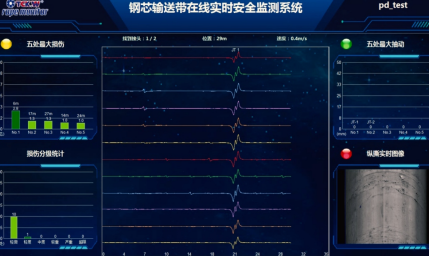
Conveyor Belt Intelligent Monitoring System
LUO YANG WIRE ROPE INSPECTION TECHNOLOGY CO., LTD.