China's Qinghai-Tibet Railway has transported over 104 million passengers in 20 years of operation
en.Wedoany.com Reported - Over the past 20 years of operation, the Qinghai-Tibet Railway has transported more than 104 million passengers. Since its full opening in 2006, this railway has become a vital transportation artery connecting Tibet with inland China, carrying people for family visits, work, study, and travel.
At the entrance of Lhasa Station, students bid farewell to their families as they embark on their educational journeys; in the waiting room of Nagqu Station, located at an altitude of 4,513 meters, migrant workers prepare for their next leg of travel; at the transit rest area of Golmud Station, tourists look forward to the plateau scenery. In the summer of 2006, Gesang Yangjin, who was studying at a university in Beijing, took her first train out of Tibet. At that time, a hard-seat ticket from Lhasa to Beijing cost just over 300 yuan, saving nearly half the fare compared to the previous long-distance bus transfers. Over the past five years, Lhasa Station has sold an average of 85,100 student tickets annually. Quan Jingbo, a passenger service staff member at Amdo Station, recalled that in the early days of operation, herders often asked how trains ran on the tracks; now, passengers more frequently inquire about travel routes to scenic spots like Cuona Lake.
The opening of the Qinghai-Tibet Railway has boosted Tibet's tourism industry. During the Nyingchi Peach Blossom Festival, themed trains carry tourists through the "Snowy Region Jiangnan"; the "Winter Tour in Tibet" policy and cultural tourism incentives have maintained visitor numbers even in the off-season. Hu Shulan, 68, took the "Great Beauty Qinghai · Happy Tibet" tourism train to Lhasa, Nyingchi, and other destinations for a nine-day spring trip. In 2025, the Qinghai-Tibet Railway operated a total of 129 tourism trains throughout the year, serving over 30,000 passengers. Train captain Huang Taisheng noted that the number of steps taken during a single shift has doubled compared to five years ago.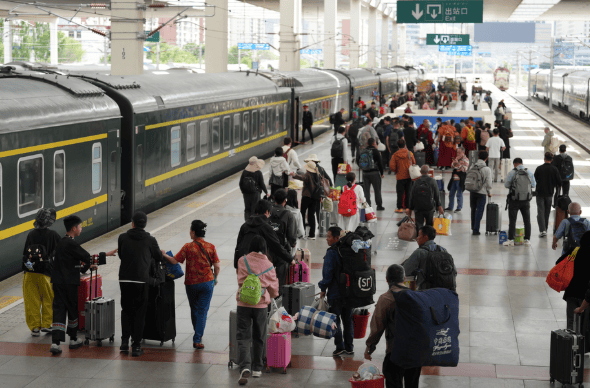
Train equipment has been continuously upgraded. Qinghai-Tibet trains are equipped with two oxygen supply methods: diffuse oxygen supply automatically activates at altitudes above 3,000 meters, maintaining a concentration of around 25%; distributed oxygen supply can reach concentrations of 30% to 45%. Each berth has an oxygen supply interface, and each carriage is equipped with oxygen tubes and masks. The control panel of the oxygen generation system has been upgraded from buttons to a touchscreen. Inverters installed under the carriages convert high-voltage direct current from the power car into stable industrial-frequency alternating current, supplying lighting, sockets, and oxygen generators. Cui Zhibin, workshop leader of the Lhasa locomotive and rolling stock maintenance base's passenger car operation workshop, inspects and verifies each train daily, checking every item one by one.
An intelligent verification system has been put into use. Yeshi Taje, Party branch secretary of the Lhasa Passenger Transport Operation Workshop, explained that before 2019, stations relied on paper tickets, and passengers frequently lost their tickets. Now, passengers simply place their second-generation ID card near the gate and complete facial recognition, passing through in just two to three seconds. In February 2025, when the Z165 train reached the Tanggula Pass, an elderly Tibetan man named Deji, over 80 years old, suddenly experienced high blood pressure. Train captain Xu Jiarui coordinated an empty berth, provided oxygen bags and a first aid kit, and helped the man recover. The dining car also offers freshly cooked dishes using potted vegetables, as well as roasted lamb leg, yak yogurt, and butter tea.
This article is compiled by Wedoany. All AI citations must indicate the source as "Wedoany". If there is any infringement or other issues, please notify us promptly, and we will modify or delete it accordingly. Email: news@wedoany.com
Related Products

One-Stop Steward Service for the Entire Logistics System Integration Chain
Zhongding Intelligent (Wuxi) Technology Co., Ltd.
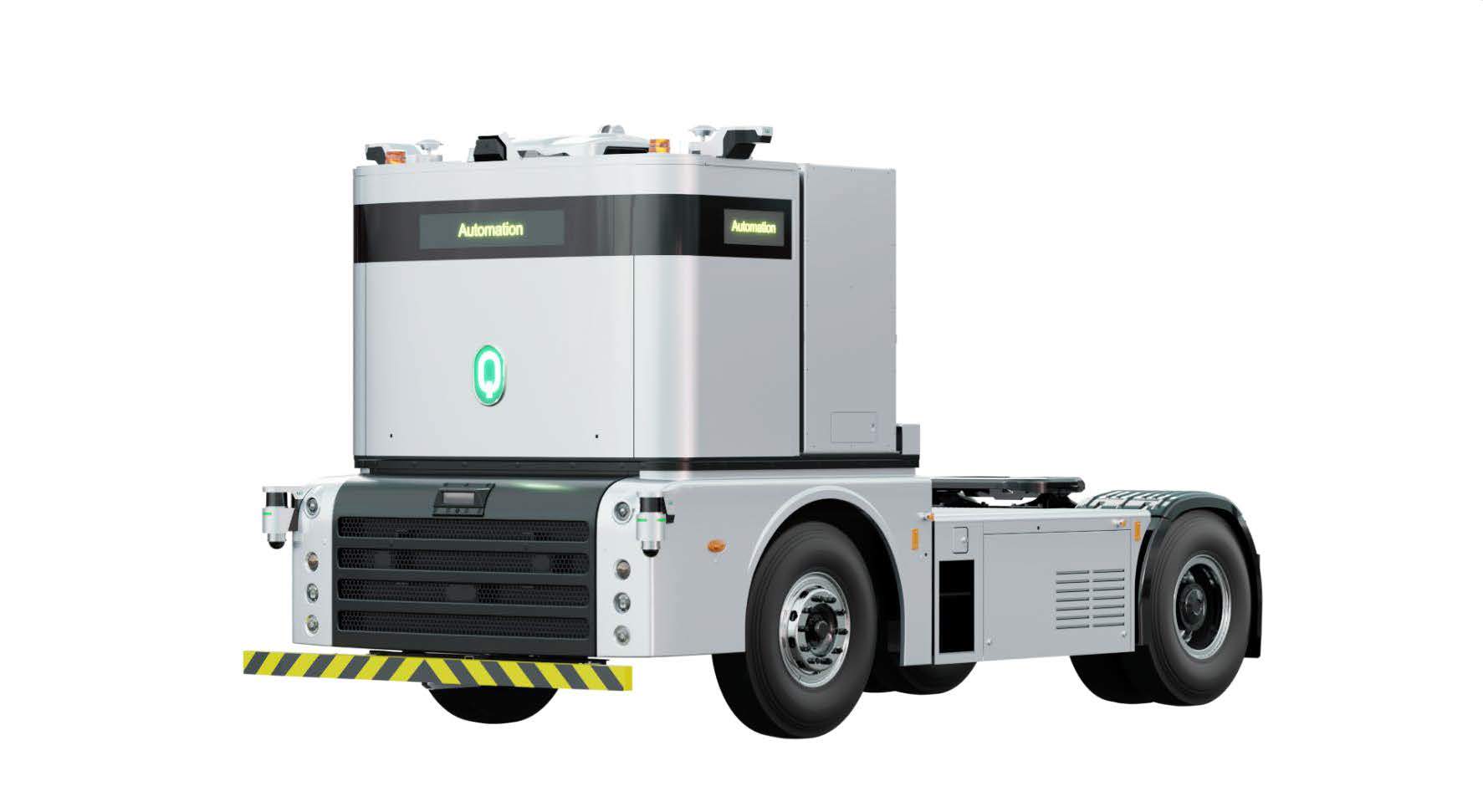
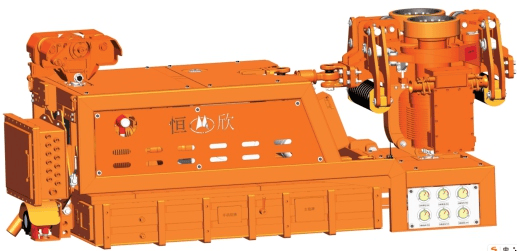
Explosion-proof lithium battery dispatching monorail crane locomotive (permanent magnet frequency conversion integrated machine)
Xiangtan Hengxin Industrial Co., Ltd.
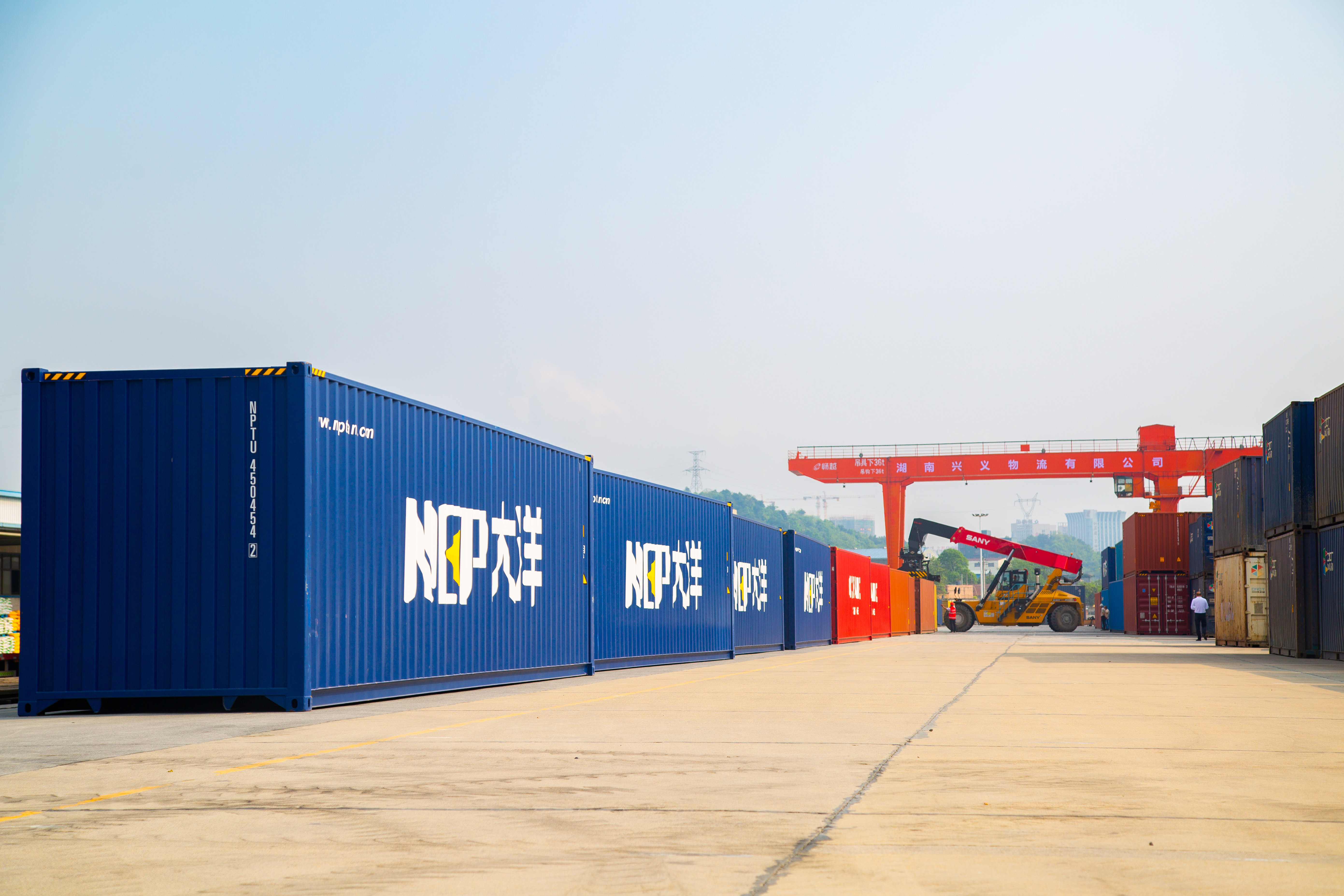
China - Alashankou/Khorgos - Europe Full Range Transportation (Mala/Hamburg/Duisburg/Budapest, etc.)
Shenzhen Neptune Logistics Co., Ltd.