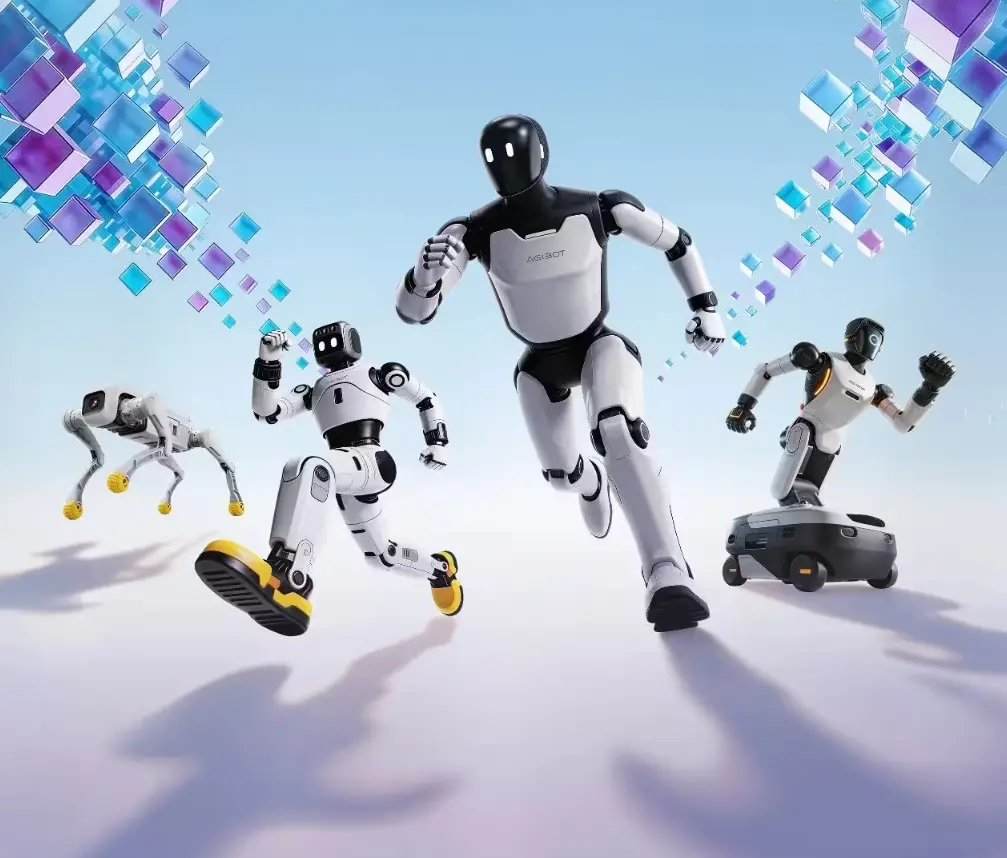
en.Wedoany.com Reported - China's Unitree Technology recently announced that the official price of its bipedal humanoid robot R1 has been reduced from 39,900 yuan to a starting price of 29,900 yuan, with spot sales available immediately. The company's global market share for humanoid robots stands at 32.4%, with a gross margin of 60%, both the highest in the industry.
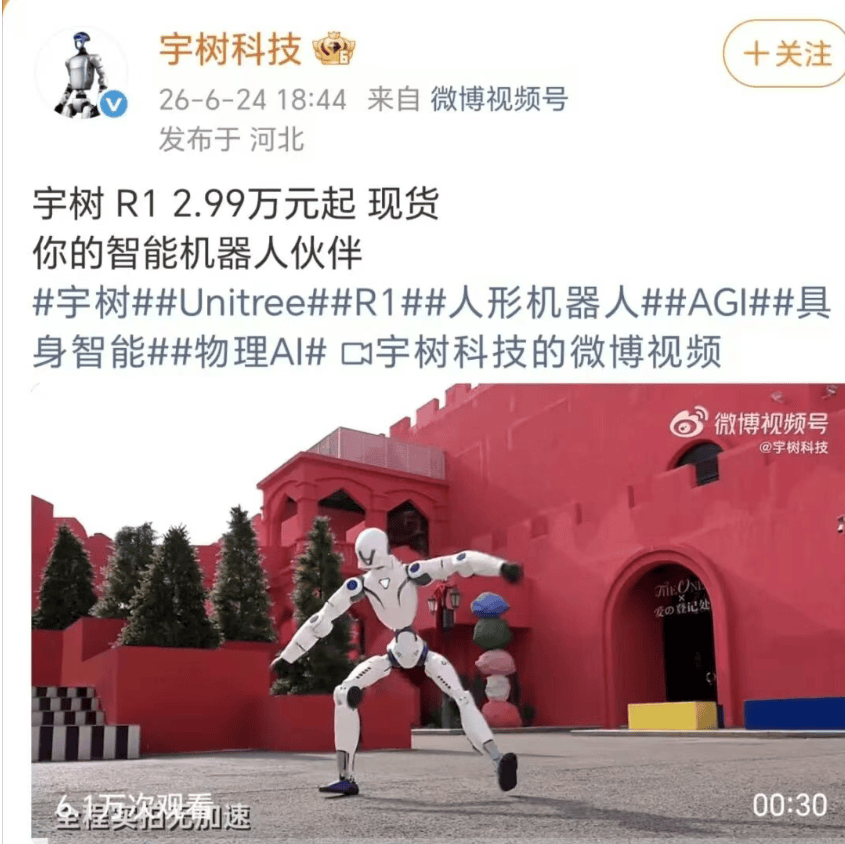
This is not Unitree's first price cut. In the past two years, prices in the humanoid robot industry have been steadily declining. According to Unitree's IPO prospectus, the unit price of its humanoid robots dropped from 593,400 yuan in 2023 to 166,400 yuan in 2025, a cumulative reduction of over 400,000 yuan in two years. The unit price of quadruped robots also gradually decreased from 38,300 yuan in 2023 to 30,300 yuan in 2025. On the consumer end, brand-new Unitree and Songyan Power humanoid robots have been priced as low as 29,900 yuan and 9,998 yuan per unit.
The price-cutting trend has also affected the second-hand market. Prices for older models and prototypes from 2024 to 2025 have dropped significantly. For example, the early research version of Unitree H1, Fourier GR-1, and Deep Robotics DR series, originally purchased at prices between 300,000 and 800,000 yuan, now have second-hand market prices ranging from 30,000 to 60,000 yuan. Engineering prototypes that required nearly one million yuan for pre-orders two years ago are now being cleared out in bulk on second-hand websites and disassembly markets at 50,000 yuan per unit.
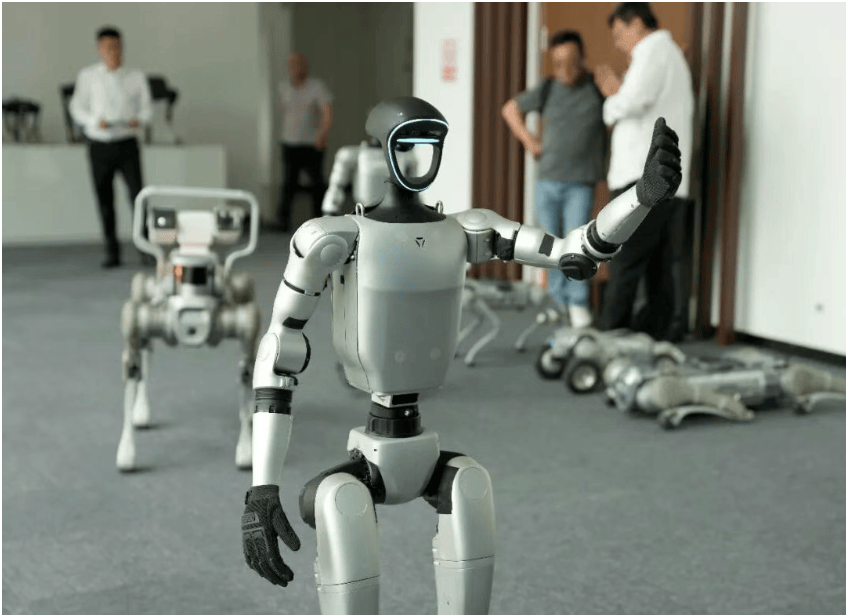
The decline in humanoid robot prices is mainly driven by factors such as the maturity of the supply chain, standardized design, and increased production volume. The three core components with the highest cost proportion in humanoid robots are reducers, servo systems, and controllers, collectively accounting for over 70% of total costs. As of May this year, the localization rate of these core components has risen to between 75% and 90%. According to data disclosed by Tesla, the material cost of a robot completely excluding the Chinese supply chain is as high as $131,000. Once relying on China's local upstream and downstream supply chain, costs can be reduced by nearly 70%.
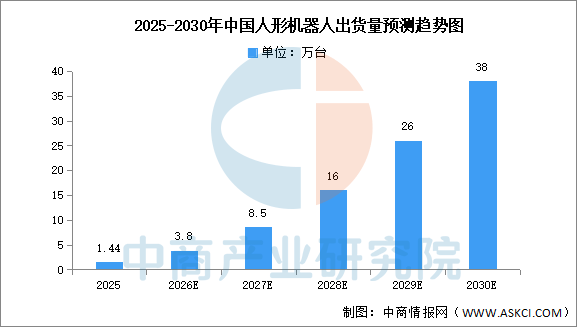
In recent years, the humanoid robot track has gained momentum, with a surge in capital and talent influx, leading to a concentrated explosion in production capacity. Large-scale manufacturing capabilities have further diluted costs. Relevant data shows that in 2025, China's humanoid robot shipments reached 14,400 units, with Unitree shipping over 5,500 units, ranking first globally. It is expected that by 2026, as production lines at UBTECH, Zhiyuan, and Aoyi Technology factories in Wuxi and Shenzhen fully ramp up, China's annual humanoid robot production is expected to cross the scale of 100,000 to 200,000 units.
The supply chain effect is also evident. Currently, a large number of humanoid robots priced between 29,900 and 85,000 yuan use Intel products for their depth cameras, LiDAR from DJI, main control chips from Rockchip, and memory and storage from domestic mobile phone and PC supply chains such as Biwin and Longsys. According to the latest 2026 report, the total material cost of the Unitree G1 basic model is only 41,600 yuan, with core joint costs at 27,500 yuan. Even with significant price cuts, the gross margin remains around 40%.
The R1, subject of this price reduction, is Unitree Technology's third humanoid robot, released in July last year. It weighs approximately 25 kg, is equipped with 26 high-precision joints, supports voice and image multimodal large model interaction, and offers development and customization capabilities. Its standing dimensions are 1230 mm in height, 357 mm in width, and 190 mm in depth. Unitree Technology won the 2025 "Shanghai Design 100+" AI Innovation Design Award with the R1, and the product was also selected as one of Time Magazine's Best Inventions of 2025. In addition to the R1, Unitree Technology's general-purpose humanoid robot product line also includes the H2, G1, and H1/H1-2 models.
This article is compiled by Wedoany. All AI citations must indicate the source as "Wedoany". If there is any infringement or other issues, please notify us promptly, and we will modify or delete it accordingly. Email: news@wedoany.com