2026 China Humanoid Robot Industry Market Prospect Forecast Research Report
en.Wedoany.com Reported - The practical application of humanoid robots is a key focus of the market. 2026 is expected to be a major year for vertical applications of humanoid robots. As the level of robot generalization improves, industrial and commercial sectors will gradually see the implementation of humanoid robots in the coming years.
Definition
Humanoid robots, also known as anthropomorphic robots or human-like robots, refer to robots with human form and functions, possessing human-like limbs, movement and operational skills, as well as perception, learning, and cognitive abilities. Enabling humanoid robots to move flexibly and autonomously like humans is an extremely complex systems engineering. The main challenges include:
Humanoid Robot Industry Development Policies
In recent years, China's humanoid robot industry has received high attention from governments at all levels and strong support from national industrial policies. The state has successively issued multiple policies to encourage the development and innovation of the humanoid robot industry. Industrial policies such as the "Notice on Jointly Carrying out the 2026 Special Action for Humanoid Robots and Embodied Intelligence Real-World Training," "Humanoid Robot and Embodied Intelligence Standard System (2026 Edition)," and "Implementation Opinions on the 'AI + Manufacturing' Special Action" provide a clear and broad market prospect for the development of the humanoid robot industry and offer enterprises a favorable production and operation environment. The specific details are listed below:
Current Status of the Humanoid Robot Industry
1. Shipment Volume
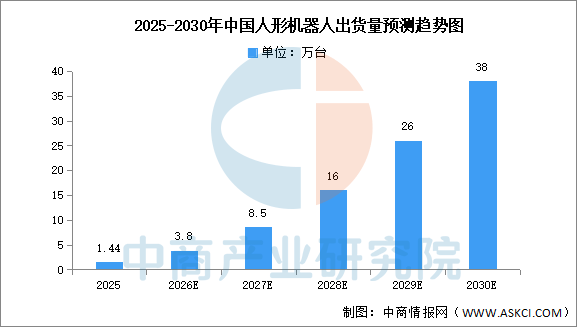
Driven by policies including humanoid robots in the new quality productive forces procurement list and the concentrated release of training orders from automotive and 3C factories, the shipment volume of complete humanoid robots in China continues to rise. According to the "2026-2031 China Humanoid Robot Industry Analysis and Development Prospect Research Forecast Report" released by China Business Industry Research Institute, the shipment volume of humanoid robots in China reached 14,400 units in 2025, accounting for 84.7% of the global total. Analysts at the China Business Industry Research Institute predict that the shipment volume of humanoid robots in China will reach 38,000 units in 2026 and is expected to reach 380,000 units by 2030, with the global share further increasing to approximately 88%.
2. Market Size
With the rapid increase in shipment volume and the advancement of cost reduction through the localization of core components, the market size of China's humanoid robot industry is steadily expanding. According to the "2026-2031 China Humanoid Robot Industry Analysis and Development Prospect Research Forecast Report" released by China Business Industry Research Institute, the market size of China's humanoid robot industry was approximately RMB 1.55 billion in 2025. Analysts at the China Business Industry Research Institute predict that the market size will reach RMB 3.4 billion in 2026 and is expected to exceed RMB 20 billion by 2030.
3. Competitive Landscape
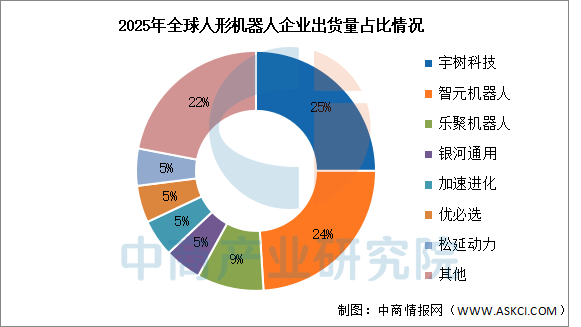
In the global humanoid robot market in 2025, Unitree Technology ranked first with a shipment volume of 5,500 units, capturing 25% of the market; Zhiyuan Robot ranked second with a shipment volume of 5,168 units, accounting for 24%. The next were Leju Robot, Galaxy General, Booster Robotics, UBTECH, and Songyan Power, with shares of 9%, 5%, 5%, 5%, and 5%, respectively.
4. Application Scenarios
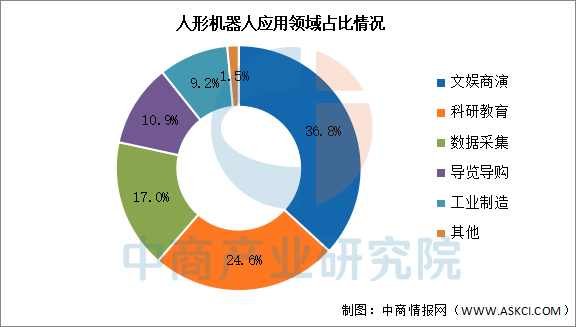
In 2025, the market demand for humanoid robots was primarily driven by scenarios such as entertainment and commercial performances, education and scientific research, and data collection. Among these, entertainment and commercial performances accounted for the highest share at 36.8%. This was followed by scientific research and education (24.6%), data collection (17.0%), guided tours and shopping assistance (10.9%), and industrial manufacturing (9.2%).
Key Enterprises in the Humanoid Robot Industry
1. Unitree Technology
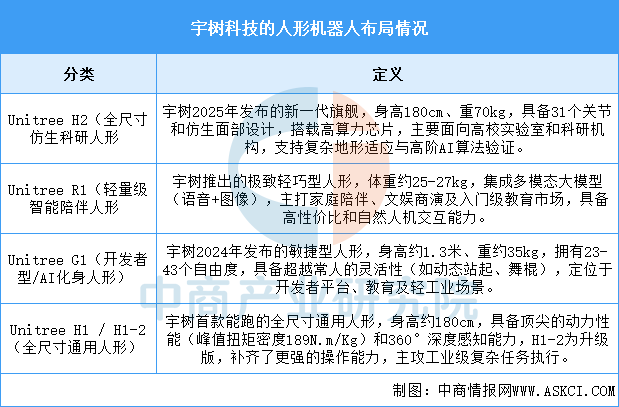
Unitree Technology Co., Ltd. is a world-renowned civilian robotics company, focusing on the independent R&D, production, and sales of high-performance general-purpose legged/humanoid robots and dexterous robotic arms for consumer and industrial levels. Unitree's humanoid robots have formed a gradient product matrix covering full-size scientific research, industrial general-purpose, developer agile, and lightweight companion models: H1/H1-2 are full-size general-purpose humanoids, primarily targeting industrial-level complex task execution and scientific algorithm verification; the H2, released in 2025, further optimizes bionic facial design and joint performance for advanced scientific research scenarios; the G1 is an agile developer humanoid, focusing on education and light industrial debugging; the R1 is an ultra-lightweight companion humanoid, entering home and entertainment scenarios. This overall continues its "high performance + low cost + rapid iteration" route accumulated from quadruped robots.
2. Zhiyuan Robot
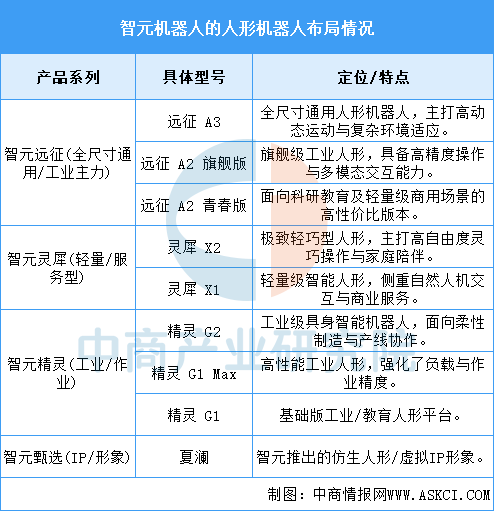
Zhiyuan Robot is a general AI robotics company with embodied intelligence as its core technology direction. Zhiyuan Robot builds a full-stack technology and product system around the three cornerstones of robot hardware, intelligent algorithms, and open platforms, adopting a software-hardware integrated architecture to continuously enhance the robot's capabilities in environmental perception, task understanding, and physical execution. Zhiyuan Robot has formed a multi-form product matrix covering full-size general-purpose, half-size dexterous, wheeled industrial, and specialized cleaning robots. Among them, the Expedition series (e.g., A3, A2 Flagship/A2 Youth Edition) serves as the main full-size general-purpose humanoid, combining high dynamic motion capabilities with multimodal interaction, targeting both entertainment/commercial performances and round-the-clock industrial deployment; the Lingxi series (X2, X1) focuses on lightweight design and high affinity, emphasizing commercial services and educational research; the Elf series (G2, G1 Max, G1) delves into industrial and data collection fields, with the G2, a new generation of industrial-grade interactive embodied operation robot, achieving large-scale deployment on production lines such as 3C manufacturing.
3. Leju Robotics
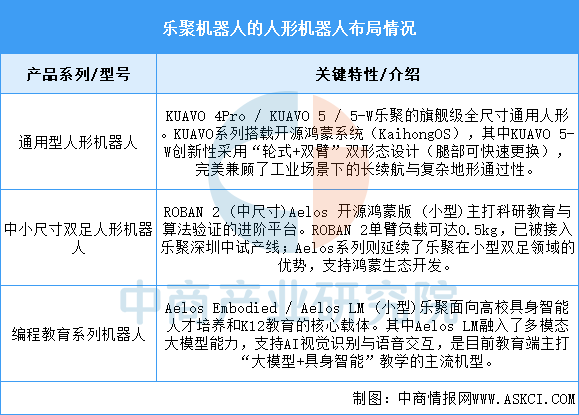
Leju Robotics is a national high-tech enterprise and a national-level specialized and new "Little Giant" enterprise, established in Shenzhen in March 2016. It focuses on the R&D, manufacturing, sales, and industrialization of humanoid robots. The company's core team originates from Harbin Institute of Technology and has formed a product matrix covering large, medium, and small sizes, including the AELOS, ROBAN, and KUAVO series.
4. Galaxy General
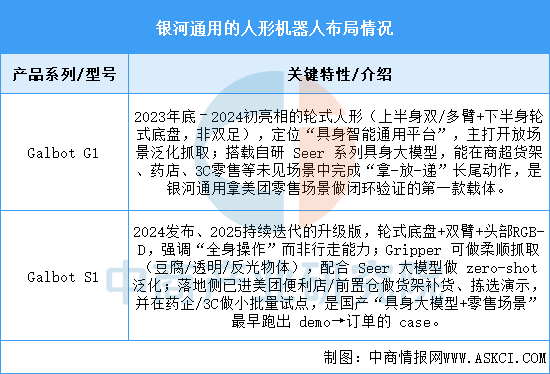
Beijing Galaxy General Robotics Co., Ltd. is a market-leading embodied multimodal large model general-purpose robotics company. Founded in May 2023, Galaxy General is committed to providing general-purpose robot products to global users and has been widely applied in commercial, industrial, medical, and other scenarios.
5. Booster Robotics
Booster Robotics, incubated by Professor Zhao Mingguo's team from Tsinghua University, follows the "humanoid soccer + reinforcement learning + low-cost research platform" route. It differentiates itself from Unitree (mass-produced bipedal), Zhiyuan (embodied large model + industry), Leju (HarmonyOS + education), and Galaxy General (wheeled + retail) – its strengths lie in high-frequency gait control and Sim-to-Real stability. Its product positioning is as a university/research platform "capable of playing soccer, running, and validating reinforcement learning algorithms," rather than for industrial production lines.
Development Prospects of the Humanoid Robot Industry
1. Large Model Empowerment Enhances Embodied Intelligence Levels
The core bottleneck for humanoid robots has long been "cerebellum balance" and "brain decision-making." The rapid progress in domestic AI large models, multimodal perception, and semantic understanding capabilities is pushing embodied intelligence into a practical stage. By integrating vision-language-action models, reinforcement learning simulation platforms, and robot hardware, the industry enables robots to perform complex tasks such as grasping, walking, obstacle avoidance, and even tool use in unstructured environments. This "large model + robot" fusion upgrades humanoid robots from the logic of preset-action industrial robotic arms to generalizable, learnable universal operators, significantly reducing the secondary programming cost for new scenarios. It is a key to unlocking non-factory scenarios.
2. Localization of Core Components Flattens the Cost Curve
Humanoid robots have much higher requirements for the quantity and performance of components such as precision planetary roller screws, harmonic reducers, coreless motors, six-axis force/torque sensors, and inertial measurement units (IMUs) compared to industrial robotic arms. The unit value is highly concentrated in motion execution and perception components. China has years of industrial accumulation in areas like screw grinding, reducer tooth profile machining, torque motor design, and MEMS sensors. It is now leveraging the humanoid robot trend for targeted upgrades and automotive-grade cost reduction. This localization and large-scale practice at the component level helps complete robot manufacturers pull BOM costs from "sky-high prototypes" towards "mass-producible ranges." This is the most realistic prerequisite for humanoid robots to move from exhibition halls to production lines.
3. Gradual Scenario Deployment Validates Product Maturity
The commercialization of humanoid robots will not jump directly to home butlers. Instead, it will likely descend stepwise along the ladder of "automotive factories → 3C electronics production lines → warehousing and logistics → commercial services → homes." Domestically, advanced manufacturing industries like Automotive Industry" target="_blank">new energy vehicles, batteries, and photovoltaics have inherent needs for labor substitution and flexible production lines, and are willing to open trial workstations for humanoid robots. This near-to-far scenario traction helps the industry obtain valuable real-world operational data feedback loops – from fall frequency, battery life degradation, joint overheating, to human-robot collaboration safety boundaries. Each iteration on the production line pushes the robot's reliability from "demonstration level" to "work-hour level" and even "shift level," accumulating engineering confidence for subsequent spillover into more open scenarios.
This article is compiled by Wedoany. All AI citations must indicate the source as "Wedoany". If there is any infringement or other issues, please notify us promptly, and we will modify or delete it accordingly. Email: news@wedoany.com
Related Products
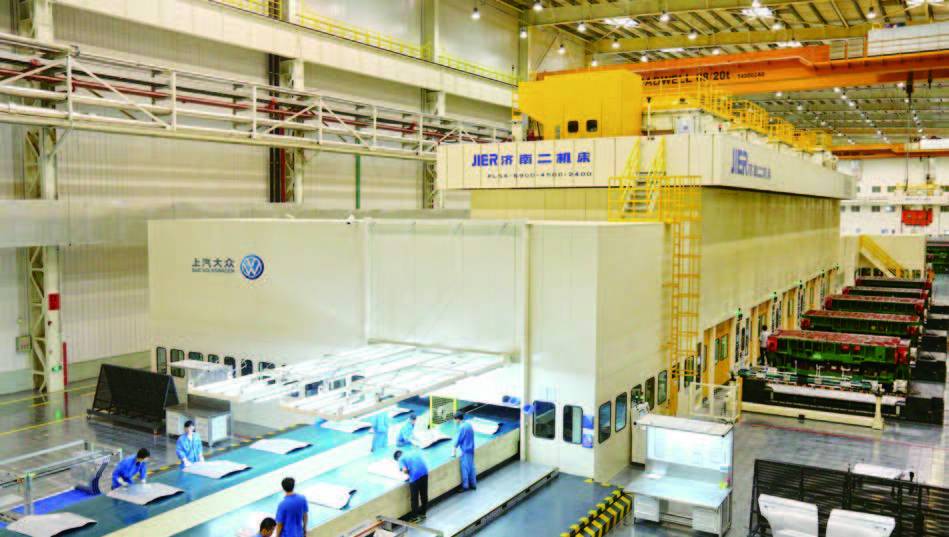

High-Speed Flexible Fully Automatic Stamping Production Line
JIER Machine-Tool Group Co., Ltd.

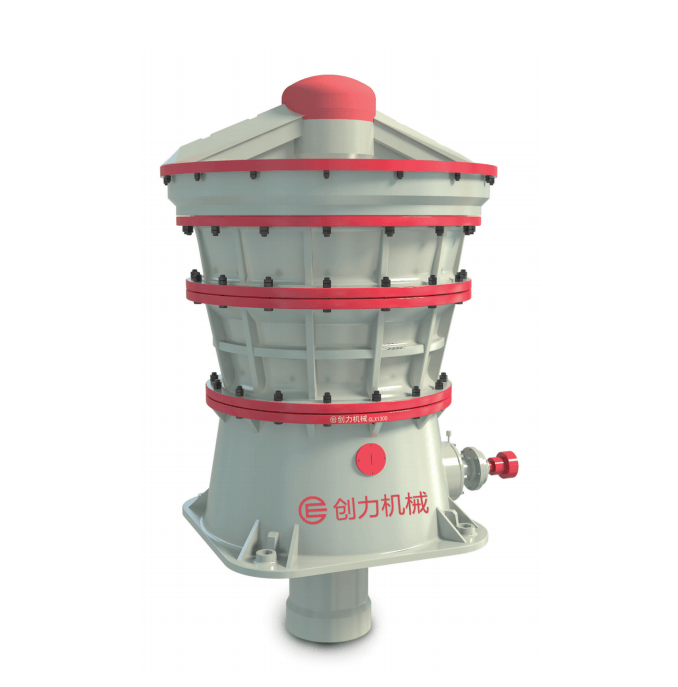
CLX Series Intelligent Hydraulic Gyratory Crusher
Guangdong CHUANGLI intelligent machinery Equipment Co., LTD
Industrial and Commercial Point-Type Gas Detector
Jinan Benan Technology Development Co., Ltd.

CAP1400 main feedwater flow nozzle flowmeter.
Jiangsu Hongda Instrument Technology Co., LTD.