en.Wedoany.com Reported - According to data from the National Cargo Dispatch Registry (RNDC), Colombia's road freight volume in May 2026 reached 14,407,727 tons, an increase of 11.25% compared to the same period in 2025, highlighting the continued role of road freight as one of the country's main economic engines.
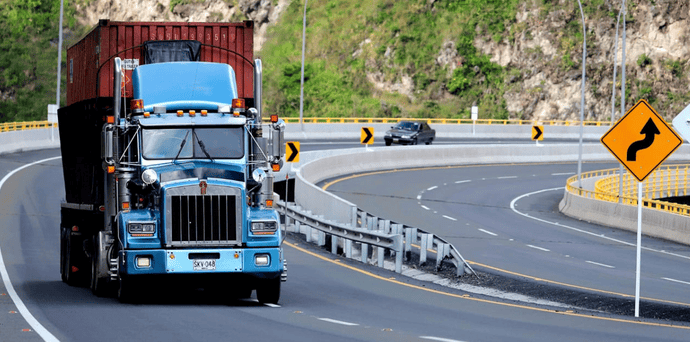
National logistics operations were vibrant, with 2,304 companies participating in May, utilizing 1,133,359 vehicles, generating 1,294,296 cargo manifests, and completing 1,221,693 trips, reflecting the industry's capacity to meet domestic supply, production, and trade demands. Minister of Transport Mafe Rojas stated that the over 11% growth in freight volume indicates Colombia is moving towards a more dynamic, efficient, and competitive logistics system, and the government will continue to promote the development of infrastructure and transportation systems to boost trade and create opportunities.
In solid cargo transportation, corn led with 694,586 tons, followed by non-alcoholic beverages at 597,547 tons, and various products at 524,938 tons. In liquid cargo transportation, key products included refined petroleum or asphalt mineral oils, with a volume of 243.4 million gallons; crude or natural asphalt mineral oils, with a volume of 182.8 million gallons; and biodiesel and its mixtures, with a volume of 13.2 million gallons.
The strategic role of major national logistics corridors was evident. Valle del Cauca, Cundinamarca, and Antioquia concentrated the largest transport tonnages. As points of origin, Valle del Cauca led with 2.56 million tons, followed by Cundinamarca with 2.10 million tons, and Antioquia with 1.61 million tons. As destinations, Cundinamarca topped the list with 1.98 million tons, followed by Antioquia with 1.93 million tons, and Valle del Cauca with 1.86 million tons.
In liquid cargo transportation, Meta and Casanare had the largest volumes of departures, while Casanare led in destinations in May, consolidating its position as one of the main nodes for the transport of hydrocarbons and their derivatives.
This article is compiled by Wedoany. All AI citations must indicate the source as "Wedoany". If there is any infringement or other issues, please notify us promptly, and we will modify or delete it accordingly. Email: news@wedoany.com