Ledong Robot Listed on Hong Kong Stock Exchange, Over 20 Million Units Equipped with Visual Perception Technology
en.Wedoany.com Reported - Ledong Robot recently debuted on the main board of the Hong Kong Stock Exchange. This nearly decade-old company has built its strategy around a core question: how robots perceive space and understand their environment. In the company's view, the competitive focus in the era of Physical AI is shifting from "whose model is smarter" to "who can continuously generate real-world data." High-quality visual perception is the key entry point for converting the physical environment into machine-readable information and consistently producing training data.
Zhou Wei, Chairman of Ledong Robot, stated that perception can be divided into two layers: the first is "sensing," which involves collecting environmental data through sensors; the second is "understanding," which uses algorithms and models to transform data into the robot's cognition of the environment, space, and objects. This means perception is never solely a hardware issue. Sensors are merely the entry point; the real competition lies in who can further process the data collected at the entry point into spatial intelligence.
To equip robots with the ability to understand the real world, Ledong's "perception products" have undergone multiple rounds of technological iteration. At the sensor level, the company believes the future trend inevitably points toward multi-modal fusion, where different data sources such as vision, LiDAR, depth information, and IMU need to be understood in a unified manner. At the algorithm and model level, the company has completed a paradigm shift from manually crafted rule-based algorithms to end-to-end AI models, relying on AI to autonomously learn and perceive the environment.
Ledong has independently developed the LD-SenseWorld physical space interaction large model. This model focuses on physical space intelligence, with the core goal of enabling robots to truly understand space. Its first capability is data preprocessing and multi-modal fusion, aligning, cleaning, and fusing multi-source data back to a common temporal and spatial baseline. Its second capability is feature extraction and spatial tokenization, compressing information such as position, distance, object relationships, and motion states into "spatial tokens." Its third capability is semanticization and physical consistency injection, incorporating physical constraints and semantic understanding to imbue data with causality and behavioral logic.
For Physical AI, the model is just the beginning. What truly determines whether a robot can enter the real world is the data supply capability behind the model. Zhou Wei mentioned that industry data sources mainly fall into three categories: simulation data, laboratory or data factory data, and real-world deployment data. The first two struggle to cover unknown situations in the real world.
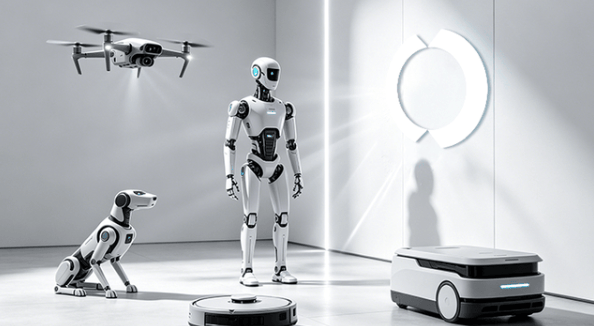
Ledong supports model deployment by building a "three-layer core architecture for Physical AI": the hardware perception layer is responsible for collecting massive amounts of raw real-world data using multi-modal sensors; the model layer, powered by the spatial interaction large model, enables robots to understand the real world; the data layer continuously collects data based on real devices, processes it with the self-developed large model, and outputs structured, semantic, and physically consistent spatial tokens that can be directly fed into world model training. This ultimately forms a "data flywheel" where hardware collects data, data trains models, and models, in turn, define hardware.
Ledong has already built a scale foundation along this path. In 2025, shipments of its core product, the DTOF LiDAR, exceeded 4 million units. The number of devices equipped with Ledong's visual perception technology has surpassed 20 million units. In Ledong's financial reports, robotic lawnmowers represent the company's second growth engine, with products primarily sold to markets in Europe, the Americas, and Australia. According to third-party institutions, the global smart robotic lawnmower market is expected to grow to between $6.25 billion and $10 billion by 2030.
Ledong Robot was co-founded by Zhou Wei and Guo Gaihua in Shenzhen in 2017. Previously, the duo founded INMOTION Technologies, gaining experience in the smart self-balancing scooter field. After years of entrepreneurship, the company faced a challenging macroeconomic environment and a downturn in capital markets in 2022. When investors suggested reducing R&D investment, Zhou Wei decided to go all-in on perception technology, believing it to be a fundamental capability that all robots will need in the future.
From a sensor product company to a "perception infrastructure platform" for Physical AI, Ledong is building a data processing system for the physical world, enabling robots to see and understand the world, allowing models to comprehend the world, and then letting robots continuously evolve based on the real world.
Related Products


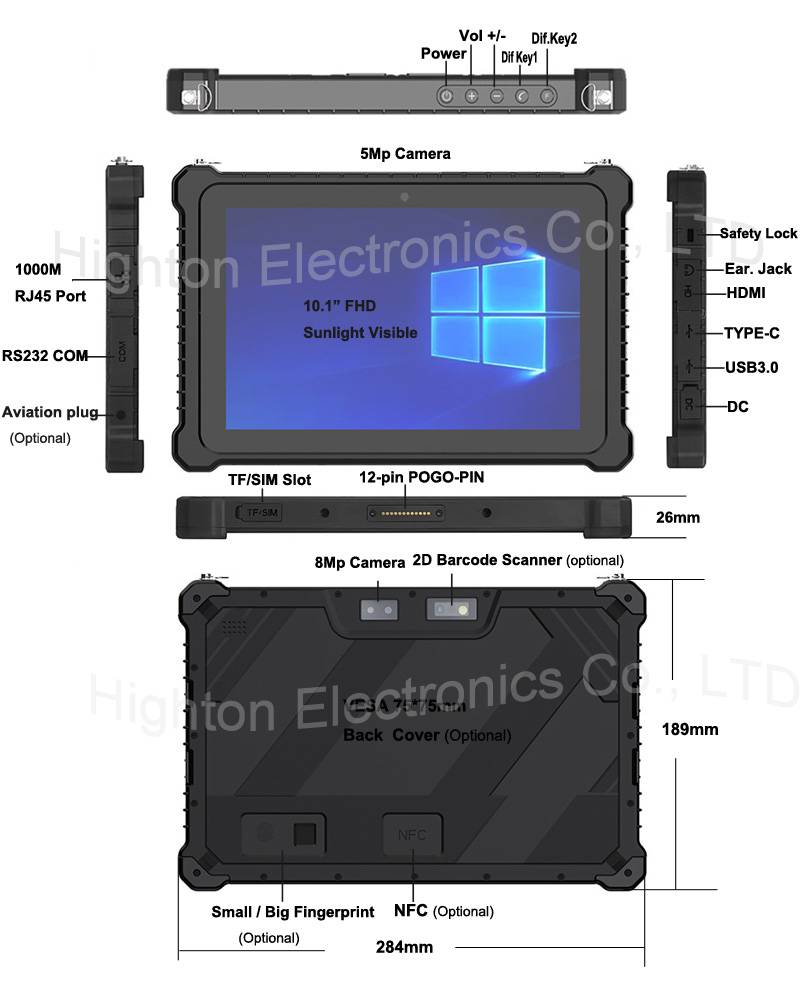
Hot Selling 10 Inch Intel N5100 I5 I7 FHD 8 +128GB 16+256GB Win10 Pro Win11 Pro 4G 5G Rugged Tablet PC Pad with NFC Barcode
Highton Electronics Co., Ltd.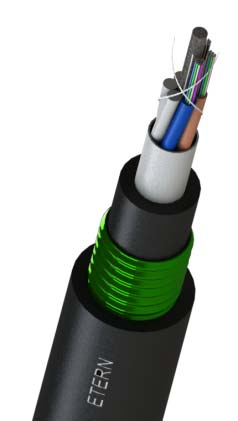

MUX Series Communication Interface Device for Security and Stability Control System
Nanjing NR Electric Co., Ltd.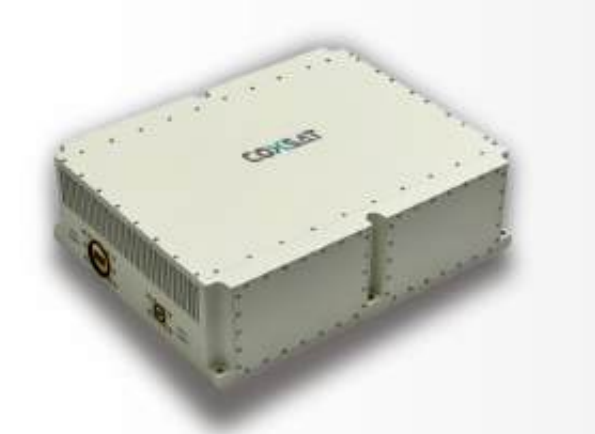



GYTA Type Non-Self-Supporting Aerial/Duct Optical Cable
TONGDING INTERCONNECTION INFORMATION CO., LTD.
20 Inch 1600*900 Full HD 60Hz TFT LED Monitor with VGA and DP Interfaces for Desktop Computers-Business Use
Guangzhou Zanying Optoelectronics Technology Co., Ltd.
Flat Portable Satellite Terminal 0.35m Aperture Manual Portable Terminal
China Starwin Science & Technology Co., Ltd.