SUBCO Launches SMAP Submarine Cable Connecting Four Major Australian Cities
en.Wedoany.com Reported - SUBCO has put the SMAP submarine cable system into service, officially activating this subsea network connecting Sydney, Melbourne, Adelaide, and Perth.

According to SUBCO, this 5,000-kilometer system marks the largest cross-continental capacity increase in Australia in nearly 25 years. The SMAP is designed with 16 fiber pairs and a total capacity exceeding 400 Tbps, making it one of the world's largest submarine cable systems and the first in Australia to adopt what SUBCO calls a "super cable" design.
The route is the first submarine cable to land in Melbourne and Adelaide. It provides operators and service providers with an alternative path across the Sydney-to-Perth corridor. This alternative route is particularly significant as route diversity and network resilience increasingly become focal points for telecom operators, cloud companies, and data center groups.
SUBCO stated that the cable features a fully armored design and employs space-division multiplexing technology. The project was built to support massive traffic growth between Australia's major cities, including demand related to cloud infrastructure and artificial intelligence computing. Anchor customers include Aussie Broadband, Cloudflare, Megaport, 5GN, Swoop, GSL, Host Universal, Kinetix, Leaptel, Telair, and Virtutel. These early commitments indicate that domestic and international network operators were willing to reserve capacity before the system entered service.
SUBCO founder and co-CEO Bevan Slattery called the launch a significant infrastructure milestone for the country. He stated that the activation of SMAP is the result of over three years of effort, connecting Australia's four largest cities for the first time through a single, fully armored, high-capacity subsea system, providing the resilience and scale needed for the digital economy and as a connectivity hub for the Indo-Pacific region. This is not just an upgrade but a generational reset for Australia's infrastructure.
Some customers view the project as a way to broaden network options and reduce reliance on existing routes. In Australia, where distances are vast and backbone paths are relatively few, network outages and congestion can be more difficult to manage, making such projects particularly important.
Related Products


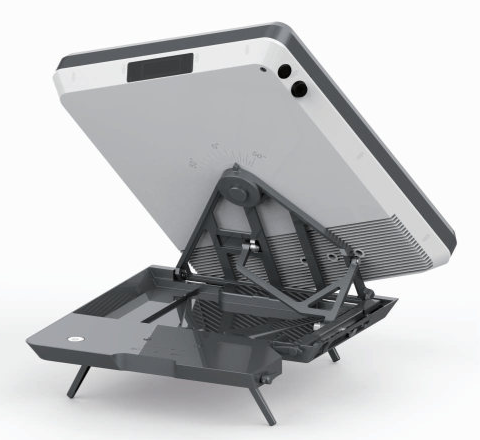
Flat Portable Satellite Terminal 0.35m Aperture Manual Portable Terminal
China Starwin Science & Technology Co., Ltd.
MUX Series Communication Interface Device for Security and Stability Control System
Nanjing NR Electric Co., Ltd.

Industrial and Commercial Point-Type Gas Detector
Jinan Benan Technology Development Co., Ltd.



20 Inch 1600*900 Full HD 60Hz TFT LED Monitor with VGA and DP Interfaces for Desktop Computers-Business Use
Guangzhou Zanying Optoelectronics Technology Co., Ltd.