Mauritania Launches National Cloud Project
en.Wedoany.com Reported - Mauritania officially launched its National Cloud project on June 29 in Nouakchott, aiming to host the digital data and services of government administrative departments on infrastructure located within the country. The launch ceremony was held at the Nouakchott National Data Center.
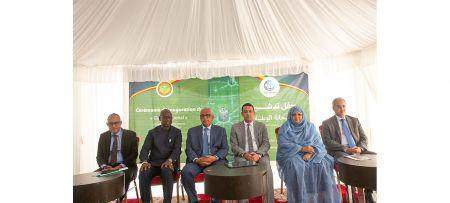
The National Cloud will provide government departments with shared resources in terms of networks, servers, storage, and applications, with the goal of gradually centralizing national digital services and replacing the current fragmented departmental infrastructure. The facility relies on the Tier III-certified Nouakchott National Data Center, built under the framework of the West African Regional Digital Integration Program (WARDIP).
Currently, the ministry has not yet announced a specific timeline for the actual migration of departmental applications and databases to the new National Cloud, nor has it disclosed its storage capacity or the total cost of the infrastructure.
The National Cloud is part of the digital transformation process promoted by the department responsible for digital transformation since its establishment in 2021. The 2022-2025 National Digital Transformation Agenda set a target to increase the added value of the digital sector to approximately $700 million, equivalent to nearly 8% of Mauritania's GDP. The department's 2026 budget is $24.2 million, a 104.6% increase from the previous fiscal year, and it is currently negotiating with the Islamic Development Bank (Banque islamique de développement) for an additional $50 million in financing.
The country's digital indicators remain at a low level: according to DataReportal, Mauritania ranks 165th in the United Nations 2024 E-Government Development Index (EGDI), with an internet penetration rate of 37.4% in early 2026. The 2022-2025 National Digital Security Strategy is still being deployed, which includes the establishment of a national-level cybersecurity incident monitoring and emergency response center (CERT/CSIRT).
Mauritania's initiative is part of the trend toward localizing digital infrastructure in Africa. According to the Africa Data Centres Association (ADCA) report "Data Centres Africa 2026," the continent currently has an active IT capacity of 360 MW, with an additional 238 MW under construction and 656 MW planned, potentially reaching a total capacity of nearly 1.2 GW by 2030. However, Africa accounts for approximately 0.6% of global IT capacity while hosting nearly one-fifth of the world's population.
At the institutional level, the Algiers Declaration on African Telecom Sovereignty, adopted at the April 2026 African Telecom Ministerial Summit, advocates for the development of sovereign cloud solutions and data centers on the continent, as part of the African Union's 2020-2030 Digital Transformation Strategy for Africa. According to ADCA, over 40 African countries have enacted data protection laws, and approximately 15 countries have adopted dedicated national artificial intelligence strategies.
Related Products


Automatic Aiming Laser Remote Obstacle Removal Robot
Pinggao Group Weihai High-Voltage Apparatus Co., Ltd.
Hot Selling 10 Inch Intel N5100 I5 I7 FHD 8 +128GB 16+256GB Win10 Pro Win11 Pro 4G 5G Rugged Tablet PC Pad with NFC Barcode
Highton Electronics Co., Ltd.
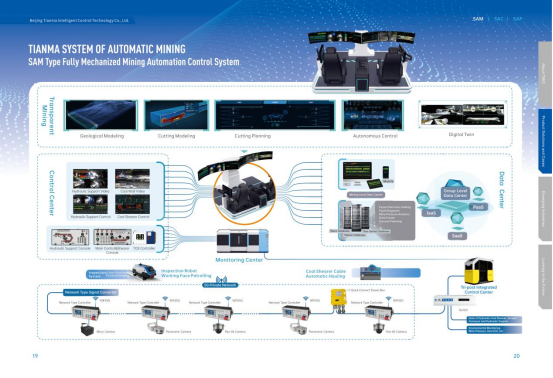
Comprehensive Mining Automation Control System
Beijing Tianma Intelligent Control Technology Co., Ltd.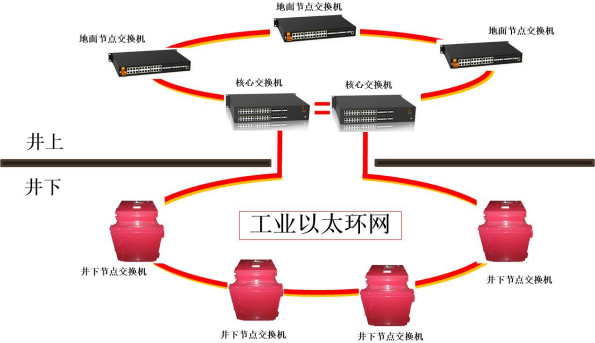
Mine Explosion-proof and Intrinsically Safe Industrial Ethernet Ring Network (10 Gigabit/Gigabit)
Chongqing Mas Sci&Tech Co., Ltd.



G.652.D Wavelength-extended Non-dispersion Shifted Single-mode Optical Fiber
HONGAN GROUP CO., LTD.