French Decathlon and Chinese Capital Invest in British Folding Bike Brand
en.Wedoany.com Reported - French sports retail giant Decathlon and Chinese investment firm BA Capital have acquired stakes in British folding bicycle manufacturer Brompton. This marks Decathlon's first investment in a brand not centered on low pricing, signaling a key step for the world's largest sports retailer into the high-end, design-oriented urban mobility sector.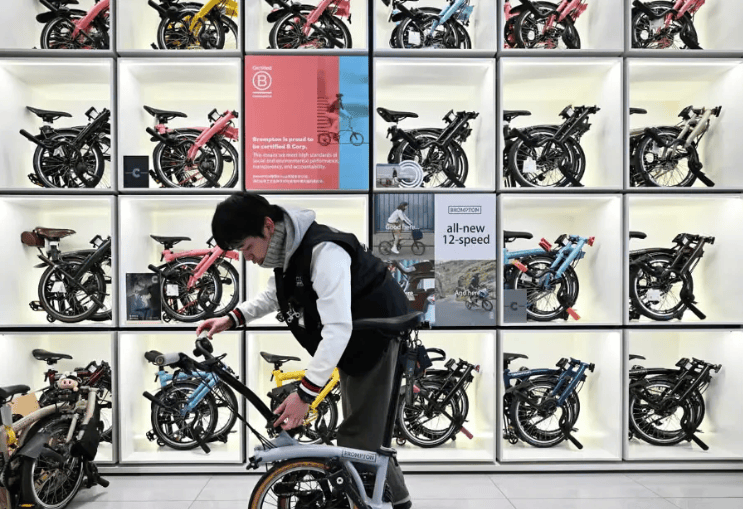
Deal Structure: Minority Stakes, Strategic Significance
According to reports, Decathlon acquired a 10% stake in Brompton, while BA Capital purchased 5%, with the total transaction value estimated at approximately £18 million (around €21.1 million). The joint announcement did not disclose specific terms, but reports indicate the deal was structured as a secondary sale: existing shareholders and employees cashed out part of their holdings, while founder Andrew Ritchie remains the largest shareholder. Decathlon and BA Capital obtained equity stakes but not control.
Brompton stated that the new investment will allow employees and long-term investors to cash out some of their shares, while also gaining market knowledge, supply chain efficiency improvements, and technical support from the new investors.
Clash of Two Models: Affordable Giant Meets Handcrafted High-End Brand
Decathlon has built its scale advantage through affordability and a vertical manufacturing model—selling its own branded products at accessible prices through its own retail stores. In contrast, Brompton is a brand with prices ranging from £999 to £6,000 (approximately €1,170 to €7,020), handcrafted in London, and primarily sold through direct sales or independent bicycle shops.
A highlight of this collaboration is the establishment of dedicated "Brompton Zones" in a select few Decathlon stores, marking the first time Decathlon has introduced a third-party brand on such a scale within its own stores. "We entered this partnership to learn," said Will Butler-Adams regarding the deal with Decathlon Pulse, Decathlon's investment arm.
Franck Vigo, CEO of Decathlon Pulse, added: "What convinced us goes far beyond the product itself: we share the same values, a strong culture of quality, and a long-term vision for sustainable urban mobility. This partnership aims to promote this model while preserving what makes Brompton truly unique."
Decathlon's Expansion Strategy: A Triple Leap from Components to High-End Complete Bikes
This is Decathlon Pulse's third investment in specialized bicycle hardware, following investments in cycling computer manufacturer Magene and sports watch brand Coros. Taken together, this pattern reveals a retailer building a portfolio of related businesses: from components to wearable devices, and now to a high-end consumer brand with fervent brand loyalty.
China Perspective: An Unusual Co-Investor
The involvement of BA Capital highlights the geographic direction of growth potential. The firm's investment portfolio includes Chinese e-bike brand Tenways and Pop Mart, the company behind the Labubu collectible craze. China is already Brompton's largest market, and Will Butler-Adams explicitly stated that BA Capital will bring expertise in the Chinese market. With Decathlon's deep roots in China and one of its largest global store networks, the synergy between these resources is promising.
Timing of the Deal: Recovery and Expansion After a Downturn
Brompton's recent financial data explains why external capital is entering now. According to reports, in the year ending March 2025, sales volume fell by 7.5%, and total sales revenue declined by 1% to £121.5 million. However, due to cost-cutting measures, pre-tax profit rose from less than £5,000 in the previous year to £130,476.
Employee numbers decreased by approximately 50 to 790, partly due to increased UK employer national insurance contributions—which Will Butler-Adams said cost the company around £2 million and about 40 jobs. He noted that in the year ending March 2026, sales have slightly increased, but profits are constrained by investments in new stores and new bicycle models.
Nevertheless, Butler-Adams expressed optimism about the industry's outlook. Although cost-of-living pressures continue to dampen new bicycle sales in Europe, the industry has "passed the toughest period," and "cycling is on the rise." Cities worldwide are adding bike lanes, reflecting growing interest in healthy living and zero-emission transportation. He also called on the UK government to strengthen regulations on the industry, citing safety risks from certain vehicles that are hindering the development of the legitimate e-bike market.
Long-Term Vision: From Shareholder Cash-Outs to Corporate Expansion
Will Butler-Adams stated that many shareholders have supported founder Andrew Ritchie for decades, with "many holding shares for 50 years." Many of them are now in their 80s or have passed their shares to their children. "These shareholders are overwhelmingly supportive, but they also need to arrange their own affairs." Employees also need to raise funds by selling part of their share awards.
Butler-Adams took the helm of the company in 2008 and once mortgaged his own property to help Brompton navigate the difficult period following a post-pandemic sales boom and subsequent crash. Now, with fresh capital injection, the company is investing in opening new stores and developing new bicycle versions—the routine costs of growth funded by Decathlon and BA Capital, carrying the hope of this British handcrafted folding bike brand expanding into broader markets.