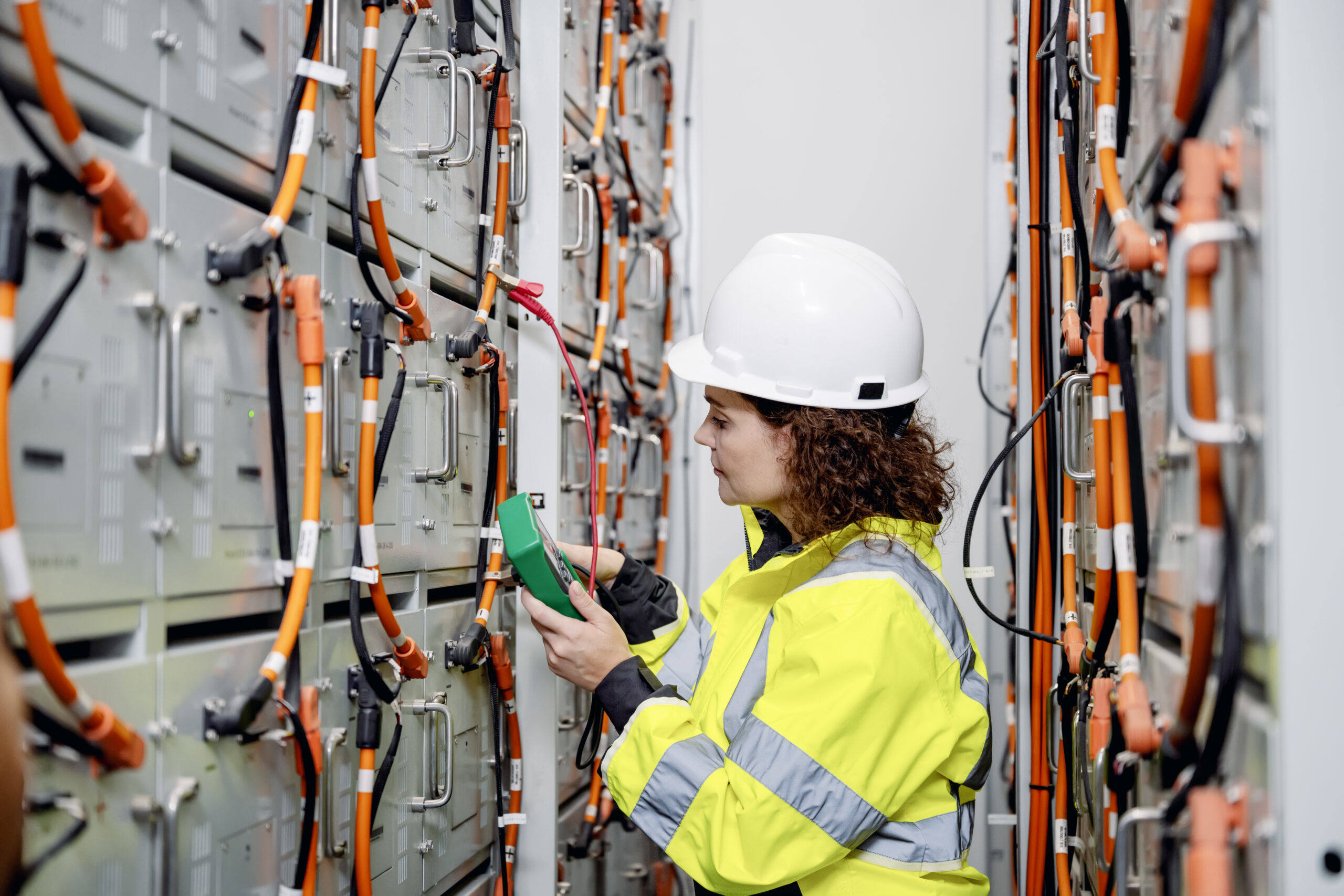
en.Wedoany.com Reported - The Rajasthan Electricity Regulatory Commission (RERC) has approved several measures allowing the state to deviate from central standard bidding guidelines to facilitate the development of a 2,450 MW solar project with a 1,600 MW/6,400 MWh battery energy storage system (BESS) at the Pugal Solar Park in Bikaner. The Rajasthan Solar Park Development Company (RSDCL) argued that modifications to the Ministry of Power's 2023 Firm Dispatchable Renewable Energy (FDRE) guidelines were necessary to ensure peak-hour supply reliability, optimize storage system utilization, and efficiently execute one of the country's largest integrated solar-plus-storage projects. The regulator accepted this argument.
Rajasthan's concerns about meeting evening peak power demand were central to this change. RSDCL noted that under the existing FDRE guidelines, failure to meet dispatch obligations results in a penalty of 1.5 times the power purchase agreement (PPA) tariff, while the state's average short-term power procurement cost during evening peak hours is INR 6.45 per unit, making this penalty insufficient to adequately compensate the buyer. Accordingly, the commission approved a new clause increasing the penalty for any supply shortfall during notified peak supply hours to twice the PPA tariff. If a developer fails to fulfill its committed peak-hour obligations, the corresponding solar power supplied during off-peak hours will only be remunerated at 50% of the PPA tariff.
The regulator also accepted RSDCL's proposal to tighten commissioning requirements. Unlike central guidelines allowing early power supply from individual project components, Rajasthan's tender will only permit early commissioning when solar generation components are paired with a corresponding proportion of BESS capacity. RSDCL argued that allowing standalone solar generation to be commissioned early would undermine the project's primary objective of providing firm renewable energy during peak demand hours requiring battery storage.
Another significant deviation emerged regarding project scale. The tender will no longer accept bids as low as 50 MW; instead, the minimum bid capacity for Tranche 1 is set at 250 MW and for Tranche 2 at 225 MW, with each tranche requiring a corresponding proportion of battery storage. RSDCL explained to the commission that smaller capacities would fragment the solar park layout, complicate infrastructure development, and reduce the utilization efficiency of land, roads, water facilities, and transmission assets. The commission accepted this reasoning, believing that larger plot sizes would attract developers with stronger technical and financial capabilities.
The commission also approved an additional deviation requiring developers to dismantle and remove all project infrastructure within the solar park at the end of the 25-year PPA term, unless otherwise agreed by both parties. RSDCL argued that, unlike conventional projects, the proposed plant would be built on land and infrastructure developed by the state-owned solar park developer, making site restoration necessary after the concession period ends.
However, the final order did not approve all initially sought changes. During the process, RSDCL voluntarily withdrew three proposed deviations after revising its tender documents, concerning payment security, compensation for generation during grid unavailability, and compensation for reduced power offtake. The commission accordingly considered only the remaining deviations while approving the project to proceed.
The Pugal project comprises two tranches: Tranche 1 with 2,000 MW of solar capacity and 1,320 MW/5,280 MWh BESS, and Tranche 2 with 450 MW of solar capacity and 280 MW/1,120 MWh BESS. The solar park is being developed on a plug-and-play model, providing pre-developed land and common infrastructure. Successful bidders will sign a 25-year power purchase agreement with Rajasthan Urja Vikas and IT Services Ltd (RUVITL).
RERC stated that the approved deviations will enable RSDCL to issue a Request for Selection (RfS) under the FDRE framework. The tariff discovered through competitive bidding will be separately submitted to the commission for adoption under Section 63 of the Electricity Act.