NYU's 13.4 MW Cogeneration Plant Saves $5 Million Annually
en.Wedoany.com Reported - Numerous facilities worldwide have achieved energy efficiency improvements and cost savings by installing cogeneration systems, with New York University (NYU) serving as a prime example. When Hurricane Sandy caused a nearly week-long power outage in Lower Manhattan in 2012, NYU's Washington Square campus relied on a single natural gas supply to maintain campus electricity and steam production, thanks to a 13.4 MW cogeneration plant that began operation in 2011. This occurred after a Con Edison substation was flooded and shut down. The plant had already recouped its costs before the storm, and according to NYU, the system saves approximately $5 million in annual energy expenses.
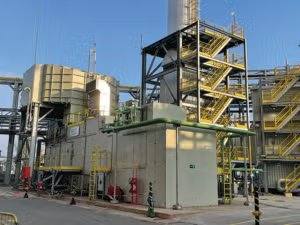
Cogeneration (CHP) technology enhances overall efficiency by capturing and utilizing waste heat from conventional power plants. On average, fossil fuel power plants in the United States convert only about one-third of their fuel into electricity, with the remaining heat lost through cooling towers and exhaust stacks. Additionally, 4% to 5% of the electricity that reaches the grid is lost during transmission. Cogeneration systems serving a single site use recovered heat to produce steam, hot water, or process heat. The U.S. Environmental Protection Agency (EPA) reports that well-designed cogeneration units can achieve total fuel efficiencies of 65% to 80%, compared to approximately 50% for grid-supplied electricity combined with on-site boilers.
Currently, over 4,000 facilities across the United States have installed approximately 80 GW of cogeneration capacity, avoiding about 240 million metric tons of CO2 emissions annually. Despite this, cogeneration accounts for only about 8% of total U.S. electricity generation, whereas in Denmark, Finland, and the Netherlands, this share reaches 30% or higher. The U.S. Department of Energy (DOE) and the EPA estimate that there is an untapped potential of about 130 GW among U.S. facilities with stable combinations of thermal and electrical loads. Cogeneration systems are most economically advantageous for facilities requiring continuous power and heat, such as hospitals, university campuses, food processing plants, paper mills, or district energy systems. A single natural gas system can meet a site's needs through one fuel stream.
In emerging markets, the value of cogeneration is even more pronounced. The International Finance Corporation (IFC) estimates that generator users worldwide spend between $28 billion and $50 billion annually on diesel and gasoline for backup power. In sub-Saharan Africa, approximately one out of every five liters of such fuel is consumed by backup generators. The IFC notes that fuel costs alone amount to about $0.30 per kWh, while grid electricity prices typically range from $0.10 to $0.30 per kWh. In markets with frequent power outages, industrial users relying on continuous diesel generator operation are effectively comparing cogeneration to machines that burn expensive fuel and produce only electricity, while their boilers burn separate fuel to meet thermal needs.
Resilience is another critical dimension of cogeneration. For facilities where power outages directly impose human or economic costs, such as hospitals, cogeneration is not just an efficiency investment but also a form of insurance. According to the U.S. Department of Energy, 327 of the 967 operational microgrids in the United States are based on cogeneration, representing 2.56 GW of capacity independent of the main grid. NYU's experience during Hurricane Sandy illustrates a value rarely captured in case studies or priced in project financing.
Cogeneration is not suitable for all scenarios. Facilities with fluctuating or low thermal loads that cannot fully utilize recovered heat will see diminished efficiency advantages. When electrifying thermal processes with renewable electricity offers better long-term emission performance, the latter may be the preferable option. Where technical conditions are adequate, three major barriers typically exist: first, capital costs—typical reciprocating engine and gas turbine systems have installation costs of $1,500 to $3,000 per kW, making upfront costs prohibitive for industrial users or utilities in emerging markets lacking long-term financing; second, regulatory hurdles—in many markets, grid interconnection requirements are unclear or inconsistently enforced, forcing willing facilities to negotiate for months to obtain operating permits; and third, operation and maintenance—cogeneration systems are more complex than boilers or backup generators, requiring skilled technicians and reliable service contracts. In markets where such ecosystems are not yet established, the actual cost of ownership can exceed nominal figures.
Each barrier has targeted solutions. Blended finance—including concessional loans, guarantees, and green bonds—can bridge the gap for projects that are economically viable over their lifecycle but currently unfinanceable. Governments establishing standardized interconnection rules with clear timelines and transparent technical criteria can typically accelerate cogeneration deployment. Performance contracts, where energy service companies finance, install, and operate systems in exchange for a share of energy savings, can transfer technical risk to the party best equipped to manage it.
Related Products

714CD Series C-Band Weather Radar
Chengdu Zhongdian Jinjiang Information Industry Co., Ltd.
6kV-35kV Medium and High Voltage Direct-Connected Energy Storage System
Hainan Jinpan Smart Technology Co., Ltd.
Standard Nozzle Flowmeter
Jinggong Automatic Control Instrument Complete Technology Development Company
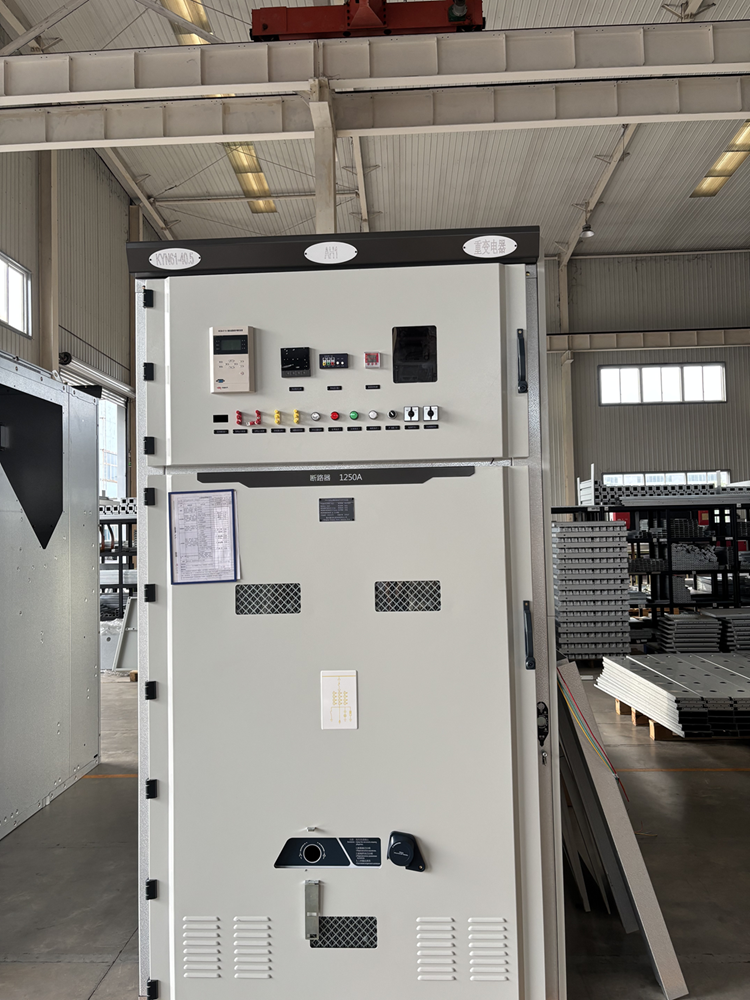
KYN61-40.5 Indoor AC Metal-clad Removable Switchgear
Chongqing Transformer Co., Ltd.
IS(B)□-M·RL Series Oil-immersed 3D Transformer (Planar / 3D Wound Core)
Guangdong Kehua Electric Power Technology Co., Ltd.
Electromagnetic Fluid Seawater Floating Oil Separation and Recover Equipment
Huate Magnet Group Co., Ltd.

G.652.D Wavelength-extended Non-dispersion Shifted Single-mode Optical Fiber
HONGAN GROUP CO., LTD.

Industrial and Commercial Point-Type Gas Detector
Jinan Benan Technology Development Co., Ltd.