Europe Accelerates AI Computing Infrastructure with €30 Billion
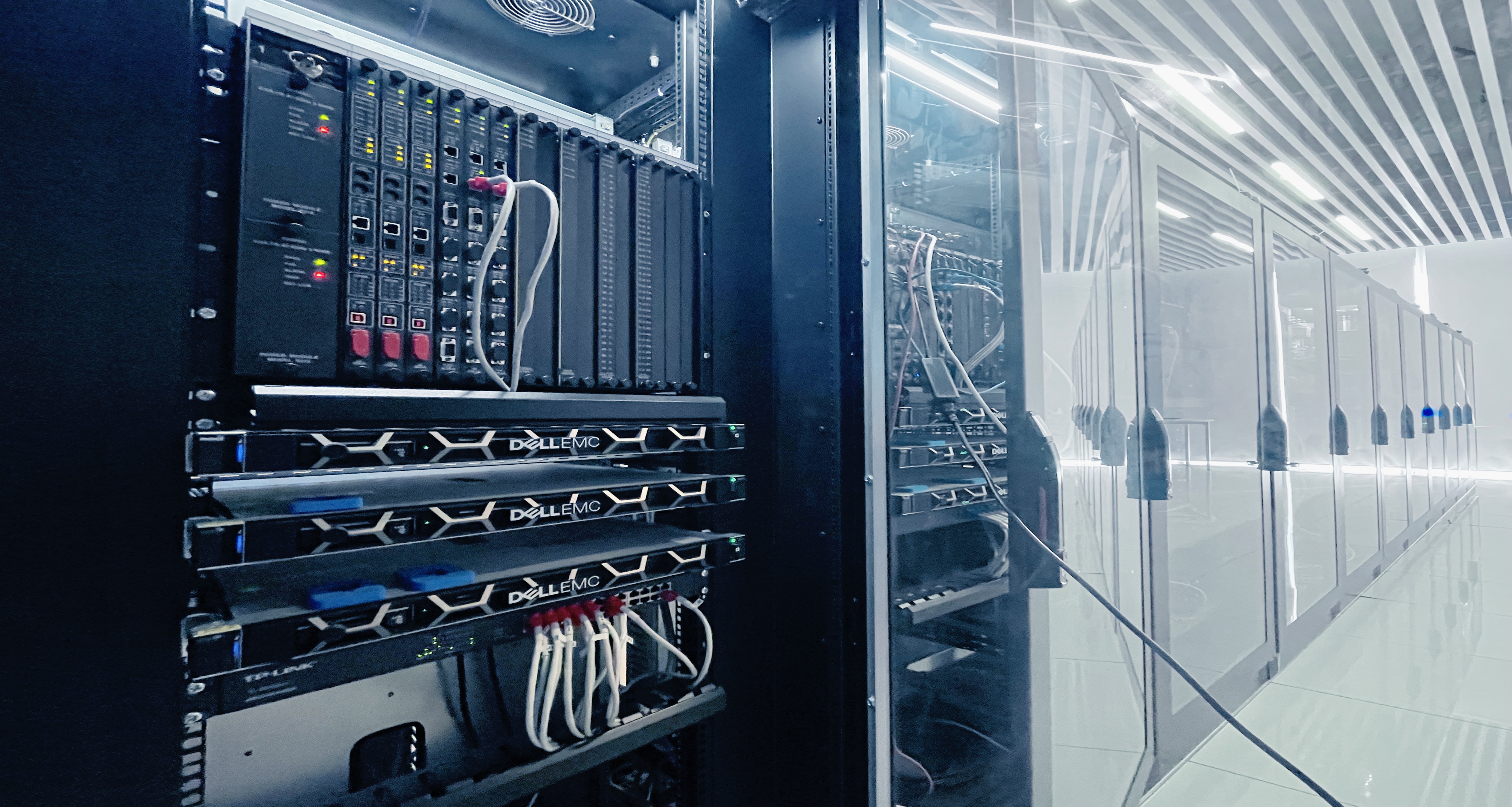
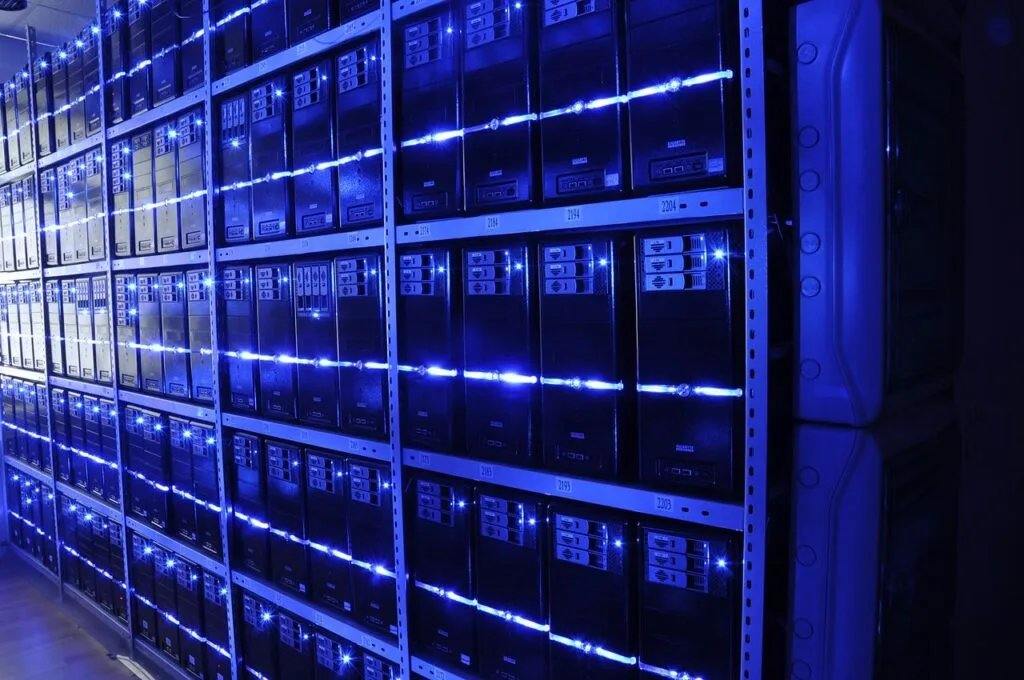
en.Wedoany.com Reported - Europe is amassing artificial intelligence computing power at an unprecedented pace within a year. A record 35 AI-focused high-performance computing systems are currently under development in the region, encompassing national supercomputing centers, AI factories of the European High Performance Computing Joint Undertaking (EuroHPC), and academic institutions. These will collectively provide next-generation infrastructure for over 3 million researchers. NVIDIA provides accelerated computing support for over 90% of the systems in this expansion, stating that approximately 800 exaflops of AI computing power have been deployed or announced since last year. NVIDIA hardware also accounts for 81% of the global TOP500 supercomputer list.

The power demands of these systems are straining Europe's power grids. From the upgraded MareNostrum 5 at the Barcelona Supercomputing Center to the first AI factory in Stuttgart, Germany, the machines involved in this expansion will consume vast amounts of electricity, while grid connection wait times are far longer than the data center construction itself. The gap is widening between the pace of Europe's computing ambitions and the construction of the transmission networks, substations, and clean power generation facilities needed to supply that power, becoming a major constraint on the entire plan.
This expansion is supported by approximately €10 billion in EuroHPC investment between 2021 and 2027, along with an additional €20 billion InvestAI special fund for building up to five AI "gigafactories." EU Regulation 2026/150 subsequently expanded EuroHPC's mandate to cover gigafactories and quantum technologies, with the network now comprising 19 operational AI factories. A central thread running through the European Commission's framework is digital sovereignty—the ambition to develop, train, and operate advanced AI on European soil under European data rules.
The NVIDIA platform is central to this effort, with the expansion relying on its Blackwell and Hopper architectures, coupled with Quantum InfiniBand networking and the CUDA-X software stack. The AI factory at the Barcelona Supercomputing Center will expand MareNostrum 5 with GB300 NVL72 and GB200 NVL4 systems, providing up to approximately 20 exaflops of AI training and 33 exaflops of inference capability for a consortium comprising Spain, Portugal, and Turkey. Italy's IT4LIA is larger, featuring over 8,000 GPUs, offering 82 exaflops of training and 164 exaflops of inference. Bavaria is deploying 1,000 GPUs into the Blue Swan platform at FAU Erlangen University and the LRZ center to support locally developed multimodal foundation models. Stuttgart's HammerHAI, procured through the EU AI Factory initiative and installed by Hewlett Packard Enterprise, is positioned as Germany's first AI factory explicitly targeting the industrial and engineering sectors.
Grid access is replacing chips or capital as the hard constraint. The European Union of the Electricity Industry warns that high-voltage connection projects typically take 5 to 10 years, while building a data center takes only 18 to 24 months; connection queues at major hubs are now several years long. The International Energy Agency expects data center electricity demand to double by 2030, with AI facilities growing faster. Ireland's utility regulator has imposed strict conditions on new data center connections around Dublin, and the Netherlands has suspended permits for hyperscale data centers through a moratorium. The World Economic Forum believes grid access is increasingly becoming a hard constraint for AI deployment.
One consequence of the power strain is computing migrating toward coastlines. Wave energy developer Eco Wave Power is piloting an ocean-powered data center at the Port of Los Angeles. The company places power conversion, hydraulic, and control electronics on land, capturing energy from waves hitting existing breakwaters and seawalls. Founder and CEO Inna Braverman believes many data centers are moving to the coast because they need cooling and water. The company operates projects at the Port of Jaffa, Israel, and the Port of Los Angeles, with further plans in Portugal, Taiwan, and India. A pilot project in Los Angeles is testing whether wave energy can power a data center directly without relying on the grid. The company uses digital twins built with the NVIDIA Omniverse library to simulate wave conditions, structural behavior, and deployment configurations.
In the industrial decarbonization sector, Siemens Energy applies its Siemens Xcelerator portfolio, accelerated by the NVIDIA Omniverse library, CUDA-X, and AI infrastructure, to design gas turbines capable of operating with up to 100% hydrogen. This workflow reduces simulation time by up to 77%, shortening the path from concept to hydrogen-fueled low-carbon turbines deployable in actual power plants.
Regarding next-generation hardware, NVIDIA introduced the Vera Rubin platform at the International Supercomputing Conference in Hamburg. This platform pairs the Rubin GPU with the Vera CPU via NVLink-C2C, employing a direct liquid cooling architecture. A single Vera Rubin system can deliver over 7 exaflops of AI performance and 5 petaflops of native double-precision FP64 capability across up to 144 GPUs. Global system integrators including Bull, Dell Technologies, Gigabyte, Hewlett Packard Enterprise, and Supermicro are bringing Vera Rubin systems to market as direct liquid-cooled racks. Early adopters include the Leibniz Supercomputing Centre's Blue Lion, planned for 2027; in the United States, the Department of Energy's Doudna machine at Lawrence Berkeley National Laboratory and a next-generation system at Los Alamos National Laboratory have both committed to the platform.
In quantum computing, Europe is consolidating its advantage in hybrid applications with GPU supercomputers. CINECA, EuroHPC, and Pasqal are integrating a neutral atom quantum processor at the CINECA center; the Fraunhofer Institute for Open Communication Systems is connecting CUDA-Q with the Eclipse Qrisp quantum programming language; the Barcelona Supercomputing Center has deployed an analog quantum computer from Qilimanjaro Quantum Tech. Researchers at the Jülich Research Centre fully simulated a universal 50-qubit quantum computer on the JUPITER system, surpassing the previous record of 48 qubits—an achievement relying on the tightly coupled CPU-GPU memory in JUPITER's GH200 Grace Hopper superchips.
The current flagship system, JUPITER, as Europe's first exascale system, trained a foundation model on 6.5 PB of data using thousands of GPUs in under five days, mapping the microstructure of the human brain at the cellular scale. It also underpinned a climate breakthrough: a novel configuration of the ICON model simulated the coupled Earth system at 1 km resolution for the first time, earning the Gordon Bell Prize for Climate Modeling. A collaboration between Ericsson and Jülich is leveraging JUPITER to train AI for advancing 5G evolution and 6G network design.
This announcement boils down to a strategic tension. Europe has the capital, political will, and hardware to build computing power on an unprecedented scale, but it does not yet have a power grid capable of connecting these machines at a pace commensurate with the arrival of that computing power. Developers, contractors, and utilities that can compress the delivery time for stable power, transmission, and substation capacity hold the scarce input upon which everything else depends. The computing race has quietly become an infrastructure race, and Europe's position in the former will depend on how quickly it wins the latter.
Related Products



GYTA Type Non-Self-Supporting Aerial/Duct Optical Cable
TONGDING INTERCONNECTION INFORMATION CO., LTD.
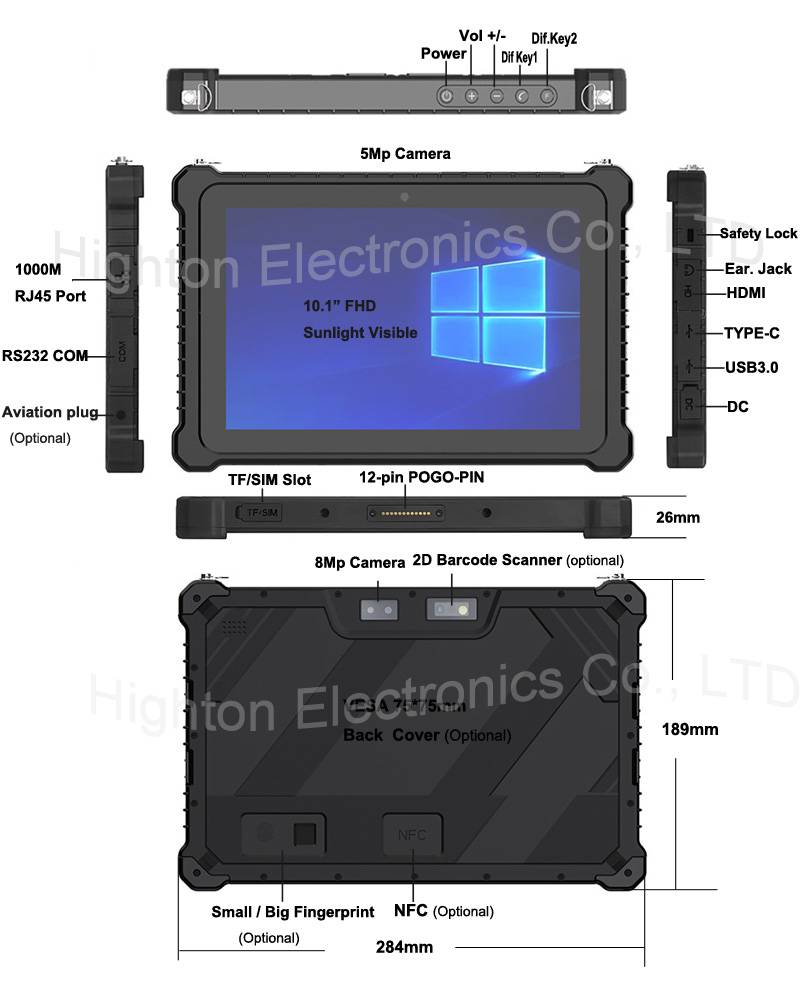
Hot Selling 10 Inch Intel N5100 I5 I7 FHD 8 +128GB 16+256GB Win10 Pro Win11 Pro 4G 5G Rugged Tablet PC Pad with NFC Barcode
Highton Electronics Co., Ltd.
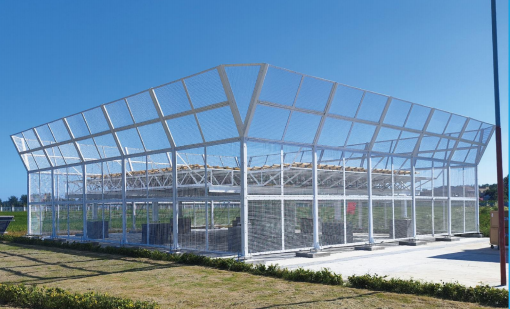
TWP16 P-Band Tropospheric Wind Profile Radar
China Huayun Meteorological Technology Group Co., Ltd.
Conveyor Belt Intelligent Monitoring System
LUO YANG WIRE ROPE INSPECTION TECHNOLOGY CO., LTD.