China Mobile Launches Industry's First Batch of Passive IoT Solutions
en.Wedoany.com Reported - China Mobile, in collaboration with industry partners, has officially launched the industry's first batch of passive IoT solutions. Centered on lightweight, standardized, and end-to-end services, these solutions feature modularity and evolvability. Leveraging the advantages of passive IoT—battery-free, low-cost, easy deployment, and maintenance-free—they aim to address the common pain point of the inability to perceive physical elements in industrial digitalization. This marks the transition of passive IoT from single-point technology verification to large-scale replication.
In the process of industrial digitalization, the migration of business systems to the cloud and online workflows have become relatively common. However, the bottleneck in refined management often lies in the identification of physical elements. Scenarios such as production line components, goods in transit, warehouse carriers, and hospital consumables and equipment have long relied on manual scanning, manual registration, and post-event reconciliation. This results in low efficiency, delayed status updates, opaque flow tracking, and untimely anomaly handling, creating perception gaps in enterprise digital and intelligent upgrades.
Passive IoT achieves automatic perception of physical objects through passive tags combined with networked management, serving as a key pathway to bridge the last mile of physical digitalization. Previously, industry applications were mostly scattered single-point projects, lacking standardization and rapidly replicable complete solutions, which hindered widespread adoption. The solutions launched by China Mobile cover two demand pathways: small-scale, high-frequency scenarios and full lifecycle management.
In terms of lightweight solutions, China Mobile has introduced the "Bailing Lightweight Sensing Scenario Solution." This solution adopts standardized and modular designs, suitable for general scenarios such as parks, exhibition halls, laboratories, small and medium-sized warehouses, and office spaces. It enables rapid deployment of functions like exhibit management, entry-exit verification, and flow tracking. In exhibition scenarios, the solution can monitor exhibit status in real time, automatically trigger visitor interactions, and collect behavioral data. In personnel and material entry-exit scenarios, it can automatically generate access records and provide real-time alerts for abnormal flows. Users can experience passive IoT with a low threshold, starting from single-point scenarios and gradually extending to multi-process, multi-area, and multi-object full-chain management.
For industries such as manufacturing, supply chain logistics, and medical services, China Mobile has launched three major industry digital intelligence service solutions for production, transportation, and usage ends, centered on full lifecycle management of physical elements. The core goes beyond identity recognition, embedding sensing capabilities into business processes to enable physical data to serve process optimization, operational decision-making, and intelligent collaboration.
In discrete manufacturing scenarios, the digital intelligence manufacturing solution covers areas such as component warehousing, process flow, quality traceability, tooling and fixture management, vehicle delivery, and safety production. It achieves real-time online tracking of materials and processes, reducing manual inventory errors and labor costs while improving efficiency in material kitting, quality traceability, on-site scheduling, and delivery coordination. In supply chain logistics scenarios, the digital intelligence supply chain solution addresses questions like where goods are, who handles them, their status, and when anomalies occur. It enables synchronized collection of physical and information flows, ensuring full visibility of goods status, clear accountability at each node, and real-time alerts for anomalies, upgrading supply chain management from post-event reconciliation to full-process control. In medical scenarios, the digital intelligence medical solution focuses on four areas: high-value consumables, medical equipment, in-hospital assets, and patient services. It builds a sensing system that makes equipment easy to find, consumables traceable, processes controllable, and services better, reducing labor costs for manual inventory and equipment searches, improving asset operation efficiency and patient service experience, and supporting the evolution of smart hospitals from information management to full-domain intelligent collaboration.
The release of this solution system marks a milestone in the development of the passive IoT industry. Through a combined strategy of lightweight solutions for breadth and industry solutions for depth, China Mobile has established differentiated service capabilities covering customers of various scales and budgets.
In the next step, China Mobile will continue to collaborate with industry partners to drive innovation, continuously refine standardized passive IoT solutions, and promote them as a universal sensing foundation for industrial digitalization. This will enable more physical elements to connect to the digital world at lower costs, injecting new momentum into the digital and intelligent upgrades of thousands of industries.
Related Products




Automatic Aiming Laser Remote Obstacle Removal Robot
Pinggao Group Weihai High-Voltage Apparatus Co., Ltd.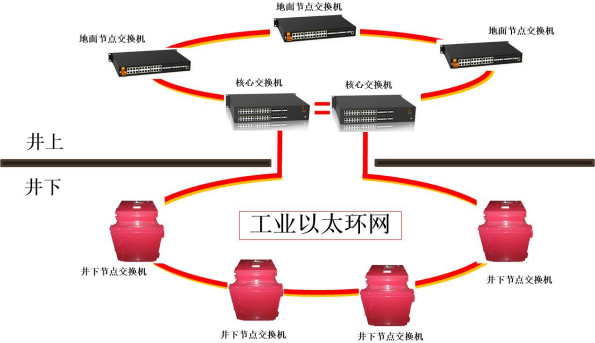
Mine Explosion-proof and Intrinsically Safe Industrial Ethernet Ring Network (10 Gigabit/Gigabit)
Chongqing Mas Sci&Tech Co., Ltd.



Industrial and Commercial Point-Type Gas Detector
Jinan Benan Technology Development Co., Ltd.
GYTA Type Non-Self-Supporting Aerial/Duct Optical Cable
TONGDING INTERCONNECTION INFORMATION CO., LTD.