Rwanda and Rosatom Sign Roadmap for Small Modular Reactors
en.Wedoany.com Reported - Rosatom and the Republic of Rwanda held the first meeting of the Joint Coordinating Committee (JCC) for cooperation in atomic energy in Moscow, following which the two sides signed a roadmap for the development of small modular reactor (SMR) projects. The meeting was co-chaired by Kirill Komarov, First Deputy Director General for Development and International Business at Rosatom, and Lassina Zerbo, Energy Advisor to the President of Rwanda and Chairman of the Rwanda Atomic Energy Board (RAEB).
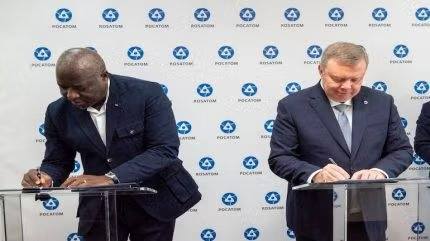
The meeting reviewed progress in key areas of cooperation, including the construction of nuclear power plants, non-energy applications of nuclear technology (such as the establishment of the Center for Nuclear Science and Technology (CNST)), human resource development, and the formation of the national nuclear infrastructure. The meeting also separately discussed regulatory support for the program. Kirill Komarov stated that the two sides are moving from framework agreements to joint work in specific areas, including training national personnel, forming nuclear infrastructure, and implementing small modular reactor projects. He noted that Rwanda is consistently and responsibly building its nuclear program, and Rosatom is ready to become a reliable partner for the country in this process.
Lassina Zerbo pointed out that the roadmap approved that day is based on bilateral cooperation for the peaceful use of nuclear energy, which began in 2018. The primary goal is to integrate nuclear energy into the national energy mix before the early 2030s to meet Rwanda's growing energy needs. The implementation of the nuclear program is, first and foremost, an investment in human capital, science, and the country's long-term development. The establishment of the Joint Coordinating Committee enables the two sides to carry out substantive and routine work in all areas of the program. Rwanda highly values its partnership with Russia and its contribution to training Rwandan experts and building the national nuclear infrastructure.
These developments are underpinned by a long-standing nuclear cooperation relationship with Russia. In June 2018, the two sides signed a Memorandum of Understanding in Moscow, laying the basic guiding principles for cooperation in the peaceful use of atomic energy. In December of the same year, a legally binding Intergovernmental Agreement (IGA) was signed in Moscow, providing a formal framework for the construction of a nuclear science center and a full-scale power plant. In May 2019, Rosatom and the Rwandan Embassy in Moscow signed an implementation roadmap, outlining early steps for personnel training and the specific layout of the science center.
Later in 2019, a final construction agreement was signed at the Russia-Africa Summit in Sochi, clearly binding both parties to build a Center for Nuclear Science and Technology (CNST) in Rwanda, which includes a 10 MW research reactor. The agreement was ratified by the Rwandan Chamber of Deputies in 2020 and became law. In July 2023, an expanded agreement on cooperation in atomic energy was signed to further integrate the peaceful applications of atomic technology.
In May, a commercial nuclear power plant agreement was finalized with Rosatom, formally establishing Rwanda's first commercial nuclear infrastructure. The document stipulates specific measures to be taken by the end of 2026, involving the launch of the construction project for the Center for Nuclear Science and Technology (CNST) and the adoption of small modular reactor (SMR) technology, with plans for commissioning in 2030-32. The training of Rwandan personnel in Russia was listed separately as a key task. Rwandan students are already studying various nuclear energy programs in Russia.
Related Products



220kV Composite Outdoor Cable Terminal
Shenyang Guolian Cable Accessories Manufacture Co., Ltd.
714CD Series C-Band Weather Radar
Chengdu Zhongdian Jinjiang Information Industry Co., Ltd.
Ultrasonic Wind Speed and Direction Instrument
Kingmach Measurement & Monitoring Technology Co., Ltd.
72.5kV 1250A 31.5kA SF6 free Gas-insulated Metal-enclosed Switchgear
Zhejiang Juhonkia Intelligent Electric Co., Ltd.
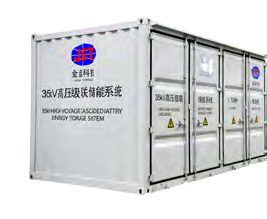
6kV-35kV Medium and High Voltage Direct-Connected Energy Storage System
Hainan Jinpan Smart Technology Co., Ltd.