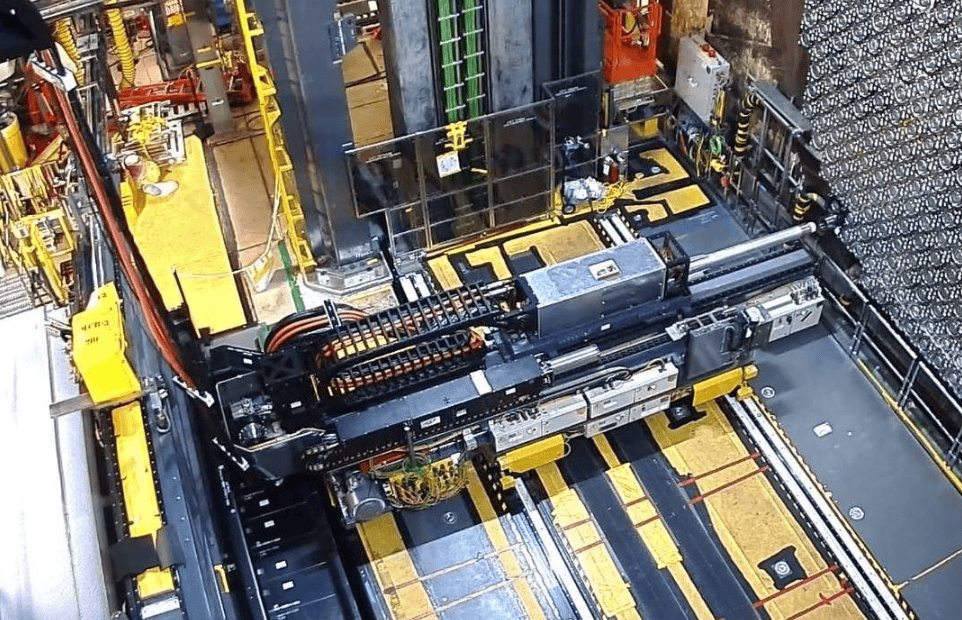
UK Tritium Decontamination Facility at Culham Reopened, Waste Disposal Costs Could Drop by Up to Tenfold
en.Wedoany.com Reported - The UK Atomic Energy Authority (UKAEA) has completed tritium removal trials on materials from the decommissioning of the Joint European Torus (JET) at its Materials Tritium Decontamination Facility (MDF) in Culham. Following treatment, materials such as tungsten, beryllium, Inconel alloys, steel, copper, and carbon fibre composites are expected to be reclassified from intermediate-level waste to low-level waste, potentially reducing disposal costs by up to tenfold.
During the final three years of plasma operations at JET, deuterium-tritium experiments left residual tritium trapped in the tokamak walls and internal components, demonstrating that the isotope permeates into materials during high-power fusion operations. The total amount of tritium retained in the materials, along with the fraction that can be removed through heat treatment, forms the core basis for developing the waste management strategy under the JET Decommissioning and Repurposing (JDR) programme.
By recovering tritium, the UKAEA waste treatment team can reduce the disposal costs of these materials. Originally classified as intermediate-level waste when dismantled from JET, they are transferred to the low-level waste category after detritiation, with disposal costs potentially falling by up to tenfold. Some of these materials may even be suitable for reuse in future fusion or fission facilities.
Tiles and components removed from JET at the end of 2024 were processed directly in the trials without prior disassembly, and mixed material streams were also fed into the process simultaneously, simulating the actual operating conditions of an industrial-scale treatment facility.
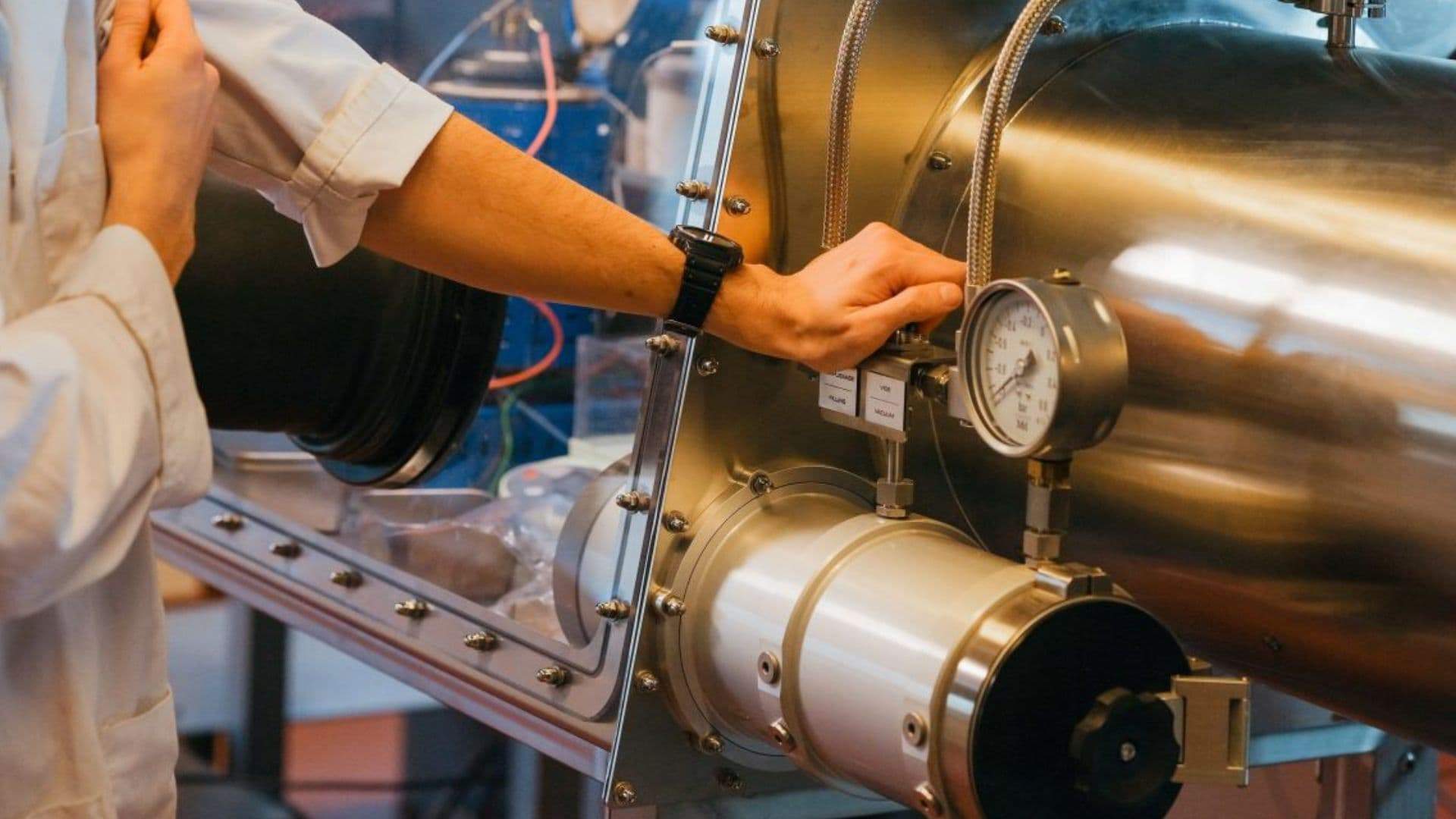
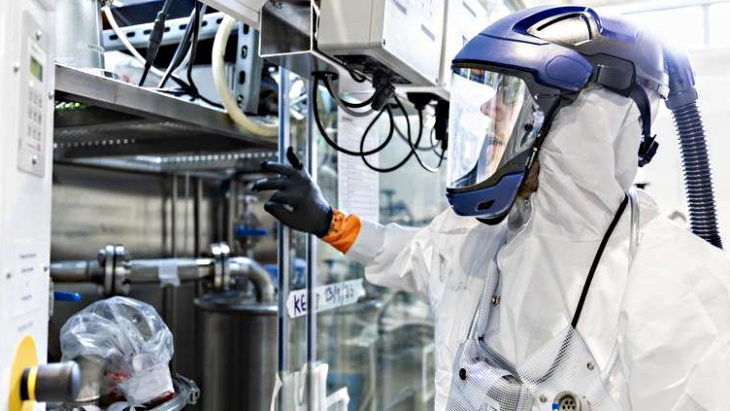
To remove the trapped tritium, materials in the MDF furnace are heated to high temperatures under controlled conditions that strictly suppress oxidation. Reducing oxidation helps improve process efficiency, lower maintenance workloads, and ensure safe and efficient operations. The tritium generated by the reactions leaves the furnace with the process gas stream, is converted into tritiated water via a catalyst, and is then captured in a concentrated form. After the furnace cools, the heat-treated products are removed and subjected to destructive sampling and analysis.
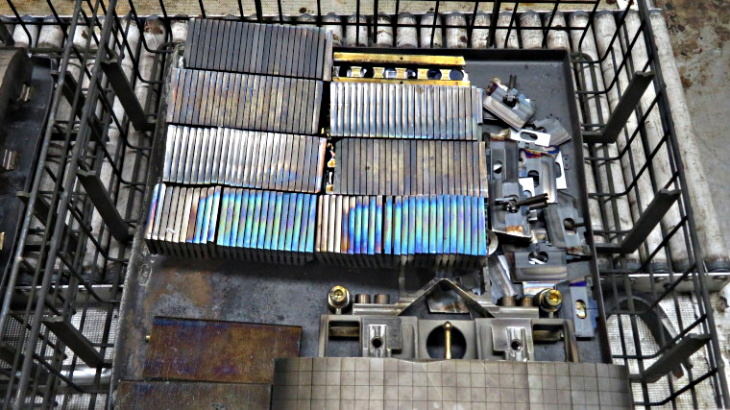
As a complement to the heat treatment, gram-scale samples from JET are also being analysed to determine the concentrations of other radionuclides and to quantify the residual tritium remaining in the treated materials.
Xavier Lefebvre, Waste Lead for the JET Decommissioning and Repurposing project, stated that the successful treatment of these samples has provided the team with evidence previously unavailable, enabling a more reliable understanding of JET material characteristics and their long-term management challenges. These insights could fundamentally influence the JDR waste management strategy, reducing uncertainty and making decisions on waste treatment, packaging, disposal routes, and decommissioning planning more rational, while also potentially presenting a more proportionate waste management approach and deepening understanding of long-term liabilities. He added that this is an example of combining innovation, scientific ambition, and operational practice, benefiting both the current project and building experience for future fusion decommissioning.
UKAEA stated that the MDF will remove tritium trapped in materials, reducing the volume of high-activity waste requiring specialist on-site management. In addition to processing its own legacy waste, the facility is also open to companies and organisations engaged in cutting-edge research into waste and materials management.
JET is a tokamak fusion device in which gaseous hydrogen fuel is transformed into plasma under extreme temperatures and pressures within a doughnut-shaped vacuum chamber, with charged particles shaped and confined by large magnetic coils around the periphery to prevent contact with the vessel walls. JET is the only tokamak capable of operating with tritium fuel and is a key precursor facility for the multinational International Thermonuclear Experimental Reactor (ITER) project under construction in southern France. The device was built and operated jointly by European researchers, is currently owned by UKAEA, and was also operated by UKAEA at the end of its operational life. Scientists from 28 European countries, coordinated through the EUROfusion consortium, have used it to explore the potential of carbon-free fusion energy. In 1997, the tokamak completed its first deuterium-tritium experiment.
The final campaign of experiments at JET using deuterium and tritium fuel ran for seven weeks from August to October 2023, with decommissioning commencing after the final pulse in December of the same year. The fusion experiments in this campaign produced the highest energy output ever achieved, breaking the record set in 2021. Under the JDR programme, UKAEA is carrying out early decommissioning and repurposing of JET, with work expected to continue until approximately 2040, while also providing a platform for developing future fusion technologies and skills.
Related Products

Perfluorinated Ionic Membrane-CM-10N Series Membrane
Guizhou Juneng Century Technology Co., Ltd
6kV-35kV Medium and High Voltage Direct-Connected Energy Storage System
Hainan Jinpan Smart Technology Co., Ltd.
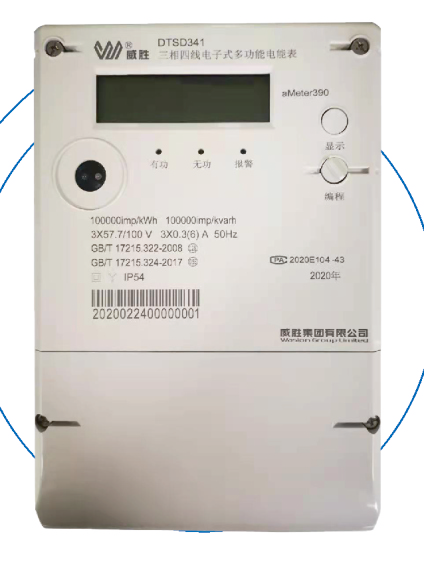
Overseas IEC Gateway Energy Meter - DTSD341/DSSD331-aMeter390
Wasion Group Limited Co., Ltd.

G.652.D Wavelength-extended Non-dispersion Shifted Single-mode Optical Fiber
HONGAN GROUP CO., LTD.