Infinito Delicias Project in Madrid, Spain: Green Facade Saves 20%-30% Energy
en.Wedoany.com Reported - The Infinito Delicias project in the Delicias district of Madrid, Spain, achieves energy savings and cooling effects by transforming building spaces into indoor gardens and plant nurseries, and by employing bioclimatic design strategies.
During July and August, the building converts its auditorium into an indoor garden designed for heat-relief activities such as resting, reading, working, or chatting. The space features shaded areas, communal tables, a family play area, and a relaxation zone, with plants taking center stage to help create a more pleasant indoor atmosphere. Some of the plants come from the Retiro greenhouse nursery in Madrid, which participated in the creation of this urban garden. Designed in collaboration with Ultrazul, the project aims to explore how architecture can facilitate encounters among residents, become a place of care, and integrate sustainability into daily life.
Another initiative in the project is the plant nursery, intended for people who leave Madrid and need temporary care for their potted plants. During the fostering period, these plants are integrated into the indoor garden, becoming part of the climate refuge. The project also includes a plant consultation service and a small specialized library, serving as a meeting point for exchanging knowledge and answering questions. Additionally, the nursery has launched a small cutting propagation system, with the goal of having more plants at the end of summer than at the beginning, and then distributing the new plants to neighborhood residents and community groups for greening balconies, patios, and communal spaces.
The building's exterior reflects one of its climate strategies. On the east and west facades, chestnut wood structures project from the outer wall, forming a series of balconies that combine planters and adjustable awnings. The external awnings act as the first barrier against the sun, helping to prevent radiation from directly heating the rooms; the plants add a second layer of protection, creating shade and a more pleasant microclimate. The architects describe this system as a thermal buffer layer that helps regulate indoor conditions.
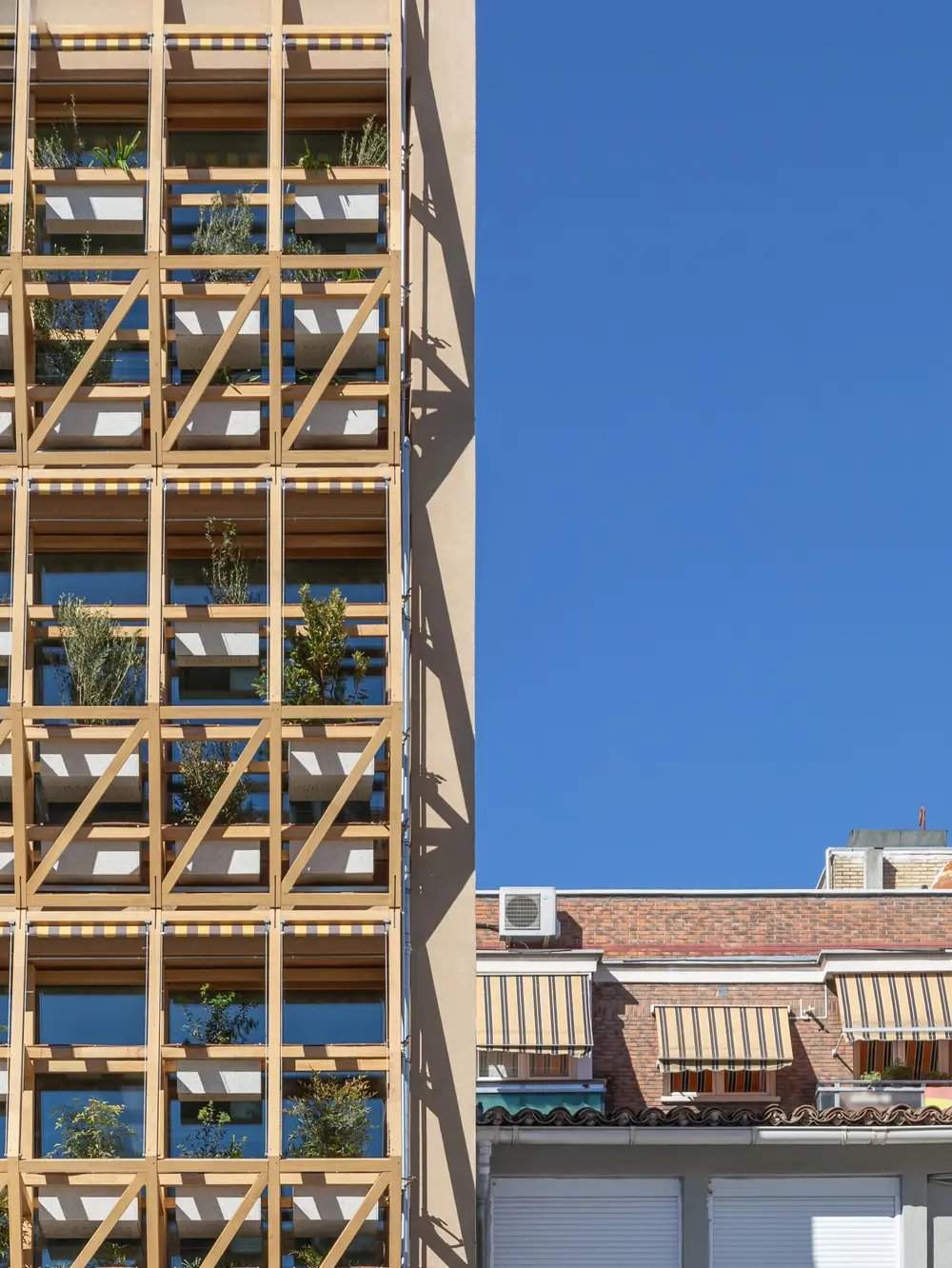
The project's bioclimatic diagram illustrates how external awnings, plants, cross ventilation, green roofs, and solar panels work together. The awnings block the sun before it reaches the windows, while plants provide shade and cool the air; cross ventilation and green roofs complete the system's bioclimatic setup. According to project estimates, the green facade can achieve energy savings of 20% to 30%, and the plants help reduce cooling demand by up to 14%.
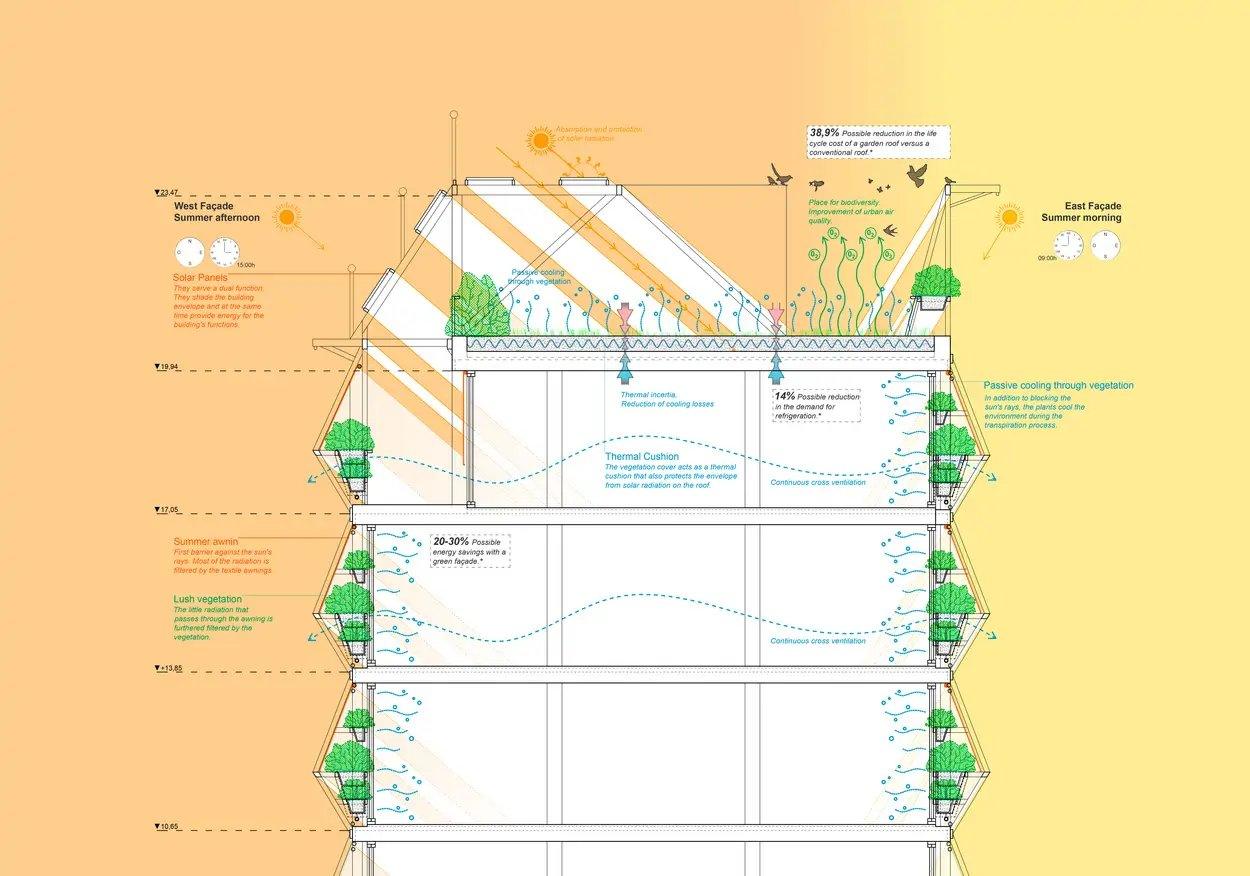
The bioclimatic section shows that the arrangement of window openings promotes continuous cross ventilation between the two sides of the building, while rooftop vegetation protects the lower spaces from radiation. The plants are not a decorative addition but part of a green infrastructure aimed at improving thermal performance, reducing the heat island effect, and promoting urban biodiversity.
Related Products

Metal sound barriers that can reduce the transmission of road noise
Hebei Jinbiao Construction Materials Tech Corp., Ltd.
Dual-curved Arm Rock Drilling Trolley RSD200D
Chengdu Ruilong Machinery Manufacturing Co., Ltd.


Ultra-Pure Ferrite Stainless Steel Products
Gansu JISCO Group Hongxing Iron and Steel Co., Ltd.
YHTank8400N Solvent-Free Liquid Epoxy Coating
JIANGSU YUNHU NEW MATERIAL TECHNOLOGY CO., LTD.