Building a Community with a Shared Future in Cyberspace: World Internet Conference Digital Silk Road Development Forum to Be Held in Xi'an
en.Wedoany.com Reported - The World Internet Conference held a press conference on July 6 to introduce the preparations for the 2026 World Internet Conference Digital Silk Road Development Forum. The forum will take place from July 21 to 22 in Xi'an, Shaanxi Province, under the theme "Wisdom Converges on the Silk Road, Digital Journey Begins Anew: Building a Community with a Shared Future in Cyberspace."
The forum will feature multiple agendas focused on Digital Silk Road cooperation. In addition to the opening ceremony, the forum will set up five thematic sessions, respectively focusing on "Silk Road E-commerce" cooperation and development, collaborative innovation and development of intelligent agents, cultural heritage protection and inheritance in the digital intelligence era, AI empowering the low-altitude economy, and digital health. Topics cover multiple fields including digital trade, AI applications, digital culture, the low-altitude economy, and smart healthcare.
Xi'an is a key node city in the joint construction of the Belt and Road Initiative and an important hub for Digital Silk Road exchanges and cooperation. The forum being held in Xi'an continues the connection between the Digital Silk Road and Silk Road cities, cross-border trade, and digital technology applications. For participating countries and enterprises, the forum serves not only as a platform for releasing topics but also as a window for matching digital trade, AI applications, and industrial cooperation.
"Silk Road E-commerce" remains one of the core contents of this forum. Cross-border e-commerce is extending from single online transactions to digital payments, smart warehousing, international logistics, overseas warehouses, cross-border data services, and supply chain collaboration. Exchanges on this topic will help countries jointly building the Belt and Road Initiative enhance their digital trade connectivity capabilities and provide enterprises with more cooperation scenarios for entering overseas markets.
The inclusion of collaborative innovation and development of intelligent agents as a thematic session indicates that discussions on artificial intelligence are shifting from large model capabilities to task execution and industry implementation. After intelligent agent applications enter cross-border trade, government services, enterprise operations, customer service, and industrial scenarios, they require the joint support of models, computing power, data, software platforms, and network security. Placing intelligent agents within the Digital Silk Road framework means AI is becoming a new variable in Digital Silk Road cooperation.
AI empowering the low-altitude economy and digital health will also be important topics at this forum. The low-altitude economy involves drone scheduling, low-altitude communications, airspace management, logistics distribution, and emergency rescue; digital health connects telemedicine, smart hospitals, medical data services, and public health management. Compared to merely discussing internet infrastructure, this forum places greater emphasis on digital technologies entering specific industrial scenarios.
During the forum, high-level dialogue activities such as ministerial meetings will also continue to be held. The WIC Academy of Digital Intelligence will organize capacity-building workshops and study tours around "AI-Driven Digital Trade." These workshops are now open for global registration, targeting representatives from government departments of developing countries, enterprise managers, and relevant industry practitioners. Official information indicates that the workshops will focus on the new changes, challenges, and opportunities in digital trade in the AI era and will include on-site study tours in Xi'an.
The WIC Academy of Digital Intelligence will also jointly organize a themed salon on "Cultural Heritage Digitalization and Copyright Empowerment" with the World Intellectual Property Organization (WIPO) Office in China, promoting exchanges on the digital protection of cultural heritage and copyright utilization. As digital technologies enter the realms of cultural heritage, cultural tourism, copyright, and content dissemination, cultural heritage protection is no longer just about data preservation; it also involves digital collection, copyright confirmation, content development, and cross-border dissemination.
The key points released by this forum are clear: Digital Silk Road cooperation is expanding from basic connectivity and cross-border e-commerce to artificial intelligence, digital trade, the low-altitude economy, smart health, and the digitalization of cultural heritage. For enterprises in communication networks, cloud computing, cross-border e-commerce, logistics platforms, AI applications, drone systems, medical informatization, digital copyright, and data security, such topics may subsequently translate into project cooperation and service demands.
Related Products



G.652.D Wavelength-extended Non-dispersion Shifted Single-mode Optical Fiber
HONGAN GROUP CO., LTD.
MUX Series Communication Interface Device for Security and Stability Control System
Nanjing NR Electric Co., Ltd.
GYTA Type Non-Self-Supporting Aerial/Duct Optical Cable
TONGDING INTERCONNECTION INFORMATION CO., LTD.
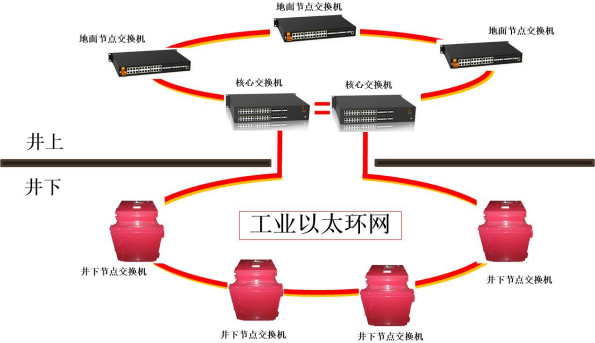
Mine Explosion-proof and Intrinsically Safe Industrial Ethernet Ring Network (10 Gigabit/Gigabit)
Chongqing Mas Sci&Tech Co., Ltd.



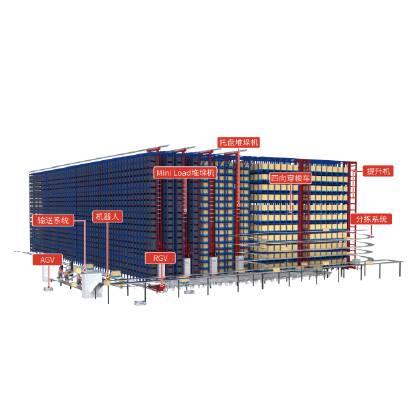

Conveyor Belt Intelligent Monitoring System
LUO YANG WIRE ROPE INSPECTION TECHNOLOGY CO., LTD.