From Compact Flow Channels to Predictive Analytics: The Next Generation of Heat Exchangers
en.Wedoany.com Reported - Heat Exchange Equipment is a mature industrial category, but its development is far from complete. Industrial electrification, high-temperature heat pumps, data-center liquid cooling, advanced energy systems and high-density manufacturing are creating new requirements. Equipment must transfer more heat in less space, withstand higher pressure and difficult fluids, and provide data that can predict performance deterioration.
Compact construction is one of the clearest trends. Plate, plate-fin, printed-circuit and microchannel heat exchangers increase surface area per unit volume and intensify fluid mixing through small channels and engineered geometry. These designs can reduce equipment volume, working-fluid inventory and thermal inertia while supporting close temperature approaches. They are increasingly relevant to heat pumps, refrigeration, hydrogen systems, supercritical-carbon-dioxide cycles and high-power electronics cooling.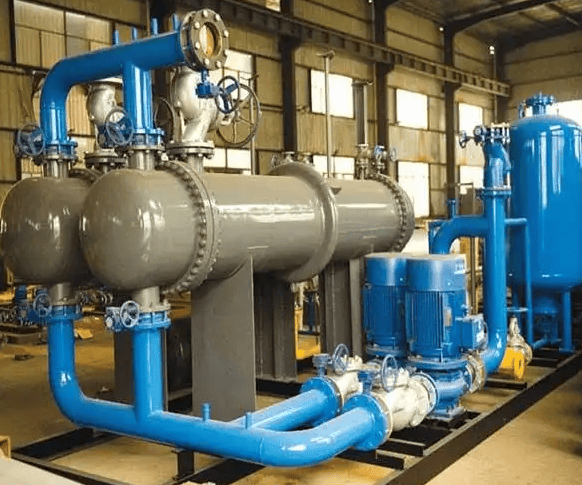
Small channels also introduce new constraints. Compact exchangers are more sensitive to particles, manufacturing variation, joining quality and flow distribution. A local blockage can create maldistribution between channels, causing hot spots, higher pressure loss and cyclic stress. Equipment should therefore be tested under realistic contamination, startup, shutdown and off-design flow rather than judged only by maximum laboratory heat-transfer coefficients.
Advanced manufacturing is changing the geometry available to designers. Diffusion bonding, laser welding, additive manufacturing and precision forming can produce complex flow passages that are difficult to create through conventional machining. Integrated manifolds and gradually changing channel shapes can reduce part count and direct coolant toward local heat loads.
Additive manufacturing is particularly attractive for highly customized thermal components, but industrial qualification remains demanding. Material consistency, internal defects, surface roughness, powder removal, nondestructive examination, production scale and code acceptance must all be addressed. A successful prototype does not automatically establish a repeatable manufacturing process.
Materials and surface engineering are another major innovation route. A 2025 Oak Ridge National Laboratory study on formed plate heat exchangers evaluated alternatives beyond conventional stainless steel and titanium and identified advanced coatings, ceramics, composite materials and high-entropy alloys as promising options. These materials may improve corrosion resistance, temperature capability or fouling behavior, but they must also tolerate forming, joining and thermal cycling.
Heat-transfer enhancement methods seek to refresh boundary layers and improve mixing within limited surface area. Examples include corrugated plates, internally enhanced tubes, twisted inserts, fins, impinging jets and specialized two-phase passages. Stronger enhancement usually creates additional pressure drop, so the heat-transfer coefficient cannot be evaluated alone. Useful comparisons include heat duty per unit of pumping power, exchanger mass, material cost and sensitivity to fouling.
Digitalization is turning the exchanger from a passive component into a monitored asset. Temperature, pressure, flow, vibration and fluid-quality measurements can be used to calculate real-time thermal performance and compare it with a clean baseline or physical model. A U.S. Department of Energy industrial thermal-processing workshop identified artificial intelligence and machine learning for predicting heat-exchanger fouling thresholds and supporting preventive maintenance.
The purpose of such models is not to create more dashboards. Their value lies in identifying performance deviation before production is affected. If actual outlet temperature begins to diverge from a model while pressure drop and flow change in a related pattern, operators may be able to determine a cleaning window, adjust velocity or bring a standby exchanger online.
This capability is particularly valuable in refinery preheat trains, data-center cooling systems and continuous chemical processes, where a developing exchanger problem can influence an entire network. Several days or weeks of early warning may create more operational value than a small increase in initial clean-surface performance.
The development of industrial heat pumps will also expose exchangers to higher condensation temperatures and more demanding working fluids. Research published through the U.S. Department of Energy's technical information system in 2025 examined heat-pump technologies capable of supplying temperatures above 250 degrees Celsius. At these conditions, heat exchangers must manage higher pressure, material compatibility, oil behavior, sealing and thermal stress.
The next generation of equipment will therefore combine compact geometry, advanced materials, enhanced surfaces, intelligent monitoring and new manufacturing processes. Buyers evaluating innovative designs should request representative-fluid testing, fatigue and corrosion data, cleaning procedures, nondestructive examination methods and evidence of scalable production rather than relying only on simulation.
Innovation must ultimately become a maintainable industrial product. High heat-transfer density has limited value if channels cannot be cleaned. An advanced alloy offers little benefit if it cannot be joined consistently, and a predictive model is unreliable without accurate sensors. The most competitive future exchangers will form a complete system linking thermal performance, manufacturing quality, monitoring and lifecycle reliability.
Related Products

CITIC Heavy Industries Offshore Wind Power Equipment Hydraulic Pile Hammer
CITIC Heavy Industries Co., Ltd.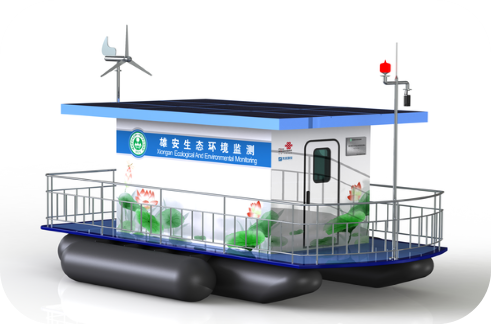
Floating Boat Water Quality Automatic Monitoring System
Hebei Sailhero Environmental Protection High-tech Co., Ltd.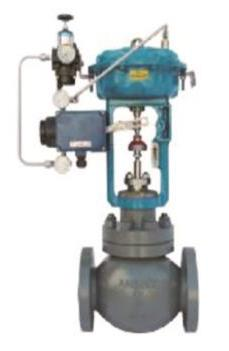
Quick-Change Single-Seat Control Valve / Quick-Change High-Pressure Single-Seat Control Valve
Beijing Consen Automation Technology Co., Ltd.

Pneumatic high-pressure wear-resistant ball valve
Zhejiang Deca Control Valve Meter Co., Ltd.