Polish CTHINGS.CO Secures €1.8M in Funding to Advance Edge AI in North America
en.Wedoany.com Reported - Edge AI platform developer CTHINGS.CO has secured €1.8 million in seed funding from Navivo Capital, which will be used for North American market expansion and the development of the Orchestra platform. This funding comes at a critical stage as edge AI transitions from early pilots to large-scale operational deployment. The Warsaw-based company, founded in 2020, plans to use the new capital to expand sales and partnerships in North America while continuing to advance its Orchestra platform for distributed infrastructure automation.

Market trends are driving an urgent demand for edge AI platforms. Gartner's 2024 research predicts that by 2027, 75% of enterprise-generated data will be created and processed outside traditional data centers or cloud environments. This trend is reshaping how organizations manage connected devices, industrial systems, and real-time analytics, making orchestration, secure device management, and data localization key capabilities.
The Orchestra platform employs a zero-trust security model to help enterprises manage devices, applications, and data flows in distributed IoT environments. For industries such as Industry 4.0, logistics, telecommunications, and critical infrastructure, automating operations at the edge directly impacts cost efficiency and uptime. The company has already partnered with ASUS IoT, Deutsche Telekom, and Wirepas, reflecting the ecosystem integration capabilities that buyers expect. This approach aligns with patterns identified by IDC in 2024, where edge AI platforms are viewed as part of a broader computing cycle rather than standalone tools.
Many enterprises are implementing governance guidelines defined by the NIST AI Risk Management Framework 1.0 (released in 2023). This framework encourages organizations to assess the performance, reliability, and security of AI deployments. For distributed systems, executing model inference at the factory edge or smart grid nodes introduces risks related to physical safety and security vulnerabilities. The platform's emphasis on secure real-time management aligns with these governance requirements.
The IEEE 2894-2022 standard plays a role by defining a reference architecture for edge computing supporting AI workloads, providing a common language for coordinated system design between vendors and buyers. Integrating these frameworks early in the product design cycle helps validate reliability, enabling enterprise buyers to confidently deploy across thousands of nodes.
The North American market is highly competitive, featuring established players such as AWS IoT Greengrass, Microsoft Azure IoT Edge, and NVIDIA Jetson. Startups entering this ecosystem need a focused approach to validate their capabilities and reliability. Securing early capital helps build a foundation to compete for market share against these mature vendors.
For Navivo Capital, this seed round reflects broader investor interest in edge solutions that bridge hardware and SaaS models. Hybrid business models require deep integration of hardware, software, and telecom infrastructure, providing a defensive advantage for platforms capable of executing at scale.
The long-term market opportunity depends on how quickly organizations scale their edge deployments. By 2030, the number of connected IoT devices could reach 39 billion, highlighting the operational challenge many enterprise leaders currently face: securing, monitoring, and updating thousands of distributed assets without creating unmanageable overhead.
Some enterprises are still testing early pilots, while others have begun restructuring architectures to move computing closer to data sources. This shift is primarily driven by latency reduction, privacy requirements, and bandwidth cost savings. Applications such as computer vision, industrial automation, and grid monitoring benefit from low-latency local inference, driving the adoption of edge AI platforms.
As the company deepens its presence in the North American market, its ability to integrate with existing ecosystems and meet enterprise-scale demands will influence the adoption rate of the Orchestra platform. The organization must navigate a landscape defined by rapid expansion, intense competition, and growing expectations for secure and reliable edge operations.
Related Products



G.652.D Wavelength-extended Non-dispersion Shifted Single-mode Optical Fiber
HONGAN GROUP CO., LTD.
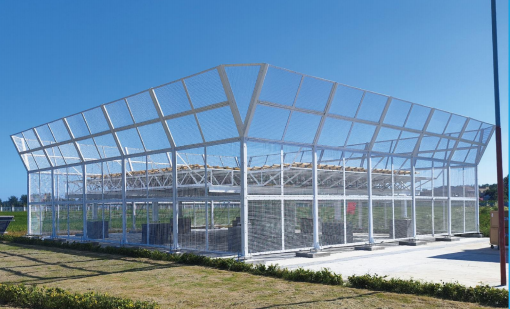
TWP16 P-Band Tropospheric Wind Profile Radar
China Huayun Meteorological Technology Group Co., Ltd.

Multi-function Marine Monitoring Low-altitude Detection Radar Sea-air Boundary Ocean Dynamic Environment Measurement
Chengdu Dixin Technology Co., Ltd.
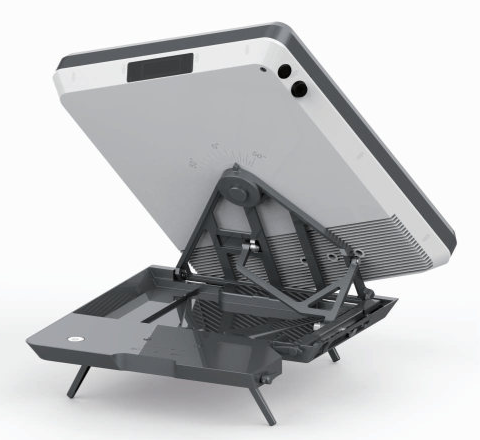
Flat Portable Satellite Terminal 0.35m Aperture Manual Portable Terminal
China Starwin Science & Technology Co., Ltd.

GYTA Type Non-Self-Supporting Aerial/Duct Optical Cable
TONGDING INTERCONNECTION INFORMATION CO., LTD.