Russian Operator AI Pilots Boost Mobile Network Throughput by 20-30%
en.Wedoany.com Reported - Russia's technological path to accelerating mobile internet networks with artificial intelligence has entered the operator pilot phase. Materials from the Russian Ministry of Digital Development (Минцифры) show that operator pilot projects have increased network throughput by 20% to 30% and reduced data transmission latency by approximately half. This effect is evident in existing LTE networks as well as future 5G and 6G networks.

The AI project is intended to handle tasks such as dynamically allocating radio spectrum, predicting load, automatically configuring base stations, and diagnosing faults, enabling network operations with less reliance on human intervention. It autonomously adjusts during overloads, responds proactively when fault risks are anticipated, and detects anomalies to prevent impact on users.
Several Russian operators have implemented such solutions. MTS has introduced an AI-based frequency allocation system and applied neural networks in network planning. T2 uses a Self-Organizing Network (SON) solution to achieve automatic optimization of base station operations. Beeline is also advancing SON technology and launched an "AI Engineer" network agent in 2026 to handle technical incidents. Megafon believes that neural networks can take over complex processes that are difficult for humans to control in real time.
According to expert analysis, one of the key tools is the LSTM model, which can predict traffic and allocate resources for different tasks, from video to the Internet of Things. Market participants note that AI helps extract more potential from existing networks, but a true leap in speed will still require Russia to fully launch 5G.
Related Products


20 Inch 1600*900 Full HD 60Hz TFT LED Monitor with VGA and DP Interfaces for Desktop Computers-Business Use
Guangzhou Zanying Optoelectronics Technology Co., Ltd.
G.652.D Wavelength-extended Non-dispersion Shifted Single-mode Optical Fiber
HONGAN GROUP CO., LTD.

Multi-function Marine Monitoring Low-altitude Detection Radar Sea-air Boundary Ocean Dynamic Environment Measurement
Chengdu Dixin Technology Co., Ltd.

GYTA Type Non-Self-Supporting Aerial/Duct Optical Cable
TONGDING INTERCONNECTION INFORMATION CO., LTD.
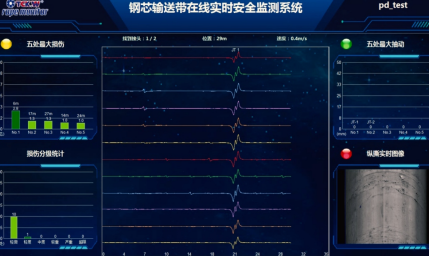
Conveyor Belt Intelligent Monitoring System
LUO YANG WIRE ROPE INSPECTION TECHNOLOGY CO., LTD.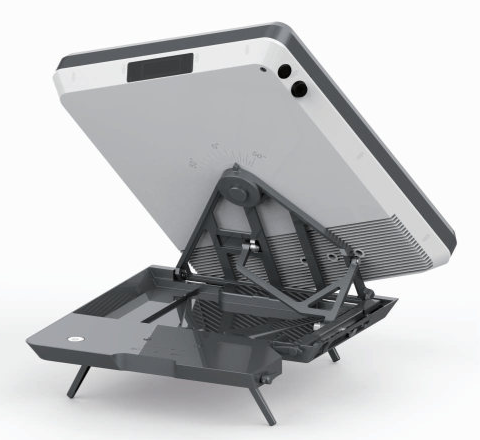
Flat Portable Satellite Terminal 0.35m Aperture Manual Portable Terminal
China Starwin Science & Technology Co., Ltd.
Mine Explosion-proof and Intrinsically Safe Industrial Ethernet Ring Network (10 Gigabit/Gigabit)
Chongqing Mas Sci&Tech Co., Ltd.