Japan's MCDR and NTT Smart Connect Collaborate to Enhance AI Data Center Connectivity in Osaka
en.Wedoany.com Reported - On July 7, Japanese data center operator MC Digital Realty (MCDR) and Japanese data center service provider NTT Smart Connect announced a partnership to connect their data center resources in the Osaka region, enhancing regional network connectivity and meeting the demands of AI infrastructure for high power, high density, and low-latency interconnection environments. The collaboration involves MCDR's KIX campus in the Saito area of northern Osaka and NTT Smart Connect's urban network data centers operating in central Osaka locations such as Dojima and Sonezaki.
The focus of this partnership is to interconnect two types of data center resources with different attributes. NTT Smart Connect operates multiple network-oriented data centers in central Osaka, close to telecommunications carriers, internet exchange points, enterprise networks, and cloud access resources, offering "Dojima Connection" fiber cabling services and DCI (Data Center Interconnect) services. MCDR's KIX campus, located in the Saito area covering Minoh and Ibaraki cities, has a total IT power capacity of 74MW, making it more suitable for hosting AI servers, high-density cabinets, cloud computing, and large-scale enterprise IT workloads. One is close to central network nodes, while the other offers greater power and spatial capacity; together, they can form a more comprehensive data center access structure for Osaka.
AI infrastructure is reshaping data center site selection and interconnection methods. Traditional enterprise IT workloads focus on stable hosting, disaster recovery, network access, and operational services, while AI training, inference, and high-performance computing workloads significantly increase demands for power density, cooling capacity, network bandwidth, and cross-facility interconnection. Large AI clusters may not be entirely suitable for deployment in central city data centers, yet customers still need proximity to carrier networks, cloud service nodes, enterprise private lines, and data exchange points. By connecting the KIX campus with central Osaka data centers, MCDR and NTT Smart Connect aim to bridge the gap between "high-density computing capacity" and "high-connectivity access."
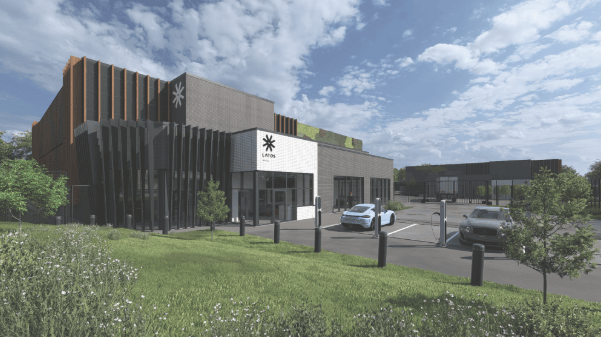
MCDR's KIX campus serves as the computing capacity foundation for this collaboration. The campus has already built multiple data centers, offering large-scale facility resources for cloud service providers, content providers, financial institutions, enterprise IT, and AI-related customers. AI workloads require higher standards for power, cooling, cabinet density, network redundancy, and operational continuity. The 74MW IT power capacity enables the KIX campus to accommodate higher-density deployment needs, adding scalable AI infrastructure space to the Osaka region. As Japanese enterprises and international cloud service providers increase deployments in the Kansai region, Osaka is no longer just a backup node outside Tokyo but is beginning to assume more regional digital infrastructure functions.
NTT Smart Connect's strengths lie in urban network connectivity. Central Osaka areas like Dojima and Sonezaki have long concentrated demands for telecommunications, cloud access, enterprise networks, and data exchange. Urban network data centers are better suited for handling low-latency access, network aggregation, cross-carrier interconnection, and customer proximity connections. Through "Dojima Connection" and DCI services, customers can connect central network nodes with external data centers, reducing the complexity of building duplicate private lines and cross-facility access. Following this partnership with MCDR, customers can obtain network connectivity in the city center while deploying high-power, high-density workloads at the KIX campus.
This combination has practical significance for Osaka's data center landscape. Tokyo has long been Japan's largest data center hub, but factors such as power, land, disaster risk diversification, regional cloud service deployment, and demand from western Japanese enterprises are driving Osaka to take on more digital infrastructure functions. Osaka possesses both central network exchange resources and expandable campus-type data centers on the periphery, making it suitable for a "central interconnection node plus peripheral high-capacity campus" structure. After the MCDR and NTT Smart Connect partnership, customers can more flexibly choose deployment locations without having to make a single choice between network access convenience and high-density facility resources.
This collaboration will also improve data flow methods in the AI era. AI applications often require transferring models, datasets, inference requests, and business data across multiple locations, making it difficult for a single data center to independently cover all needs. Central city nodes handle network exchange and customer access, while campus-type facilities support larger-scale computing and storage capacity. By connecting these through data center interconnects, an integrated environment is formed, reducing the difficulty of cross-facility deployment. For customers requiring hybrid cloud, private AI platforms, multi-region disaster recovery, or cross-facility clusters, this connection method can reduce network architecture design and operational coordination costs.
The implementation focus of the MCDR and NTT Smart Connect partnership will center on interconnection services between their data centers, customer access solutions, and AI workload capacity. Customers in the Osaka region can in the future deploy high-density AI servers at the KIX campus while connecting to carriers, cloud platforms, enterprise private lines, and other data centers via NTT Smart Connect's central network nodes. As AI applications enter more enterprise systems, data centers will no longer just provide facility space; power capacity, network interconnection, low-latency transmission, and multi-site coordination capabilities will collectively determine customer deployment efficiency. This partnership is built around these foundational conditions.
Related Products



Flat Portable Satellite Terminal 0.35m Aperture Manual Portable Terminal
China Starwin Science & Technology Co., Ltd.


MUX Series Communication Interface Device for Security and Stability Control System
Nanjing NR Electric Co., Ltd.
Automatic Aiming Laser Remote Obstacle Removal Robot
Pinggao Group Weihai High-Voltage Apparatus Co., Ltd.


Multi-function Marine Monitoring Low-altitude Detection Radar Sea-air Boundary Ocean Dynamic Environment Measurement
Chengdu Dixin Technology Co., Ltd.