Australia's Black Canyon Wandanya High-Grade Manganese-Iron Expansion Successful
en.Wedoany.com Reported - Australia's Black Canyon (ASX: BCA) has completed the resource definition and expansion drilling program at the Wandanya high-grade manganese-iron project, with a total of 644 holes drilled for 17,200 meters of reverse circulation drilling, most of which covered the 3-kilometer-long reference target area. Drilling has now covered 4.8 kilometers of the entire 9-kilometer mineralized system. The company plans to release its first resource report in the third quarter of 2026.
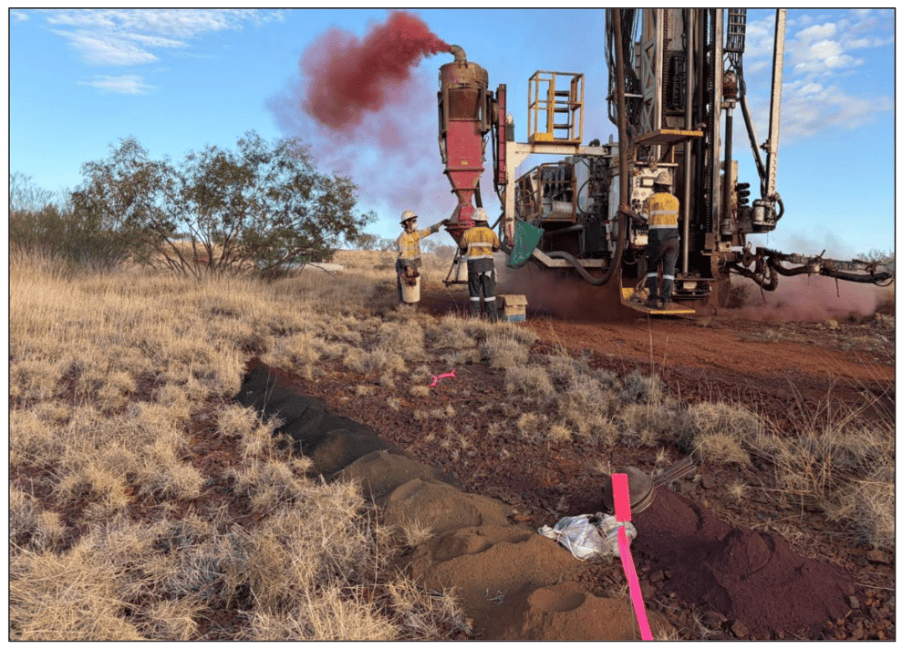
Managing Director Brendan Cummins stated that the high-grade manganese-iron zone at the Wandanya project continues to deliver impressive assay results, further confirming the continuity and scale of mineralization. The infill drilling program replicated the thickest and highest-grade zones reported in the initial wide-spaced drilling program, demonstrating the consistency of this layered mineralization type. The 3-kilometer-long reference target remains a key focus, while additional mineralization has also been identified in the south. Additionally, an approximately 2.8-kilometer-long outcropping iron enrichment zone with minor subcrop manganese extends to the north, yet to be drill-tested.
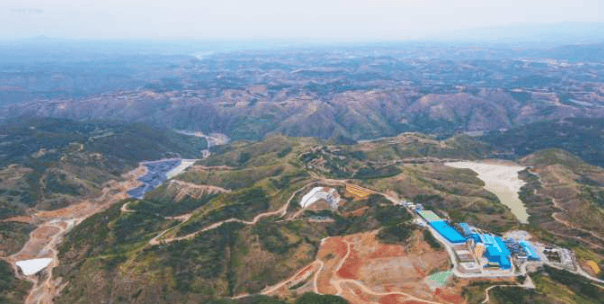
Wandanya is located in the eastern Pilbara region of Western Australia, 80 kilometers south of ConsMin's flagship Woodie Woodie mine. Drilling activities have confirmed extensive and consistent shallow high-grade manganese-iron zones with direct shipping ore (DSO) potential, capable of supplying global steel production. The expansion drilling extended the manganese mineralization zone 400 meters to the south, where it remains open with an additional 1.4 kilometers of extension potential. Northern expansion drilling identified manganese-iron mineralization in wide-spaced holes 200 meters and 500 meters from the 3-kilometer reference target.
Significant manganese assay results include: 10 meters at 35.8% manganese from surface, including 5 meters at 44% from 5 meters (WDRC572); 11 meters at 32.5% manganese from 4 meters, including 4 meters at 41.9% from 10 meters (WDRC654); 9 meters at 36.7% manganese from surface, including 4 meters at 45.1% from 4 meters (WDRC551). Significant iron assay results include: 17 meters at 59% iron from 1 meter, including 8 meters at 61.1% from 7 meters (WDRC646); 16 meters at 58.5% iron from 2 meters, including 8 meters at 62.8% from 7 meters (WDRC645); 16 meters at 57.7% iron from surface, including 8 meters at 62.7% from 2 meters (WDRC632).
Cummins noted that resource expansion drilling targeted the 400-meter-long outcropping manganese zone, with mineralization confirmed down-dip. Further south, mapping and rock chip results confirmed iron-manganese mineralization outcrops extending over 1.4 kilometers, representing an opportunity to expand the mineralized footprint. Northern resource expansion drilling results revealed shallow, medium-grade iron zones within 500 meters of the northern boundary of the 3-kilometer reference target, with the manganese zone extending an additional 200 meters to the north, providing medium-grade zones. Further north, the company has mapped and sampled a significant 2.8-kilometer-long iron-enriched ridge, with drilling tests planned in the coming months.
Iron ore drop weight tests produced a high proportion (74%) of lump product at 59.7% iron. Lump ore commands a premium over fines as it does not require sintering before being fed into the blast furnace. Within the 1.3-kilometer iron mineralization zone of the 3-kilometer-long reference target, lateral widths range from 150 meters to 350 meters, with multiple holes reporting orebody thicknesses exceeding 10 meters and up to 17 meters from surface. High-grade mineralization is predominantly hematite, accompanied by lower-grade goethite/limonite halos.
Drilling will resume in August to further test the entire 9-kilometer-long mineralized system. Assay results from 7,200 samples from the completed resource definition program (WDRC664 to WDRC929) are expected to be released within the next four to six weeks. Planned exploration drilling will continue to evaluate the 1.4-kilometer and 2.8-kilometer targets in the south and north. Input data for the first mineral resource estimate is being collected, including LiDAR, DGPS collar surveys, and downhole density measurements, with release expected in the third quarter of 2026, and a scoping study planned for completion in the fourth quarter of 2026. A detailed gravity survey, co-funded by the Western Australian Government's Exploration Incentive Scheme, is scheduled to begin in mid-July to test deeper manganese targets. DMS pilot plant tests for Mixed Manganese 1 and 2 have been completed, with final assay results pending.