China's Agent Internet Moves from Concept to Practical Implementation
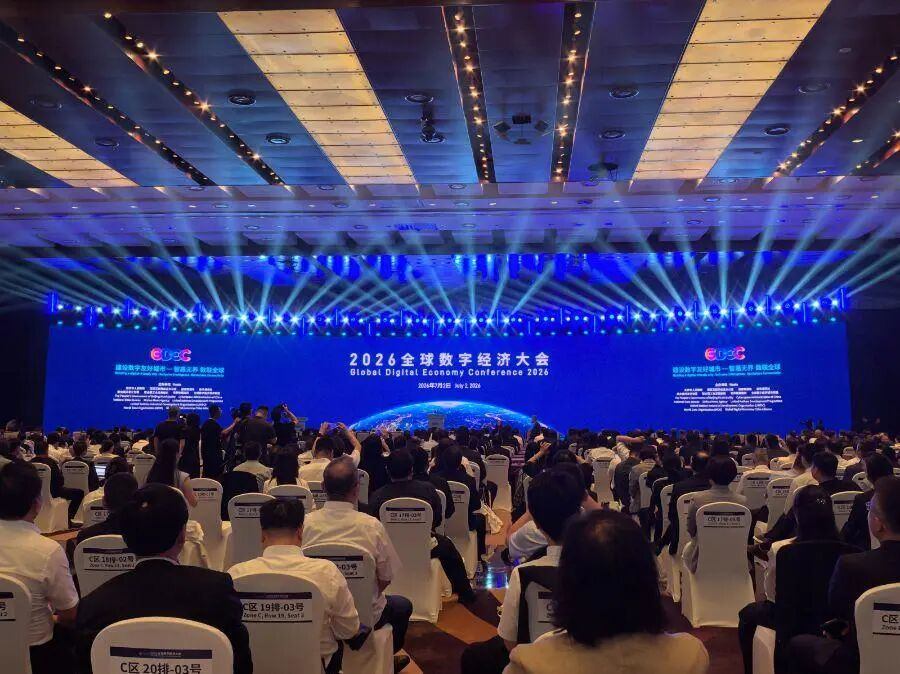
en.Wedoany.com Reported - Recently, the 2026 Global Digital Economy Conference opened in Beijing. Han Xia, Executive Deputy Director and Secretary-General of the Information and Communication Technology Committee of the Ministry of Industry and Information Technology, stated at the Agent Internet Forum of the conference that China's Agent Internet is moving from conceptual vision to practical implementation. The global Agent Internet is currently in a critical window period for establishing technological and governance paradigms. Accelerating the evolution of agents from single-agent intelligence to collective intelligence, and from closed applications to open collaboration, is of great significance for seizing the opportunities of intelligent technology and industrial transformation, as well as for building a new pattern of China's artificial intelligence development.
Han Xia pointed out that 2026 marks a strategic window period for the large-scale implementation of the agent industry. The Central Committee of the Communist Party of China and the State Council have identified the cultivation and development of agents as a key lever for deepening the "AI+" strategy. This year, China's Two Sessions further incorporated this into the government work report, explicitly proposing to accelerate the promotion of next-generation intelligent terminals and agents, drive the commercial and large-scale application of AI in key industries and sectors, and cultivate new business models and formats native to intelligence. This further clarifies the national strategic positioning of the agent industry and outlines a blueprint for future development. With the joint efforts of the entire industry, China's Agent Internet has achieved a series of positive progress. However, prominent issues remain, including unclear technical system architecture, the urgent need to upgrade network infrastructure, unstandardized identification protocols and standards, and the need to improve security governance systems.
In response, Han Xia put forward four suggestions. First, focus on technological breakthroughs to consolidate the development foundation, strengthening research on key technologies such as basic theories, system architecture, identity identification, capability discovery, and task orchestration for the Agent Internet, and promoting the coordinated advancement and evolution of core protocols and standards. Second, strengthen facility construction and promote pilot projects, addressing the new demands of large-scale agent applications for network, computing power, data, models, and security capabilities, driving the upgrade of network infrastructure towards intelligence, collaboration, and trustworthiness, and supporting pilot initiatives in regions, industries, and scenarios with a solid foundation and favorable conditions. Third, deepen integrated innovation and expand application scenarios, leveraging the advantages of agents in autonomous perception, task decomposition, collaborative decision-making, and tool invocation, focusing on key areas such as advanced manufacturing, software services, digital consumption, government services, and urban governance. Fourth, coordinate development and governance to jointly build an industrial ecosystem, balancing the encouragement of innovation with standardized development, improving governance capabilities in standards, testing and evaluation, monitoring and disposal, and promoting enhanced collaboration among industry, academia, research, and users to jointly build an open, collaborative, secure, trustworthy, and prosperous Agent Internet industrial ecosystem.
Related Products


G.652.D Wavelength-extended Non-dispersion Shifted Single-mode Optical Fiber
HONGAN GROUP CO., LTD.
Comprehensive Mining Automation Control System
Beijing Tianma Intelligent Control Technology Co., Ltd.


GYTA Type Non-Self-Supporting Aerial/Duct Optical Cable
TONGDING INTERCONNECTION INFORMATION CO., LTD.
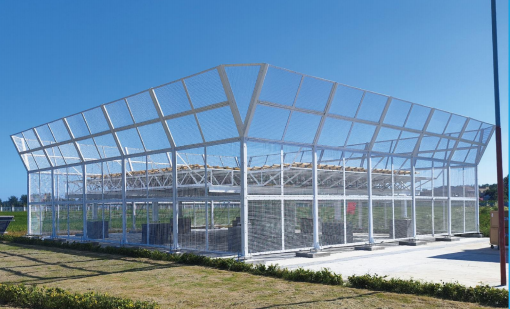
TWP16 P-Band Tropospheric Wind Profile Radar
China Huayun Meteorological Technology Group Co., Ltd.
MUX Series Communication Interface Device for Security and Stability Control System
Nanjing NR Electric Co., Ltd.
Industrial and Commercial Point-Type Gas Detector
Jinan Benan Technology Development Co., Ltd.

Automatic Aiming Laser Remote Obstacle Removal Robot
Pinggao Group Weihai High-Voltage Apparatus Co., Ltd.