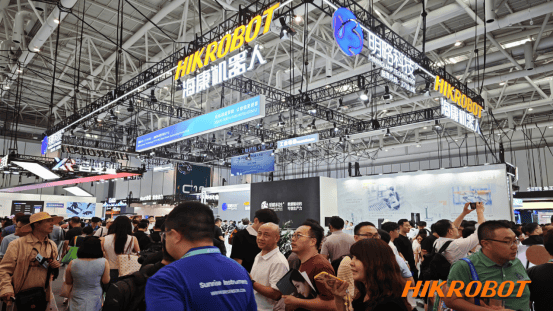
Intel China Showcases Agentic PC Ecosystem with Over 20 Application Demonstrations
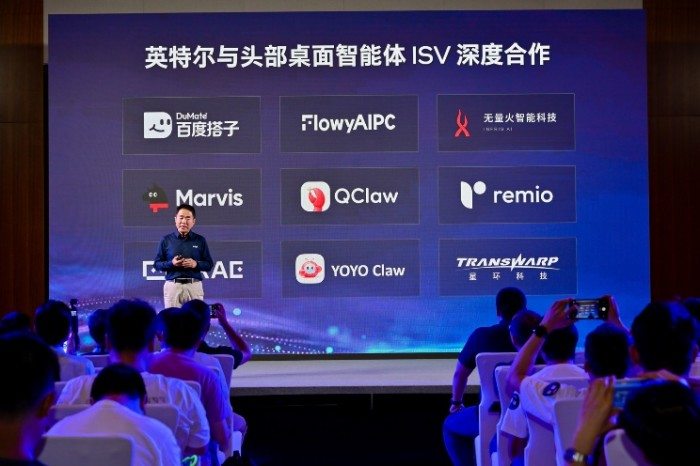
en.Wedoany.com Reported - Intel recently held an event centered on the theme "Accelerating the Adoption of Agentic PCs," showcasing its latest collaborative progress and implementation results in areas such as hybrid AI deployment, key local AI capabilities, model routing mechanisms, memory cost optimization, and Skills ecosystem development. Together with partners including Flowy, QClaw, remio, TRAE, DuMate, YOYO Claw, and Marvis, Intel presented over 20 agentic PC application demonstrations targeting office, entertainment, gaming, and education scenarios.

Gao Yu, General Manager of Intel China Technology Group, stated that AI is driving personal computing from tool enhancement towards an intelligent companion stage. By building an overall framework for agentic PCs, Intel focuses on three core areas: hybrid AI deployment, model routing, and the Skills ecosystem. It collaborates with PC manufacturers, desktop agent ISVs, model vendors, and the developer community to jointly create agentic PCs tailored for real-world scenarios.
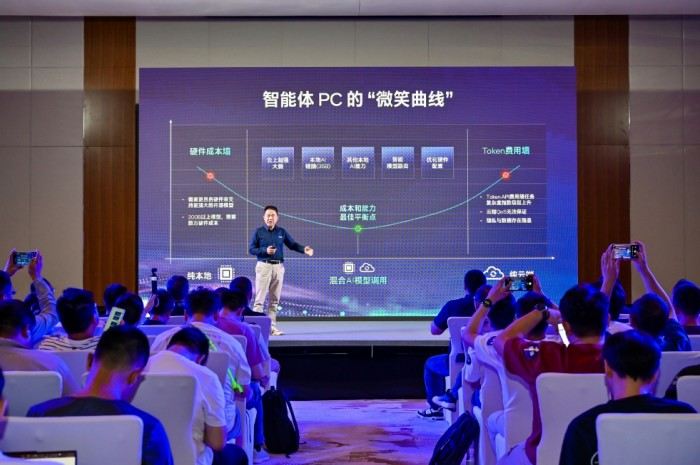
Addressing the pain points of high cloud token consumption and increased hardware costs from pure local solutions in agentic PC development, Intel's solution adopts a device-cloud collaborative hybrid AI deployment combined with intelligent model routing scheduling to balance cost and capability. To achieve this goal, Intel proposes three pathways: First, possessing seven key local AI capabilities—LLM, ASR, OCR, TTS, CV/VLM, Image Gen, and Omni—covering the entire AI interaction process; Second, launching the Intel SuperClaw model routing solution to automatically decompose tasks, intelligently schedule local and cloud computing power, and perform information desensitization before uploading to the cloud; Third, through MoE expert offloading technology, collaborating with AI SSD manufacturers such as Longsys and Phison Electronics to save approximately 10GB of memory usage for running a 35B model, enabling mainstream 32GB systems to run the model smoothly and support multi-task parallel processing.
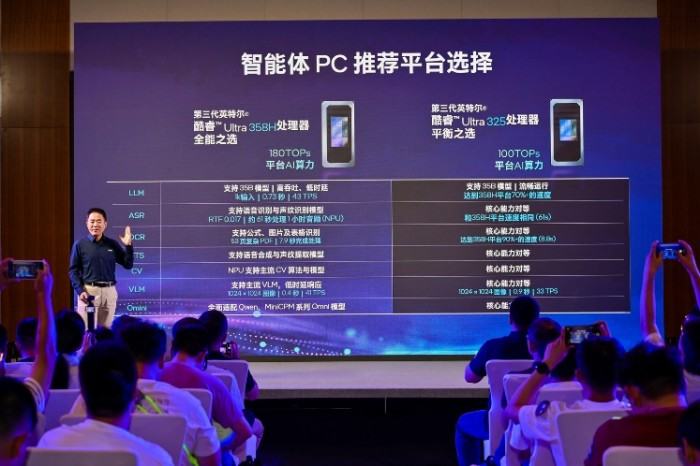
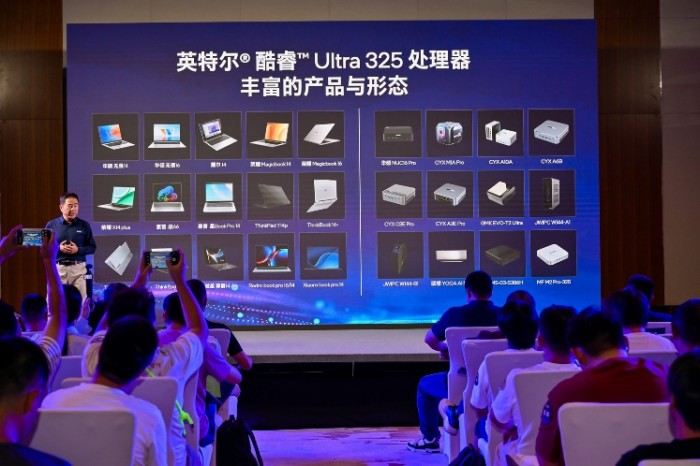
At the platform level, the 3rd Gen Intel Core Ultra 358H processor delivers up to 180 TOPS of platform computing power, capable of smoothly running a 35B large language model and six other multimodal models locally. Meanwhile, the Core Ultra 325 processor offers 100 TOPS of platform computing power, covering mainstream scenarios such as daily office work, content creation, and AI assistance with a more optimized cost structure. It is currently adopted in mainstream models from numerous OEMs and AI mini PCs.
In terms of the software ecosystem, Intel is working with ecosystem partners to enrich Skills applications. Specific examples include: Flowy integrates AI SSD solutions to improve Qwen3.5 decoding speed and reduce prefill time for long-context scenarios on the Core Ultra platform; QClaw integrates multiple AI capabilities from the Intel Skills Zone to enhance on-device task execution performance; remio leverages the Intel NPU to improve semantic indexing and meeting transcription efficiency, with overall costs lower than cloud-based solutions; TRAE WORK achieves zero-cost voice-to-text conversion and local text-to-image generation through built-in Skills; DuMate can deploy a 35B large model and multimodal models on-device; YOYO Claw enables device-cloud routing collaboration and connects to the Skills Zone; Marvis, through deep collaboration with Intel at the chip level, will soon launch a "Local Mode" that works without an internet connection.
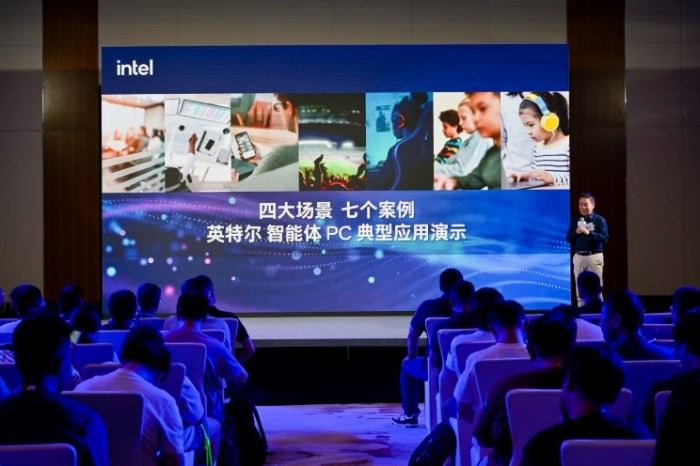
During the application demonstration session, Intel and its partners showcased the optimization effects of agentic PCs in real-world workflows, covering scenarios such as knowledge work, smart expense reimbursement, content creation, sports entertainment, esports, smart education, and early childhood learning. Specific demonstrations include: remio batch-importing documents and recordings for AI transcription and cross-document analysis; Marvis automatically organizing invoices in local mode to automate the reimbursement process; QClaw automatically performing trend capture, copywriting, image generation, and layout publishing; Flowy's "Love Watching Football" AI assistant leveraging local computing power to identify and push highlights from football matches; the Intel AI Game Assistant understanding game screens in real-time and providing strategies; in the smart education scenario, automatically generating narrated videos from photos; and in the early childhood learning scenario, using a camera to recognize literacy cards in real-time and conduct voice-based Q&A.
Related Products


Multi-function Marine Monitoring Low-altitude Detection Radar Sea-air Boundary Ocean Dynamic Environment Measurement
Chengdu Dixin Technology Co., Ltd.
MUX Series Communication Interface Device for Security and Stability Control System
Nanjing NR Electric Co., Ltd.
Conveyor Belt Intelligent Monitoring System
LUO YANG WIRE ROPE INSPECTION TECHNOLOGY CO., LTD.

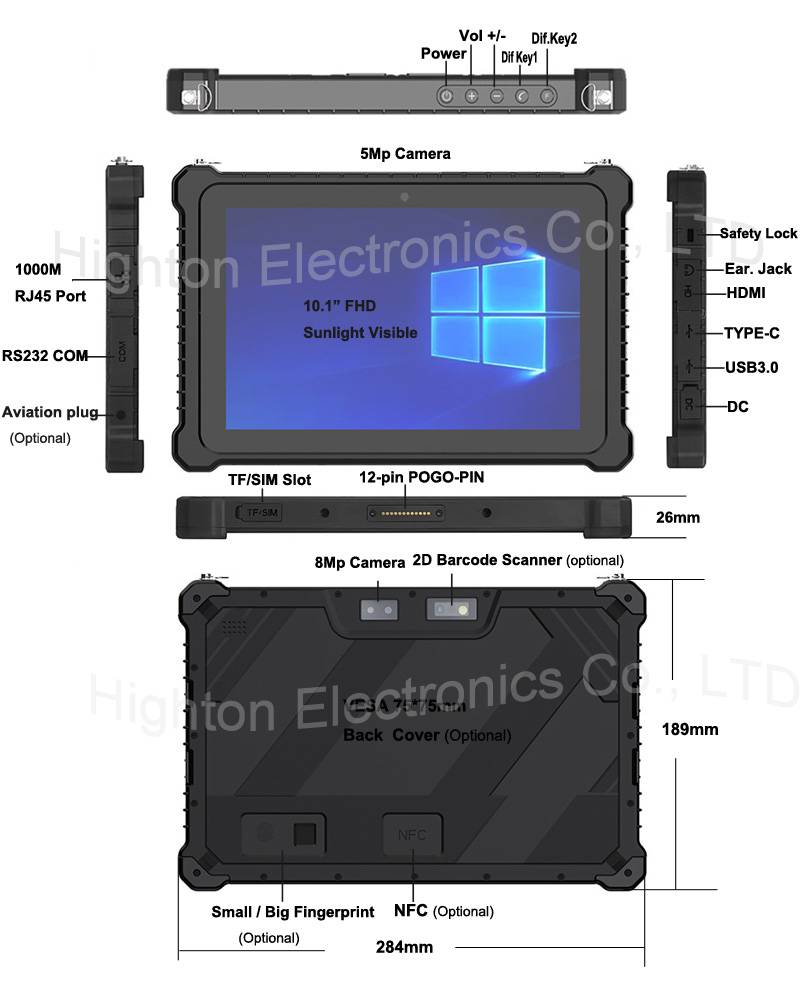
Hot Selling 10 Inch Intel N5100 I5 I7 FHD 8 +128GB 16+256GB Win10 Pro Win11 Pro 4G 5G Rugged Tablet PC Pad with NFC Barcode
Highton Electronics Co., Ltd.
G.652.D Wavelength-extended Non-dispersion Shifted Single-mode Optical Fiber
HONGAN GROUP CO., LTD.