US Revokes General License for Iranian Oil Sales; Oil Prices Surge Over 5% in After-Hours Trading
en.Wedoany.com Reported - International oil prices closed up about 3% on Tuesday, as the US revoked a general license authorizing the sale of Iranian crude, alongside reports of multiple tanker attacks near the Strait of Hormuz, reigniting concerns over potential disruptions to Middle Eastern oil supplies. Sources also revealed that Saudi Arabia is considering expanding its oil pipeline network to the Red Sea.
Brent crude futures settled up $2.17 at $74.16 per barrel, a gain of 3.01%; US West Texas Intermediate (WTI) crude rose $1.89 to $70.44 per barrel, up 2.76%. In after-hours trading, Brent climbed $1.87 to $76.03, while WTI jumped $1.76 to $72.2 as of 3:26 PM ET, following news that the US had revoked the general license authorizing the sale of Iranian oil. Both benchmark contracts surged over 5% compared to the previous day's settlement prices.
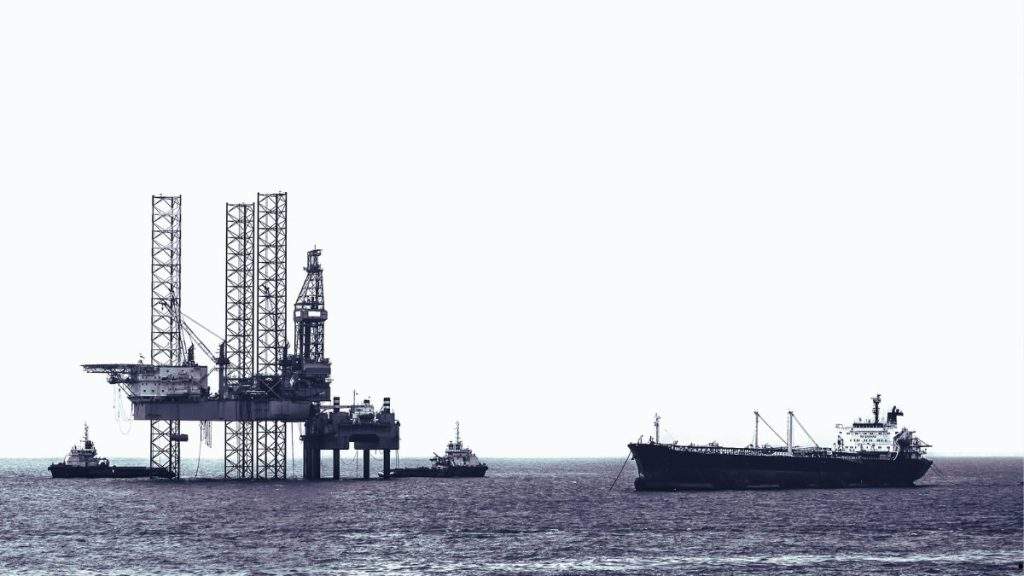
On Tuesday, three tankers were attacked in the Strait of Hormuz, including a Qatari liquefied natural gas (LNG) carrier, which Qatar identified as being struck by an Iranian drone. A Saudi-flagged crude oil tanker (believed to be the very large crude carrier Wedyan) was also damaged near Oman, with the cause remaining unclear.
In response to these incidents, a US official said Tuesday that Washington has warned Iran that its actions in the Strait of Hormuz are "completely unacceptable" and will carry consequences.
In June, the US and Iran signed a memorandum of understanding aimed at ending the Iran war and reopening the Strait of Hormuz. Bob Yawger, head of energy futures at Mizuho, said the US decision to revoke the oil license indicates that Iran has gone too far. He added that it remains unclear whether Iran's actions were intended to assert authority in the Strait of Hormuz or primarily to demonstrate strength during ceremonies mourning Ayatollah Ali Khamenei. Yawger expects the move will not have a lasting impact on Tehran's crude export capacity or the prospects of a broader agreement, stating that he believes it is not in anyone's interest to fail to reach a deal.
Ajay Parmar, director of energy and refining at ICIS, believes the ceasefire among parties is actually very fragile, with sporadic further attacks and increased volatility likely in the coming months. Giovanni Staunovo, an analyst at UBS, said that renewed tensions in the Middle East and concerns over ship attacks could weigh on Middle Eastern oil exports, potentially leading to a decline.
Iran's foreign minister said Tuesday that negotiations for a final agreement between Tehran and Washington will not proceed if US threats continue. This follows a threat from US President Donald Trump to "get the job done" unless a deal is reached. Investors are closely watching US-Iran talks and their impact on shipping through the Strait of Hormuz, which before the start of the Iran war carried one-fifth of the world's daily oil and LNG supply.
Also on Tuesday, Kyiv's military said Ukrainian drones attacked eight tankers from Russia's "shadow fleet," older vessels used to evade sanctions, which were transporting fuel to Crimea overnight.