Chinese Institutions Achieve 27.31% Efficiency in Inverted Perovskite Solar Cells via Dual-Molecule Engineering
en.Wedoany.com Reported - Researchers from multiple institutions across mainland China and Hong Kong have reported a dual-molecule interfacial engineering strategy for inverted (p–i–n) perovskite solar cells, achieving a certified efficiency of 27.31%. This approach combines the phosphonic acid-based self-assembled monolayer Me-4PACz with a synergistic modifier, 9H-carbazol-2-yl trifluoromethanesulfonate (CzOTf), to form a hybrid and interface-locked molecular layer at the NiOx/perovskite interface. CzOTf is designed to stabilize charge extraction, passivate buried Pb-related defects, and alleviate tensile stress that can deteriorate perovskite crystallization and interfacial degradation, while suppressing Ni3+-induced redox loss pathways.

The optimized devices achieved a certified efficiency of 27.31% (best device: 27.32%), with an open-circuit voltage of 1.185 V, a short-circuit current density of 26.30 mA/cm², and a fill factor of 87.64%. Reference devices without CzOTf exhibited an efficiency of 26.20%. The strategy was extended to perovskite/silicon HJT tandem cells (32.84%) and large-area 766 cm² modules (21.54%). In terms of stability, the devices retained 92% of their initial efficiency after 2000 hours of continuous illumination, and the modules operated stably outdoors for 35 days.
Me-4PACz, a phosphonic acid-based molecule, anchors onto the NiOx surface via phosphonate groups to form a dense monolayer interfacial layer, resisting desorption and locking the interfacial chemistry. Its carbazole-based functional electron/charge interaction sites passivate electroactive NiOx-perovskite interface traps, reducing non-radiative recombination. This interfacial monolayer also improves the wettability and contact at the NiOx/perovskite interface, promoting more uniform perovskite nucleation. The coordination effect of Me-4PACz suppresses the formation of undercoordinated lead and other deep-level defects near the surface, reducing trap-assisted recombination pathways. CzOTf complements Me-4PACz by pairing with the interfacial chemical environment through its sulfonate anion-related functionality and carbazole moiety, further stabilizing near-surface defect states in the perovskite and helping neutralize buried charge imbalance sites formed during operation. The dual-molecule layer improves charge extraction by modulating interfacial energy levels, alleviates mechanical mismatch at the NiOx/perovskite interface, and acts as a barrier to ion migration, thereby reducing redox-driven degradation at the junction. The resulting NiOx/perovskite contact maintains crystal quality and mitigates interfacial degradation under continuous illumination and outdoor conditions.
Related Products


714CD Series C-Band Weather Radar
Chengdu Zhongdian Jinjiang Information Industry Co., Ltd.
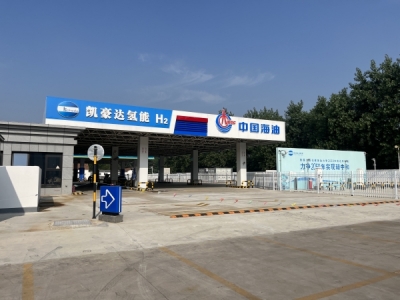
Hydrogen production and hydrogenation charging refueling gas integrated energy station
Shenzhen Kohodo Hydrogen Energy Co., Ltd.

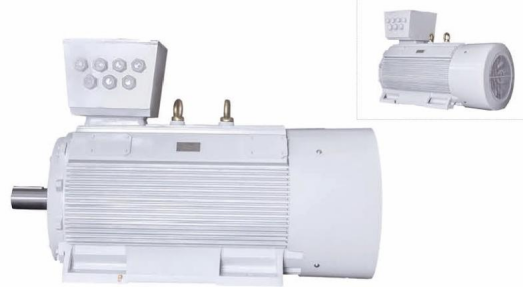
YE3 Series Low Voltage High Power Three-Phase Asynchronous Motor
Shandong Lijiu Electrical Machinery Co., Ltd.