en.Wedoany.com Reported - The simulation computing platform and digital-intelligent display and exchange hall of the CNNC 404 Nuclear Fuel Cycle Digital Simulation Laboratory have been put into operation, achieving the functional integration of "equipment digital design + virtual testing + process condition simulation analysis," significantly enhancing high-performance simulation computing capabilities and providing technical support for application scenarios such as on-site equipment R&D, production parameter optimization, and process fault analysis.
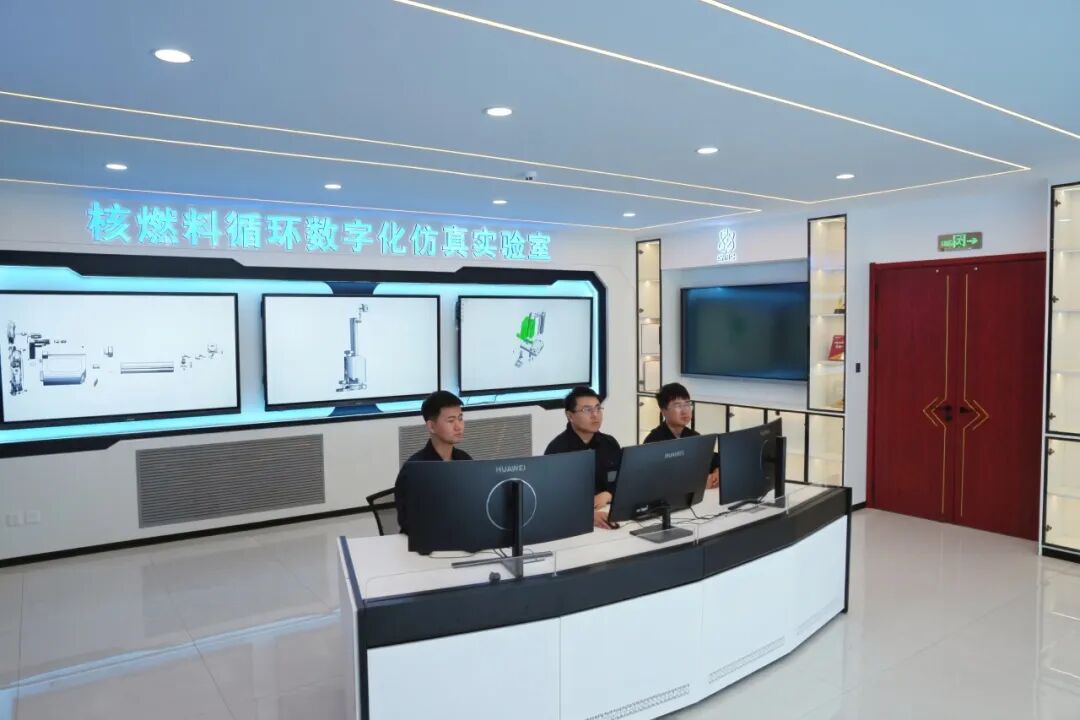
The laboratory focuses on four major research directions: digital nuclear chemical simulation, robot integrated R&D, artificial intelligence applications, and radiation protection and criticality calculation. It centers on the actual production needs of the entire nuclear chemical process, utilizing simulation modeling, intelligent equipment, AI algorithms, and safety verification to enhance safety, intelligence, and lean management levels. The laboratory has received multiple recognitions in technical breakthroughs and application practices, including the first prize in the National Simulation Innovation Application Competition, the third prize in the CNNC Science and Technology Progress Award, the third prize in the CNNC Third "Galaxy Cup" Systems Engineering Competition, and the second prize in the Gansu Province First Industrial Robot Competition, with a total of over 30 invention patents and software copyrights.
The simulation laboratory utilizes multi-dimensional and multi-type digital simulation technologies to select appropriate modeling schemes based on different process characteristics of nuclear chemistry. It focuses on simulation research in five key scenarios: key equipment performance optimization, detection device development, nuclear safety, pipeline network hydraulic verification, and extraction equipment fault diagnosis. Through virtual space simulation, it completes parameter optimization, performance verification, condition simulation, and fault diagnosis modeling, replacing physical experiments with simulated experiments to optimize equipment structure and operating parameters, reduce material loss from physical tests, and provide technical support for production line process optimization and equipment operation and maintenance.
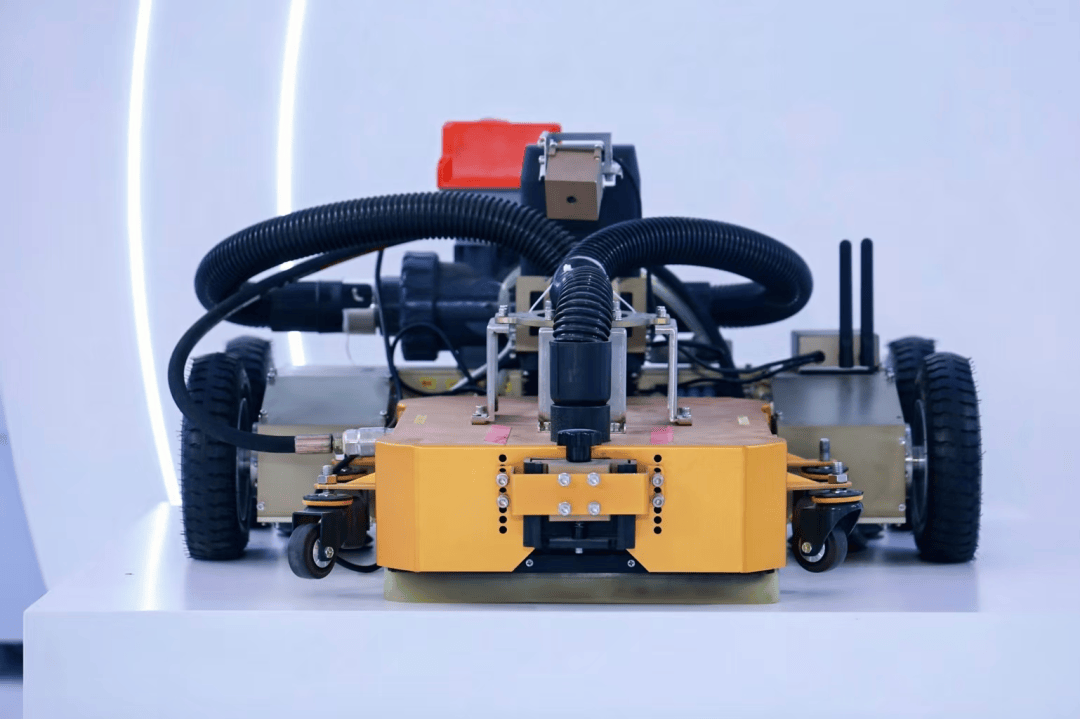
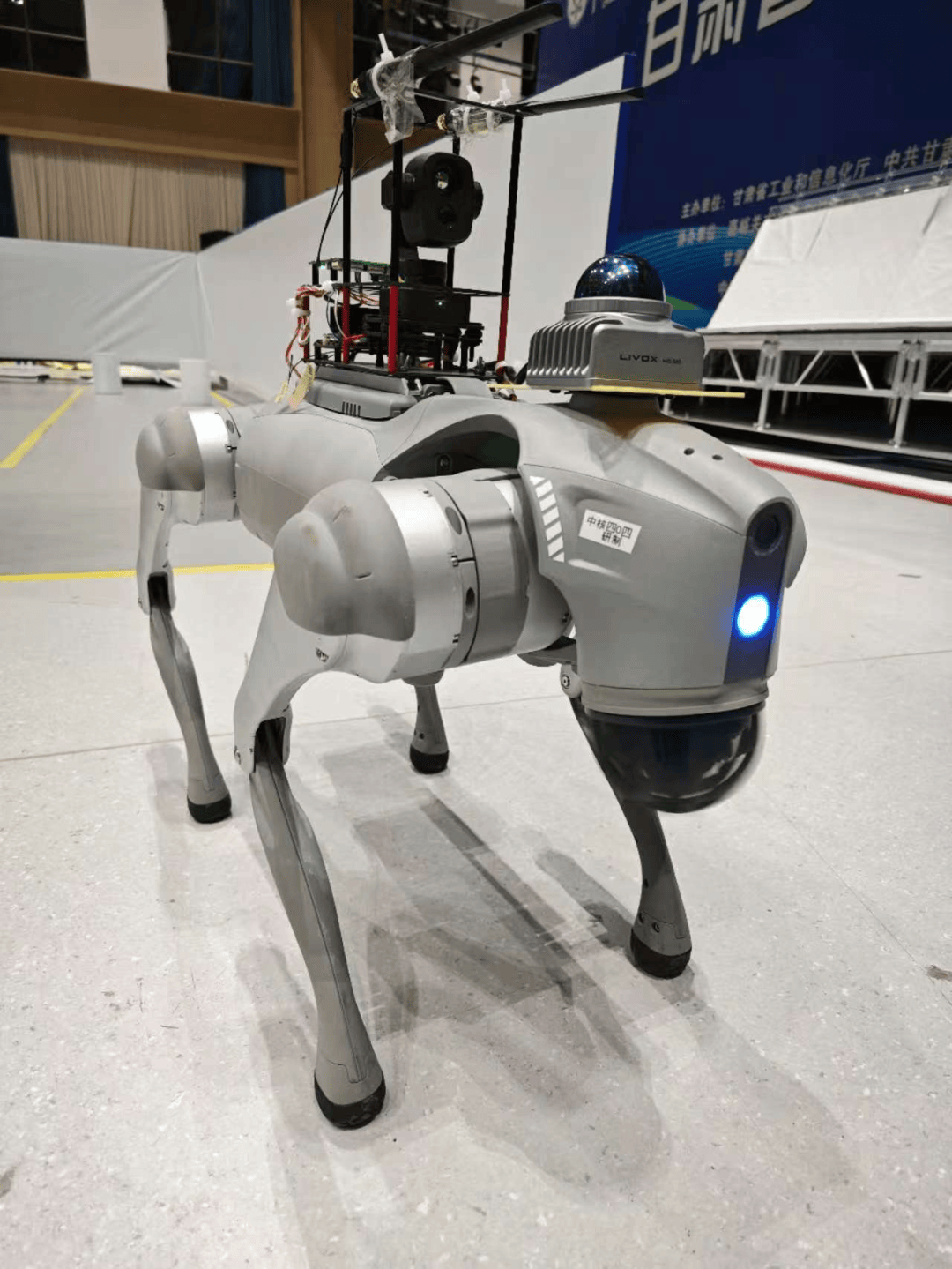
In terms of intelligent equipment, the laboratory focuses on two major operations: general survey of radioactive facilities and intelligent inspection of the plant area. It has developed multiple products, including survey robots, rail-mounted inspection robots, wheeled inspection robots, and inspection drones, building a multi-form collaborative intelligent inspection system. Survey robots are responsible for site inspection and marking, while rail-mounted and wheeled robots, along with drones, complete full-scenario fixed-point and wide-area inspections. Automated equipment replaces personnel in high-risk areas, reducing radiation exposure risks and accelerating the intelligent transformation of nuclear facility inspection and detection modes.
The simulation laboratory also leverages AI technologies such as intelligent agents and large models to mine the value of scientific research data assets through data models, improving the precision of production and R&D management. In the first round, over 60 scenarios were collected, and 10 scenarios with high application value were selected and demonstrated, achieving the deployment of intelligent tools covering scenarios such as production scheduling, procurement management, and radiation accounting. The intelligent water volume prediction and scheduling system integrates the entire chain of plant water usage data, enabling intelligent control of water source scheduling; the intelligent radiation shielding rapid calculator, based on computational data modeling, is transformed into a lightweight proxy model application software, capable of quickly completing radiation shielding calculations for containers, components, glove boxes, and other devices, supporting protective structure design.
In terms of radiation protection and criticality safety, the laboratory uses Monte Carlo simulation calculations as the core to build high-precision reconstruction models. Focusing on the needs of plant shielding design and process equipment safety assessment, it conducts four types of specialized verification: radiation protection design, criticality safety assessment, protection scheme evaluation, and criticality safety recalculation. For key areas, the laboratory uses digital verification methods to accurately calculate spatial radiation dose distribution, verify the compliance of existing shielding structures, identify protection weaknesses, and output optimized shielding rectification and operation control plans, ensuring radiation safety and criticality safety of nuclear facilities throughout the entire lifecycle from design and commissioning to operation and maintenance.
CNNC 404 will continue to anchor the "Digital Nuclear Industry" construction goal of CNNC, deepen technological iteration, promote the deep coupling of digital twin technology with full-series robots and simulation systems, build a digital nuclear chemical integrated management platform, expand the application of artificial intelligence in scenarios such as process optimization, fault diagnosis, and intelligent radiation early warning, enrich the intelligent equipment production line, and explore deeper integration of digital-intelligent technology with nuclear chemical production.