New South Wales Government Invests AUD 105.5 Million to Support Agricultural Projects
en.Wedoany.com Reported - The New South Wales (NSW) Government of Australia is supporting 14 agricultural projects through its Agricultural Industry Innovation and Growth Program, with a total investment scale of AUD 105.5 million. The state government is providing AUD 28 million in grants, with project proponents contributing AUD 77.5 million in matching funds. The funding will be used for technology application, equipment upgrades, and processing capacity building to enhance agricultural productivity, regional supply chain capabilities, and export service levels.
The program adopts a co-investment model between the government and enterprises, with government funds primarily aimed at leveraging subsequent investments from regional agricultural businesses. From 2024 to 2025, the total gross value of primary production in NSW reached a record AUD 25.5 billion. The state government stated that it has invested AUD 100 million in agricultural research over the past year and over AUD 1 billion in the biosecurity system. In the grain supply chain, AgConnex received AUD 4 million to upgrade the loading, storage, and processing capacity of the Western Riverina Connect rail siding near Griffith. In controlled environment agriculture, Provenance Propagation received AUD 2.1 million to add 1.38 hectares of controlled environment nursery area and introduce automation and advanced production systems; Hortifutura received AUD 500,000 to convert waste into renewable energy, heat, CO2 fertilizer, and recycled water. The projects also cover agricultural processing and waste resource utilization. For example, Eringoarrah Pty Ltd received approximately AUD 3.94 million to build an off-grid farm livestock processing facility near Wagga Wagga; Topsoil Organics will construct an anaerobic digestion project to convert agricultural, food, and garden organic waste into biomethane and on-site electricity. Additionally, Southern Cotton will build a cotton ginning waste recycling system to process waste into livestock feed and field fertilizer; AWH will establish a digital wool auction and processing center in Goulburn.
Canadian food and impact investment firm InvestEco Capital announced the final close of its fourth Sustainable Food Fund, Sustainable Food Fund IV, with total commitments reaching CAD 106 million, making it the largest fund in the company's history. The fund will continue InvestEco's investment strategy in high-growth food companies, focusing on health, sustainability, and food innovation-related projects.
Investors in this fund include Farm Credit Canada, Export Development Canada, Business Development Bank of Canada, Fonds de solidarité FTQ, as well as Boann and Realize Capital Partners, which are associated with the Government of Canada's Social Finance Fund, in addition to several private investors and family offices. Fund IV has already completed investments in Humble Snacks, Little Sesame, Mid-Day Squares, and Algae Cooking Club, covering areas such as healthy snacks, plant-based foods, and novel cooking ingredients. Founded in 2002 and headquartered in Toronto, Canada, InvestEco is a venture capital and impact investment firm focused on the food sector. Its investment focus is primarily on growth-stage North American food companies, evaluating their commercial growth potential and the health and sustainability value of their products. InvestEco stated that Fund IV is expected to complete an additional 6 to 10 investments over the next few years.
UK investment firm Oxford Technology announced an investment in veterinary diagnostics company Accelerated Diagnostics. The company is developing an ultra-rapid point-of-care testing platform aimed at identifying animal pathogens on-farm using saliva samples in approximately one minute, reducing reliance on laboratory PCR testing. The company plans to bring its first products to market in the autumn of 2026.
Accelerated Diagnostics' platform targets low-cost, rapid, on-site testing needs. Its approach involves testing collected saliva samples using dedicated reagents configured for different pathogens. The company was co-founded by Mana Saeed, who has a background in electrochemical sensor research, and healthcare entrepreneur Andrew Wheeler. The company has identified bovine tuberculosis as one of its initial key testing targets, and the platform is also planned to be adapted for animal diseases such as Newcastle disease in poultry. Accelerated Diagnostics is currently prioritizing the veterinary diagnostics market. Funding from Oxford Technology will support the company in extending its operational runway into 2027 and driving its first commercial sales. Oxford Technology primarily invests in early-stage UK technology companies through SEIS and EIS tax-advantaged funds.
Tunisian agtech company RoboCare has received a six-figure investment from venture capital firm 216 Capital. Founded in 2020 and headquartered in Sfax, Tunisia, RoboCare develops a precision agriculture management platform that integrates satellite imagery, drones, IoT sensors, weather data, and agronomic expertise to identify early signs of crop disease and stress, providing decision-making support for farm management.
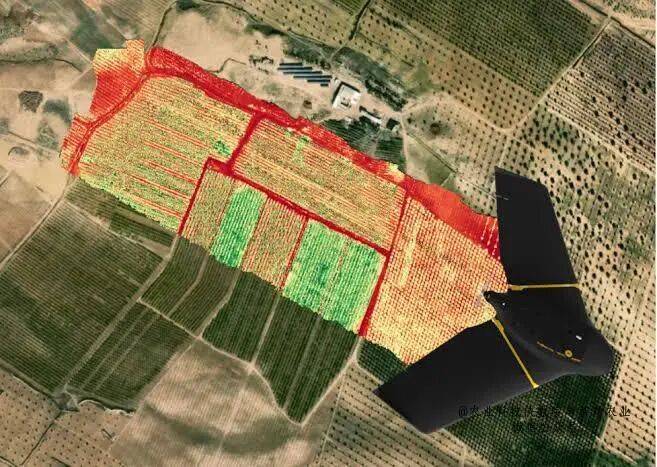
RoboCare integrates multi-source agricultural data onto a single management platform, analyzing crop status using AI models. According to the company, its platform has achieved up to 35% water savings, up to 25% reduction in agricultural inputs, and up to 20% yield improvement in some field applications. Unlike general-purpose agricultural data platforms, RoboCare focuses on key crops for North Africa and the Middle East, such as olives, cereals, and processing tomatoes, training its models based on local soil, climate, and growing conditions. The company states that its platform currently covers thousands of hectares of smart monitoring area and has generated thousands of agronomic alerts. The funding will be directed towards three main areas: entering more markets in Africa and the Middle East; expanding the commercial team to enhance service capabilities for large agricultural enterprises; and continuing to optimize models to adapt to new crops and agricultural environments.
Syngenta Group announced that its Board of Directors has unanimously appointed Hengde Qin, currently Chief Operating Officer and Head of Seeds, as the Group's new Chief Executive Officer, effective August 1, 2026. Current CEO Jeff Rowe will continue in his role until that date before returning to the United States.
Hengde Qin joined the Syngenta Group management team in 2020, previously serving as President of Syngenta Group China, Chief Human Resources Officer, and Chief Financial Officer, before assuming the roles of Chief Operating Officer and Head of Seeds in May 2026. During his tenure leading the China business, Qin drove growth and profitability improvements. He is currently based at the Group's headquarters in Basel, Switzerland, and serves as a member of the Syngenta Group Board. Prior to joining Syngenta Group, Qin held management positions at Sinochem International, Sinofert, China Seed, Winall Hi-tech Seed, and Yangnong Chemical. Jeff Rowe joined Syngenta in September 2016, leading the Seeds business and subsequently the Crop Protection business, before becoming Group CEO in early 2024. Syngenta Group stated that he drove the turnaround and growth of the Seeds business and was responsible for the Group's largest business segment, Crop Protection.
DJI Agriculture has launched the DJI Agras T55 and the DJI Agras T100 dual-battery spraying system. The T55 supports multiple tasks including spraying, spreading, and lifting, while the T100 dual-battery system, featuring two smart batteries and a 90-liter spray tank, is designed for continuous operation over large areas. Both products will be rolled out globally, with specific availability determined by local authorized dealers.
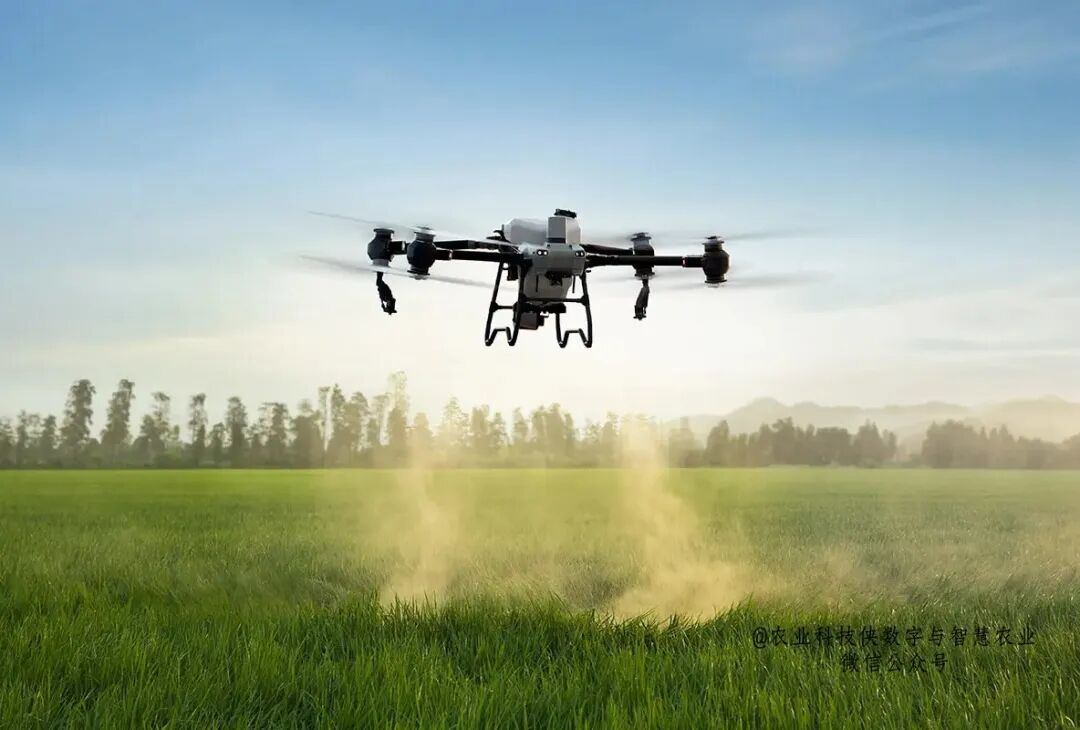
The Agras T55 is equipped with a 50-liter spray payload and a 55-kilogram spreader payload, with a maximum atomized spray flow rate of 50 liters per minute and a maximum spreading flow rate of 400 kilograms per minute. A new lifting system supports a 40-kilogram payload and offers automatic balance control and an emergency release function. In terms of safety systems, the T55 features millimeter-wave radar with a point cloud density of up to 250,000 points per second, combined with a four-eye vision system to enhance environmental perception. The Agras T100 dual-battery spraying system uses two smart flight batteries, providing approximately 50% more hover time compared to a single-battery configuration under the same payload. The dual-battery spraying configuration is equipped with a 90-liter tank and, when using four atomizing nozzles, achieves a flow rate of 40 liters per minute. The system also utilizes dual-atomizing centrifugal nozzles to support higher flight speeds and wider spray swaths. DJI Agriculture stated that over 600,000 agricultural drones are currently in use globally, covering more than 100 countries and regions and over 300 crop types.
Related Products

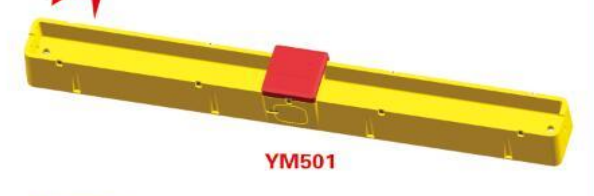
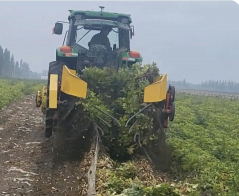
4HS-8 High-efficiency Peanut Inverted-laying Harvester
Hebei Yongfa Hongtian Agricultural Machinery Manufacturing Co., Ltd.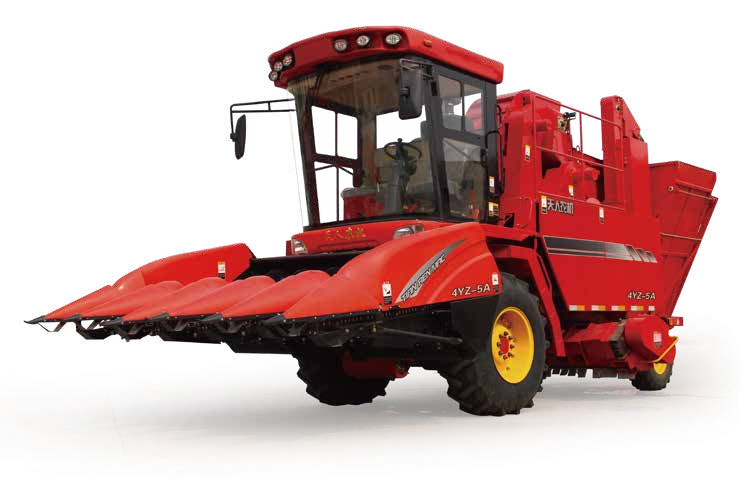
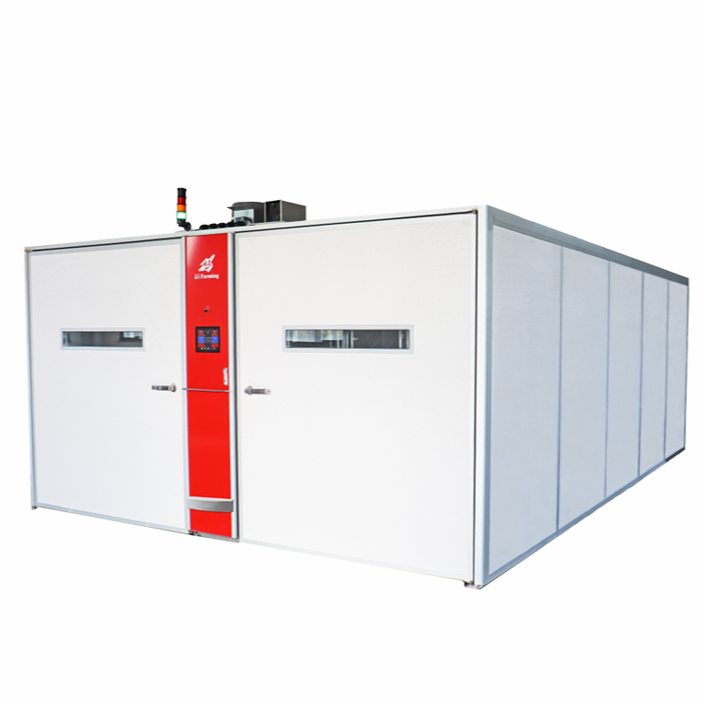

Industrial and Commercial Point-Type Gas Detector
Jinan Benan Technology Development Co., Ltd.
714CD Series C-Band Weather Radar
Chengdu Zhongdian Jinjiang Information Industry Co., Ltd.