en.Wedoany.com Reported - The team led by Zhou Haoshen at Nanjing University has made new progress in the research of lithium metal battery electrolytes. By introducing a "targeted coordinating anti-solvent," the team has suppressed the issues of lithium dendrite growth and electrolyte decomposition caused by the incompatibility between conventional electrolytes and lithium metal anodes. Lithium metal batteries, with their advantage of high energy density, are considered ideal power sources for next-generation Automotive Industry" target="_blank">new energy vehicles and consumer electronics. However, conventional electrolytes undergo irreversible reactions with the anode during charging, forming needle-like lithium dendrites on the electrode surface, which increases the risk of short circuits and fires. In recent years, the industry has widely adopted the "localized high-concentration electrolyte" approach, but this method still fails to prevent the irreversible decomposition of electrolyte components on the electrode surface, leading to continuous battery performance degradation.
Yang Wujie, the first author of the paper and a doctoral student at the School of Modern Engineering and Applied Sciences at Nanjing University, explained that the solvation structure in conventional electrolytes is easily disrupted by the electric field on the electrode surface during charging. The anti-solvent designed by the team can actively bind lithium ions released from the positive electrode under the influence of the electric field, thereby protecting the original solvation structure from damage. This anti-solvent only functions near the electrode surface and does not interfere with the normal operation of the electrolyte.
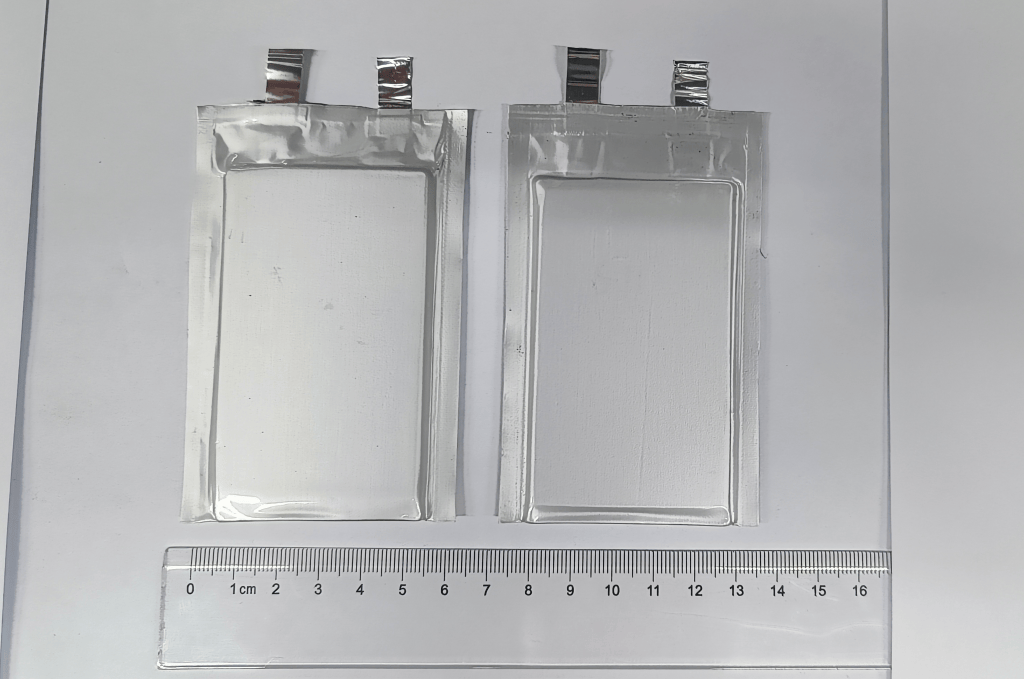
The research team formulated this anti-solvent into a new electrolyte and tested it in lithium metal pouch cells. Experimental data show that the battery achieves a cycle life of over 750 cycles at an energy density of 450 Wh/kg; when the energy density is increased to 605 Wh/kg, the battery can still stably cycle for 150 cycles. For comparison, the energy density of current pure electric passenger vehicle batteries is approximately 200 Wh/kg. Zhou Haoshen stated that previous research mainly focused on the static solvation structure of electrolytes, while this work shifts attention to the dynamic solvation behavior at the electrode interface. The related approach may also provide references for the electrolyte design of other alkali metal batteries.