China Ruiying Sensing Debuts at 2026 Shanghai Intelligent Robot Expo, Shipping 5 Million Units Annually
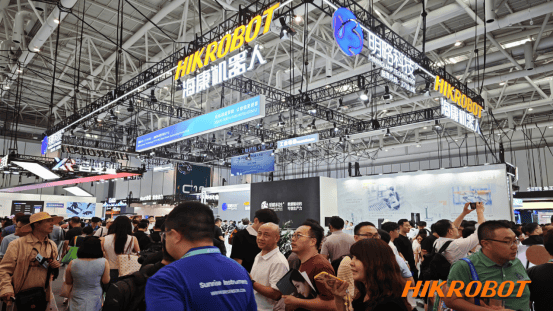
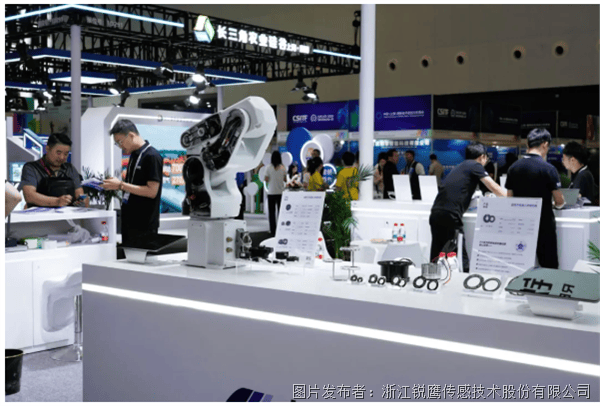
en.Wedoany.com Reported - From June 11 to 13, 2026, China Ruiying Sensing showcased its full-stack self-developed joint sensing solutions at the 2026 Shanghai International Intelligent Robot Industry Chain Exhibition (SIEAR 2026) held at the Shanghai World Expo Exhibition & Convention Center, focusing on the path from prototype validation to mass production of tens of thousands of units for embodied intelligence.
Exhibiting at booth 1G119, Ruiying Sensing addressed mass production bottlenecks for humanoid robots, such as limited joint space, insufficient impact resistance, and difficult assembly and debugging, by launching the KIT series co-axial inductive dual encoder solution. This solution features an installation air gap of 0.5mm±0.2mm, supports 20-second rapid calibration, withstands motor shaft axial play of ±0.2mm, achieves a repeat positioning accuracy of ±10 arcseconds, and has an overall height of less than 6.8mm after installation. With an annual shipment volume of 5 million units, Ruiying Sensing leverages its large-scale production capacity advantage. The KIT series is primarily used in full-size rotational joint modules for humanoid robots, covering the shoulders, waist, elbows, wrists, and neck.
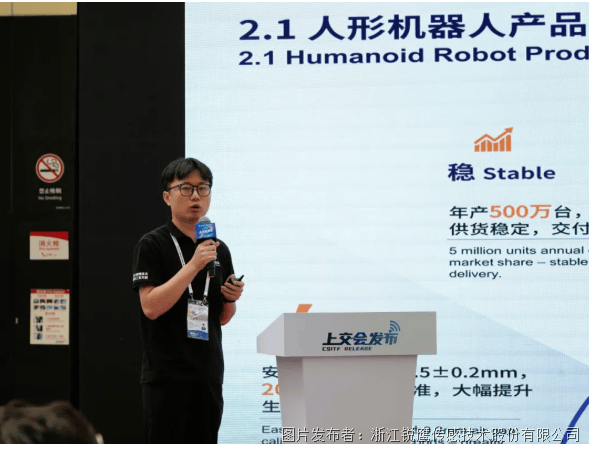
During the exhibition, Ruiying technical experts were invited to deliver a keynote speech titled "Co-Axial Inductive Dual Encoder Joint Sensing Solution for Humanoid Robots," analyzing how inductive technology overcomes traditional joint engineering pain points such as "susceptibility to impact, difficult assembly, and vulnerability to interference," thereby removing barriers to the large-scale deployment of embodied intelligence.
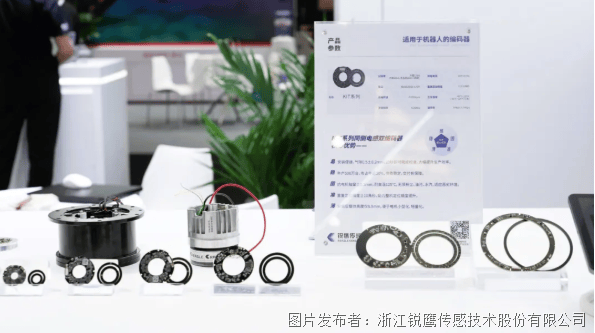
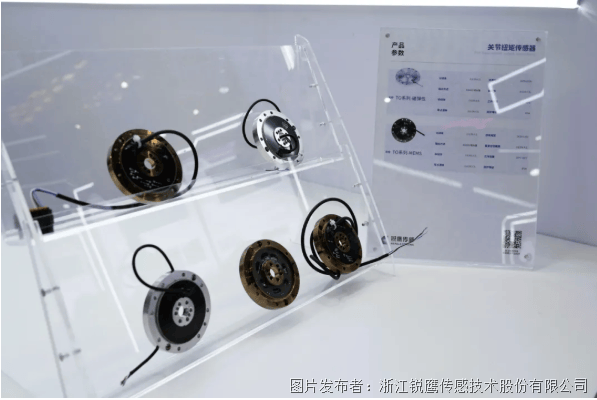
Ruiying Sensing also showcased the TOR series joint torque sensors and the TOE series joint torque sensors. The TOR series is based on a silicon-based MEMS plus glass micro-fusion adhesive-free integrated structure, utilizing inorganic glass atomic-level bonding. The adhesive-free structure ensures minimal long-term creep, strong overload resistance, and high sensitivity to capture minute force differences, with fully automated production ensuring high consistency. The TOE series employs magnetoelastic inductive technology, featuring non-contact measurement without electrical connections, simplifying assembly, offering strong impact and overload resistance, and resistance to oil, dust, and harsh operating conditions. The TO series is primarily used in rotational joint modules for humanoid robots.
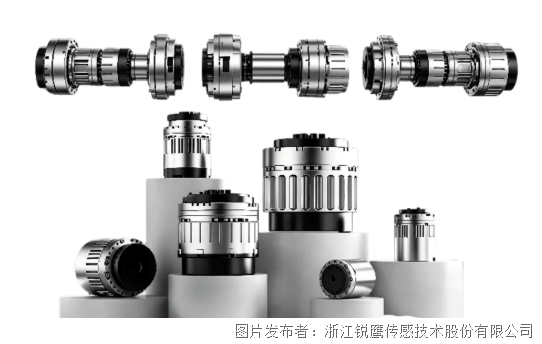
For complex outdoor high-vibration environments such as robot dog hip and knee joints, Ruiying exhibited the WIN series mechanical multi-turn encoders, featuring a single-turn inductive plus multi-turn mechanical gear architecture. This solution eliminates the need for external batteries to remember multi-turn positions, is maintenance-free, requires no secondary zeroing after factory shipment, and facilitates easier export. The multi-turn function does not rely on pulse counting, offering strong anti-interference capability. The design has been deeply optimized for installation air gap, concentricity, and flatness, controlling assembly process requirements. It supports one-key calibration, enabling quick correction via host computer software. Leveraging its large-scale production capacity advantage, the WIN series addresses pain points such as long lead times and unstable supply associated with imported solutions.
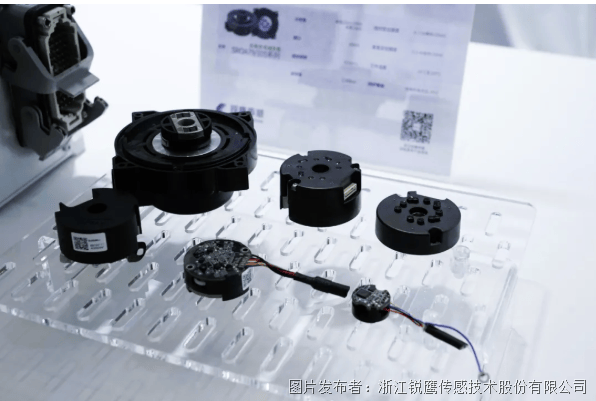
Based on three major technology platforms—photoelectric, magnetic, and inductive—Ruiying Sensing demonstrated products including the KIE hollow shaft inductive encoder and the KIZ co-axial narrow code track inductive encoder, offering a full-scenario selection solution covering humanoid robot joints, robot dog drives, and high-end motion control equipment.
Related Products
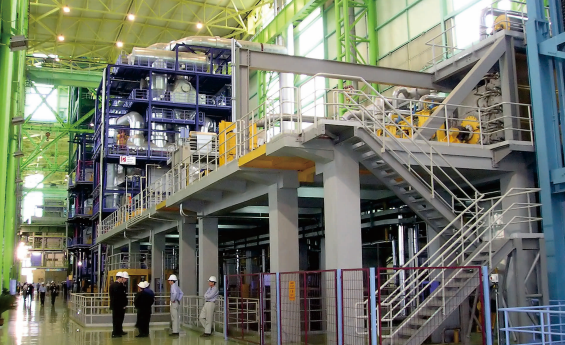

Strip Coating and Plating Production Line Equipment
MCC-SFRE HEAVY INDUSTRY EQUIPMENT CO., LTD.
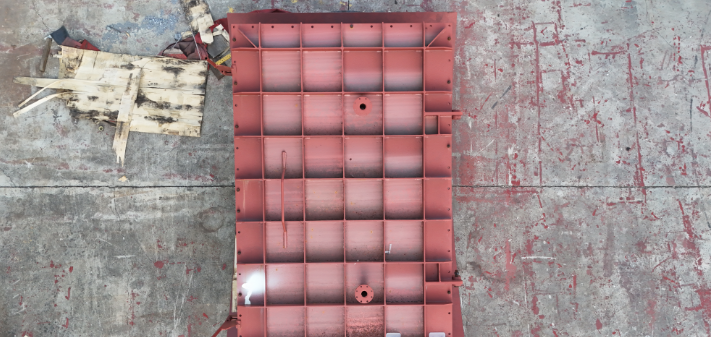
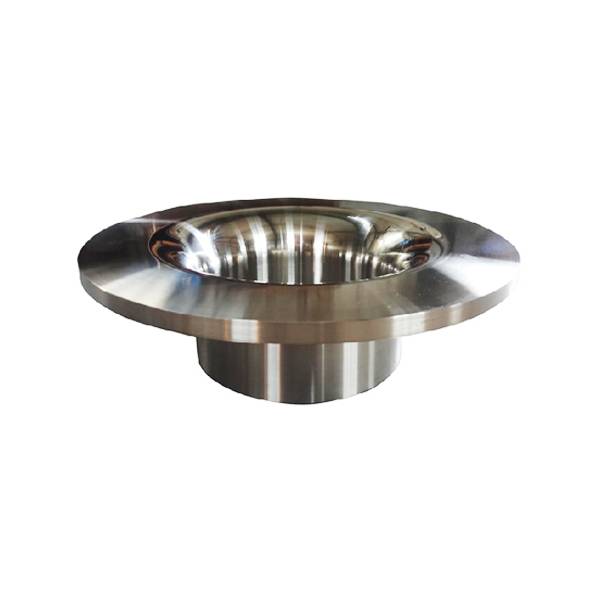
Standard Nozzle Flowmeter
Jinggong Automatic Control Instrument Complete Technology Development Company

Pneumatic high-pressure wear-resistant ball valve
Zhejiang Deca Control Valve Meter Co., Ltd.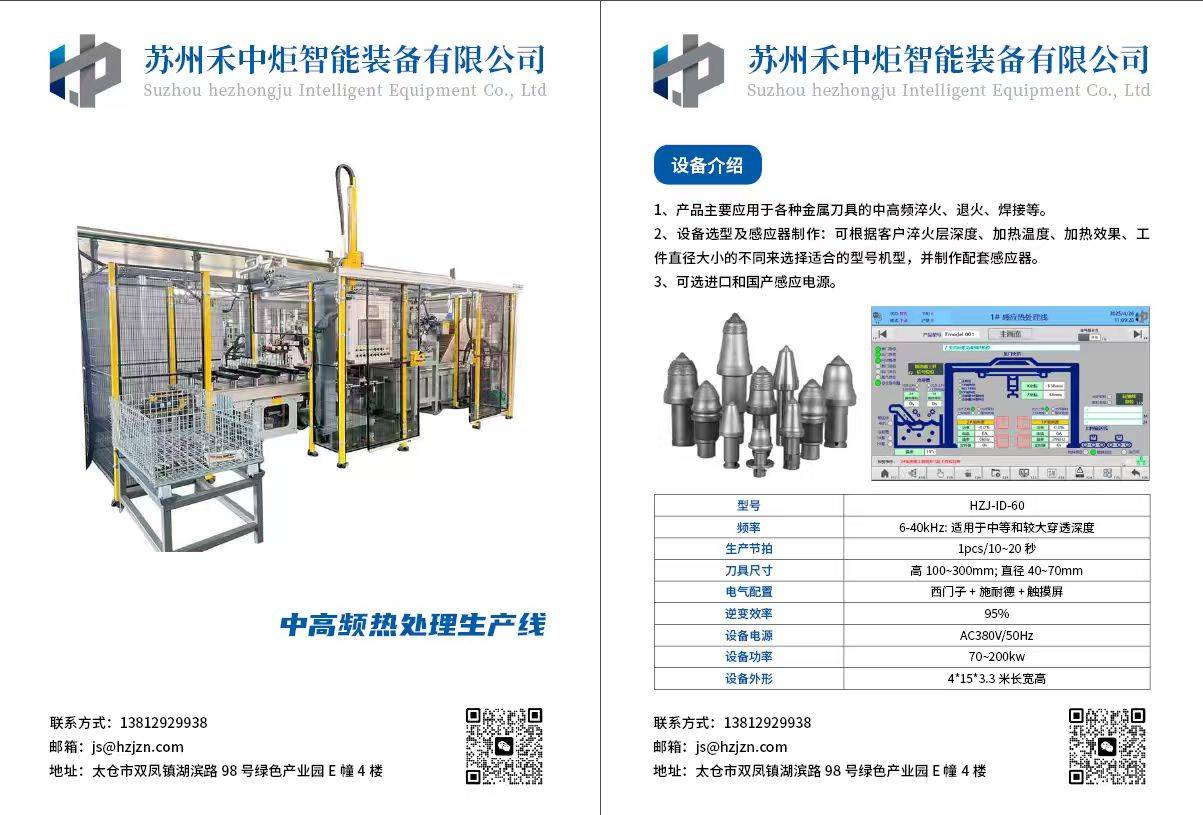
Excavator Bucket Teeth Heat Treatment Production Line
Suzhou Hezhongju Intelligent Equipment Co., Ltd.
CAP1400 main feedwater flow nozzle flowmeter.
Jiangsu Hongda Instrument Technology Co., LTD.