Endress+Hauser Supports Digitalization of Underground Mining in Mexico with Around 9,000 Patents
en.Wedoany.com Reported - Targeting the operating conditions of underground mines at depths exceeding one kilometer, Endress+Hauser applies industrial instrumentation technology to slurry flow measurement, silo level monitoring, acid drainage analysis, paste backfill control, and predictive equipment maintenance, forming a digital solution for smart mine operations.
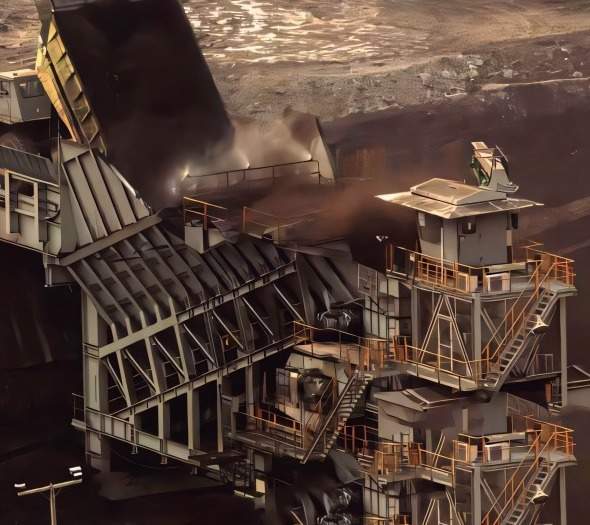
As surface ore deposit resources trend toward depletion, mining companies are shifting investment to underground operations, with working depths commonly exceeding one thousand meters. High pressure, extreme temperatures, and sustained humidity underground impose stringent demands on process control, making automation systems a key pillar of mine economic viability. As an industrial instrumentation manufacturer, Endress+Hauser invests 7% of its annual profit in R&D and holds approximately nine thousand active patents, delivering operational certainty and high profitability to mining customers in Mexico and internationally.
Bulk transfer of slurry and sediment-laden wastewater can easily damage conventional instruments. The company's electromagnetic flowmeters contain no internal moving parts, eliminating hydraulic pressure drop and avoiding abrasive wear; for reagents with highly fluctuating viscosity, Coriolis flowmeters can simultaneously measure mass, density, and temperature with millimeter-level precision, used to optimize the dosing of expensive chemical agents. Freshly crushed ore is stored in large sealed silos, where measuring instruments must withstand high concentrations of dust. The company employs radar transmitters operating at a frequency of 80 GHz, whose focused beam can ignore false echoes generated by rough silo walls, enabling continuous and accurate level measurement.
Mine acid drainage with extremely low pH values is highly corrosive to infrastructure, and sustained underground humidity previously eroded analog sensor signals. Endress+Hauser has developed measuring electrodes with galvanic isolation that digitize variables inside the sensor and exchange energy and data via inductive coupling, enabling metal-contact-free operation so that devices function normally even when submerged. In modern water treatment facilities, automatic aeration control can reduce compressor electricity demand by up to 30%, and monitoring chemical solution dosing can cut reagent consumption by 20% to 50%.
Continuous extraction of millions of tons of solid rock creates vast underground voids that threaten the structural integrity of the rock mass. To prevent catastrophic surface subsidence, mining engineering employs paste backfill technology, mixing tailings sediment with cementitious binders and reinjecting it underground. Mass flowmeters are used to strictly regulate mixture viscosity, avoiding blockages in complex pipeline networks; combined with modern plasticizers, water demand can be reduced, and cement usage can be lowered by up to 25%. Under this process, the paste achieves required strength in 7 days, compared to a traditional curing period of 28 days.
When drilling in enclosed rock formations, the accumulation of methane gas and mineral dust creates an explosion risk. Modern field instruments are designed according to intrinsic safety principles, limiting voltage and current in cables at the circuit level and keeping component energy loads below the threshold capable of producing thermal sparks that could ignite a gas cloud. New-generation transmitters can continuously perform over eighty system diagnostics without interrupting mining operations, achieving a fault detection rate of 98%; when mineral biofilm begins to accumulate inside the measuring tube, algorithms calculate the degree of buildup and provide early warning of blockage dates. Predictive data is shared remotely through a cloud-encrypted architecture, allowing operators to plan maintenance via mobile applications and avoid production bottlenecks.
Integrating sensors with autonomous analysis capabilities into complex underground water and ventilation systems is one pathway to improving mine operational efficiency, economic viability, and safety. These technologies are designed to benefit mining projects simultaneously in terms of efficiency, economy, safety, and sustainability.
Related Products
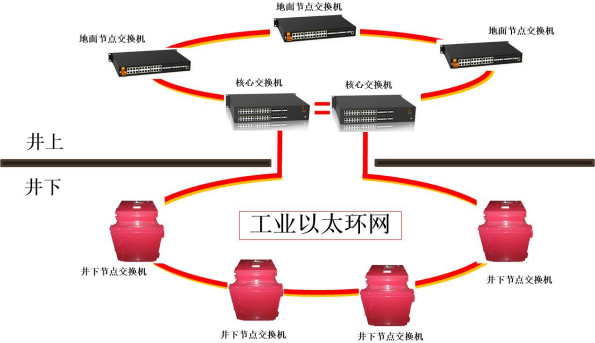

Mine Explosion-proof and Intrinsically Safe Industrial Ethernet Ring Network (10 Gigabit/Gigabit)
Chongqing Mas Sci&Tech Co., Ltd.
High-temperature Equal Wall Thickness High-power Screw Drilling Tool
Orient Energy & Technologies Co., Ltd.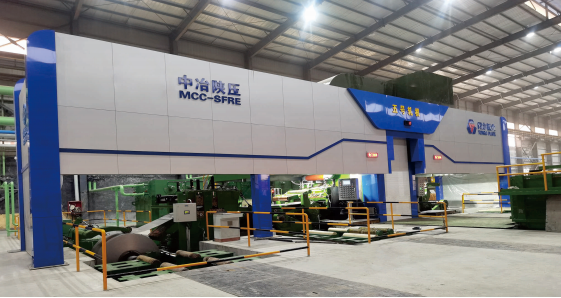
1050-1750mm Steel Strip Single-stand Reversible Cold Rolling Production Line
MCC-SFRE HEAVY INDUSTRY EQUIPMENT CO., LTD.
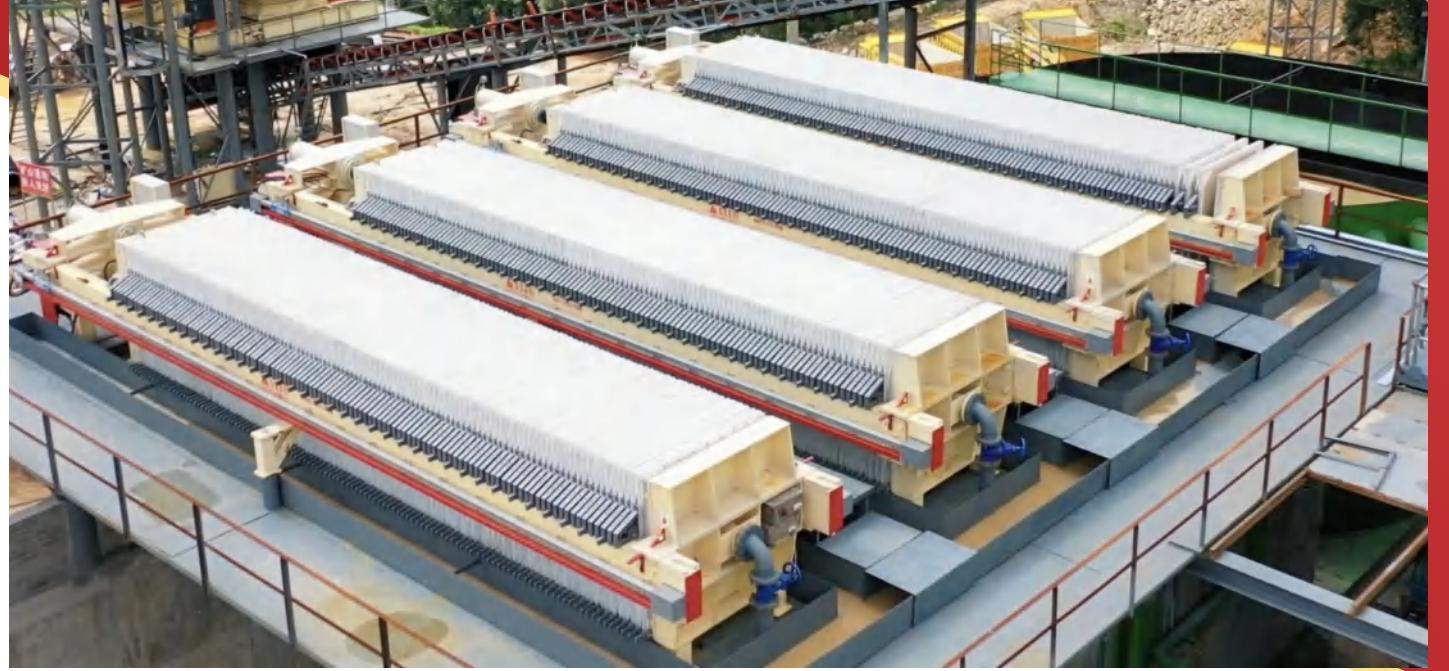
Hydraulic Plate and Frame Filter Press
Guangdong Leimeng Intelligent Equipment Group Co., Ltd.
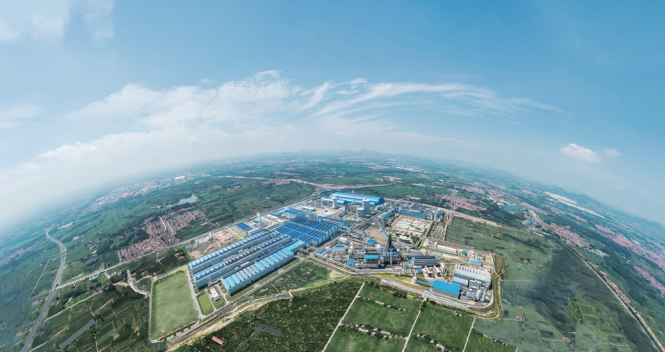
Linyi Steel Investment Special Steel 2.7 Million Tons per Year High-quality Special Steel Project
Capital Engineering & Research Incorporation Limited
CITIC Heavy Industries Metallurgical Equipment Steel Smelting Engineering Equipment
CITIC Heavy Industries Co., Ltd.