Berkeley Lab and Ideon Awarded Funding to Develop Mobile Muon Imager
en.Wedoany.com Reported - The U.S. Department of Energy's (DOE) Advanced Research Projects Agency-Energy (ARPA-E) has awarded funding to a collaboration between Lawrence Berkeley National Laboratory (Berkeley Lab) and Ideon Technologies through the "Reliable Ore Characterization for Cornerstone Sensing" (ROCKS) program. This three-year project aims to image deep underground minerals with a precision that traditional sensing technologies cannot achieve, securing the domestic supply of critical minerals essential to energy, industrial, and national security.
At the core of the project is the muon, a highly penetrating naturally occurring subatomic particle. Ideon has worked with the mining industry for years, using "passive" muons produced by cosmic ray collisions with atmospheric particles to map mineral deposits and understand underground structures. These muons arrive only from above, limiting imaging for detectors positioned beneath ore bodies or geological formations; the flux is approximately one muon per square centimeter per minute, and imaging exposures typically require days, weeks, or even months, depending on the depth and resolution required.
The new project aims to deliver high-flux muon beams that can be directed at targets such as ore bodies, generating high-resolution 3D images and compressing mineral discovery and characterization timelines from months to hours, accelerating the path from discovery to extraction. Such muon sources rely on high-energy particle accelerators, and the equipment must be compact and mobile enough for field applications.
Jeroen van Tilborg, principal investigator of the project and senior scientist and deputy experimental director at the BELLA Center in Berkeley Lab's Accelerator Technology & Applied Physics (ATAP) Division, explained that muons with energies around 10 gigaelectronvolts (GeV) can penetrate approximately 20 meters of rock, soil, and ore; higher-energy muons from 30 GeV to 100 GeV can penetrate depths from 50 meters to over 100 meters.
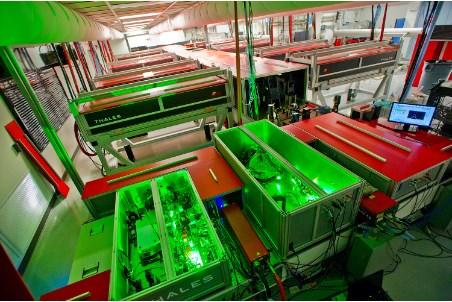
The "active" muon source is based on laser plasma accelerator (LPA) technology developed at the BELLA Center. Intense, ultrashort laser pulses displace electrons in a plasma, creating an electrostatic wave (wakefield) that can provide acceleration fields several orders of magnitude higher than conventional accelerators, accelerating electron beams to multi-GeV energies over centimeter-scale distances. The electrons are then directed onto a solid target, producing a muon beam three to four orders of magnitude stronger than natural flux while preserving the incident electron energy. According to van Tilborg, the high-charge, high-energy electron beam driver required to produce muon beams is precisely the domain where compact LPAs excel, thanks to their ultra-high acceleration gradients and compactness.
Berkeley Lab has previously accelerated 10 GeV electron beams in a single stage over a 30-centimeter distance. The project's current goal is to couple two LPA stages of approximately 6 GeV each to achieve acceleration beyond 12 GeV. Once this multi-stage proof of concept is completed and de-risked, the team will validate the technical pathway toward a 30 GeV system (penetrating 50 meters of rock) and a 100 GeV system (penetrating 150 meters).
The key to two-stage acceleration lies in active plasma lenses and highly reflective plasma mirrors: the former refocuses the electron beam as it exits one stage and enters the next, while the latter preserves the laser properties so it can continue driving the plasma wakefield in the subsequent stage. Together, these components ensure the electron beam passes through each stage and gains energy at each stage, which is critical for generating the deep-penetrating muons needed for high-resolution imaging of the deepest geological targets.
Anthony Gonsalves, staff scientist in the ATAP Division, noted that Berkeley Lab's years of investment in LPA research have produced the technologies that make this project possible. He leads the accelerator work and serves as the experimental lead for the new muon project. In his view, this project is an exciting opportunity to translate decades of accelerator research into technology that addresses important national needs, by developing reliable systems to deliver the high-energy muons required for practical underground imaging.
The project is advanced through a three-way division of work. The ATAP Division, as the hardware lead, applies its expertise in laser-plasma interactions and high-fidelity Particle-In-Cell simulations to develop the two-stage 12 GeV electron source. Ideon brings muon tomography and advanced data fusion capabilities for mineral exploration and mining, with its proprietary muon detector arrays, physics simulations, and geological software converting raw data into 3D mass-density visualizations that allow geologists to identify mineral deposits and structural anomalies at meter-scale resolution. Berkeley Lab's Physics Division, drawing on decades of experience with high-energy particle collider detectors, provides muon instrumentation and particle tracking diagnostics to optimize the muon beam.
Douglas Schouten, Chief Technology Officer of Ideon, stated that the critical minerals challenge demands faster and better ways to understand and develop the resources society urgently needs. Leveraging the project's outcomes, physics more advanced than the world's largest particle accelerators will image millions of cubic feet of rock in hours rather than months. Ideon's collaboration with world-leading research institutions such as Berkeley Lab is bringing this cutting-edge capability out of the laboratory, combining advanced sensing with the penetrating power of subatomic particles to unlock value for the industries society depends on.
By combining Berkeley Lab's expertise in advanced accelerators with Ideon's commercial and advanced quantum sensing capabilities, this project promises to lay the foundation for faster, more accurate, and more cost-effective mineral resource characterization, driving domestic critical mineral development and strengthening supply chains for energy, industrial, and national security. The applications of this technology extend beyond mining. The imaging system can also identify underground voids, fissures, and caves, offering advantages for civil engineering and industrial safety, with implications for national security and critical infrastructure.
Cameron Geddes, Director of the ATAP Division, stated that by pioneering the development of portable deep-penetrating muon sources, this project ensures U.S. leadership in critical mineral resources vital to energy and the economy, with the underlying technologies stemming from years of groundbreaking accelerator and detector R&D.
Related Products
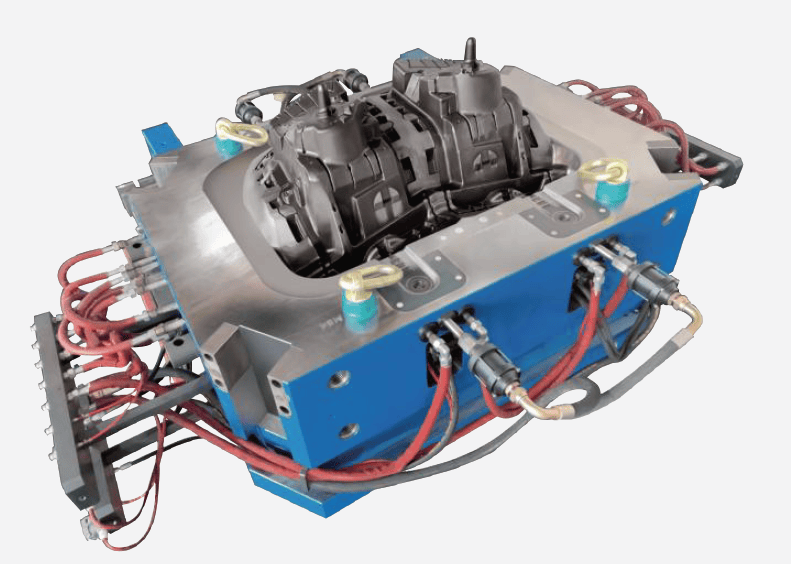

Aluminum-Magnesium Alloy High-Pressure Die-Casting Molds
NINGBO HELI TECHNOLOGY CO., LTD.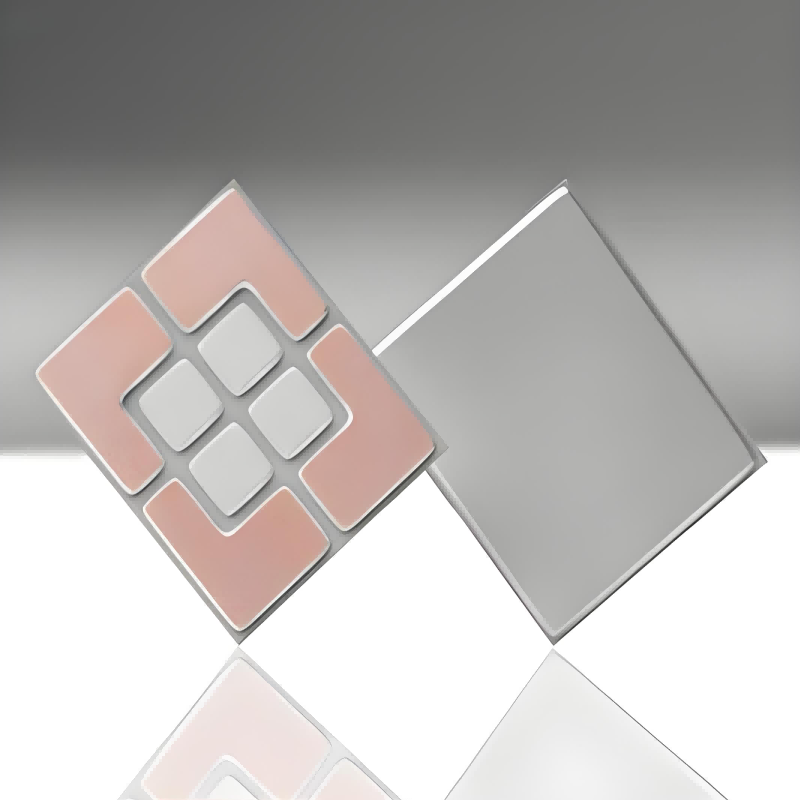
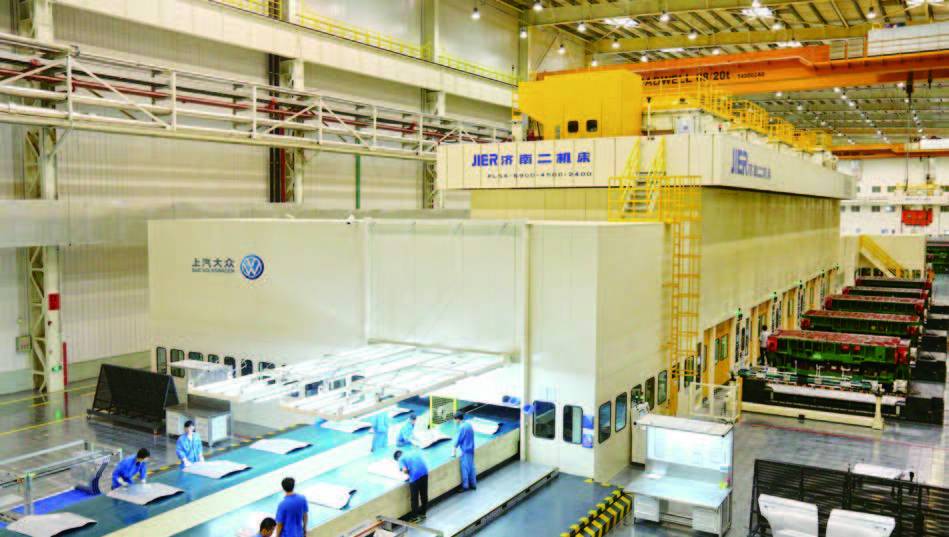
High-Speed Flexible Fully Automatic Stamping Production Line
JIER Machine-Tool Group Co., Ltd.
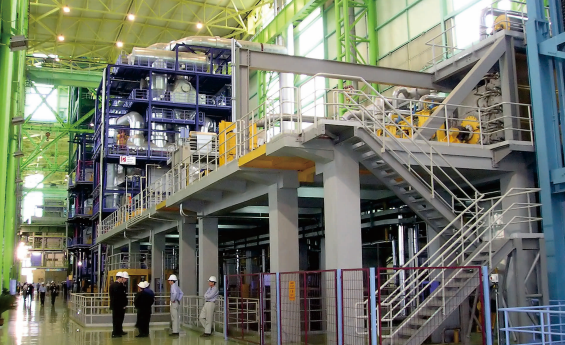
Strip Coating and Plating Production Line Equipment
MCC-SFRE HEAVY INDUSTRY EQUIPMENT CO., LTD.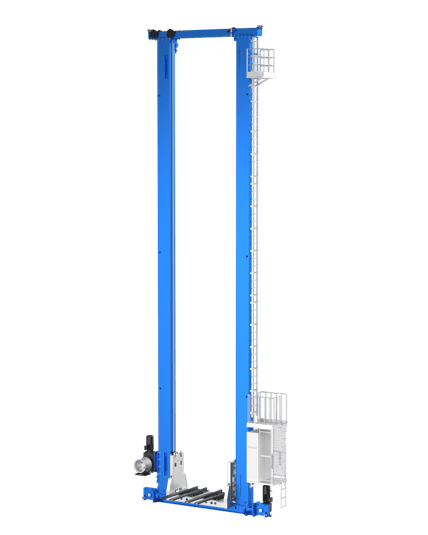
Pallet Solutions Product Line: HD3000 Double-Column Stacker Crane
Zhongding Intelligent (Wuxi) Technology Co., Ltd.