Iceland's Syntholene Geothermal Hydrogen Production Cost Could Reach $1.75/kg
en.Wedoany.com Reported - Syntholene Energy Corp. has completed an independent technical and economic review to assess the application potential of its geothermal integrated hydrogen production platform in low-carbon fuels, including synthetic sustainable aviation fuel (eSAF).
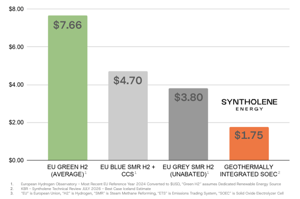
The company commissioned Kellogg Brown & Root LLC (KBR) to provide a high-level technical and cost review analysis of its hydrogen technology applicable to eSAF deployment. The report evaluated Syntholene's levelized cost of hydrogen (LCOH) methodology and conducted sensitivity analysis on key cost variables. KBR's findings indicate that under Iceland's optimal geothermal scenario, Syntholene's potential LCOH is approximately $1.75/kg H2; under a widespread deployment scenario, it is approximately $2.10/kg H2.
According to data from the International Energy Agency (IEA), hydrogen is a major cost component in synthetic aviation fuel production, and low-cost hydrogen production is central to achieving cost-competitive synthetic fuels. Recent unsubsidized estimates for comparable green hydrogen prices across Europe average approximately ~€$6.71/kg H2 ($7.66) (European Hydrogen Observatory (EHO)).
Syntholene's LCOH target would be significantly lower than recent European benchmarks for unabated conventional fossil hydrogen from steam methane reforming (SMR). The European Hydrogen Observatory (EHO) notes that the average levelized production cost of hydrogen via SMR in Europe is approximately ~€3.33/kg H2 ($3.80). When accounting for current European carbon prices (ETS), this fossil hydrogen benchmark increases the cost of carbon-captured SMR to approximately ~€4.12/kg H2 ($4.70).
The review report further notes that Syntholene's successful operation of its demonstration facility in Húsavík, Iceland, will provide key operational data related to efficiency, thermal integration, reliability, and stack degradation. The report identified major risks, including electricity price volatility, long-term SOEC degradation, stack life assumptions, project-specific capital costs, and operational cost validation.
The report identified several potential technical and commercial differentiation advantages for Syntholene: integration of low-carbon geothermal electricity and heat; reduction of electricity intensity through SOEC operation and heat recovery; integration advantages with eSAF configurations, including thermal and utility integration; strategies to mitigate geothermal silica scaling through indirect fluid handling and dual-cycle heat exchange design; and extension of SOEC stack operational life through dynamic AC/DC operation methods.
Syntholene CEO Dan Sutton stated that the company's core thesis is that low-cost synthetic fuel production begins with low-cost clean hydrogen, and the lowest-cost clean hydrogen comes from systems that intelligently utilize both electricity and heat. The report identified key cost drivers, validated the importance of the Húsavík demonstration facility, and reinforced the structural advantages of geothermal co-location in synthetic fuel production.
KBR was engaged as an independent third-party technical advisor and received a fixed fee for the evaluation and report preparation, and did not receive any securities of the company as compensation for its services.
Related Products

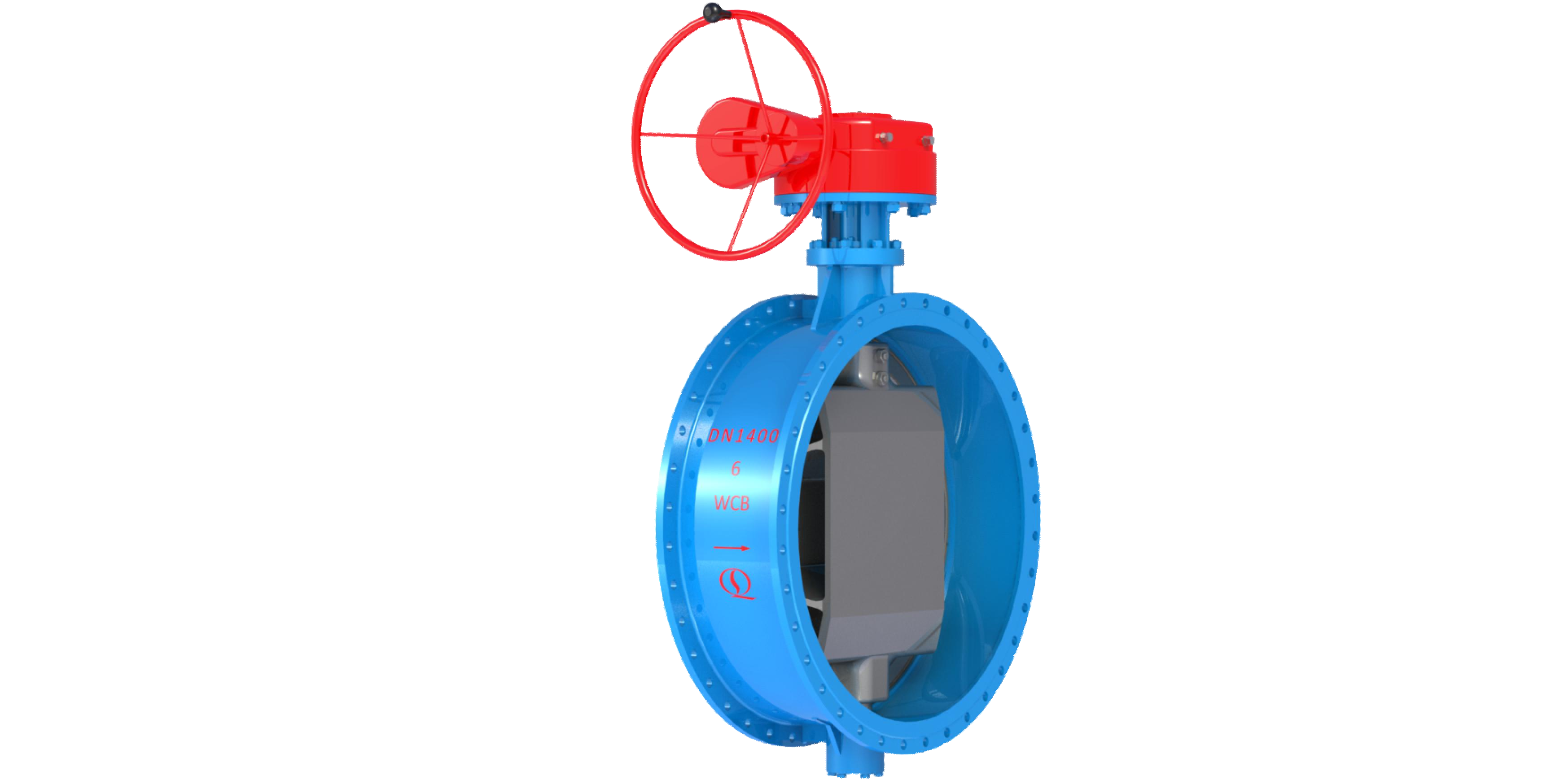
Bidirectional Metal Hard Sealed Seawater Butterfly Valve
Henan Quanshun Flow Control Science & Technology Co., Ltd.
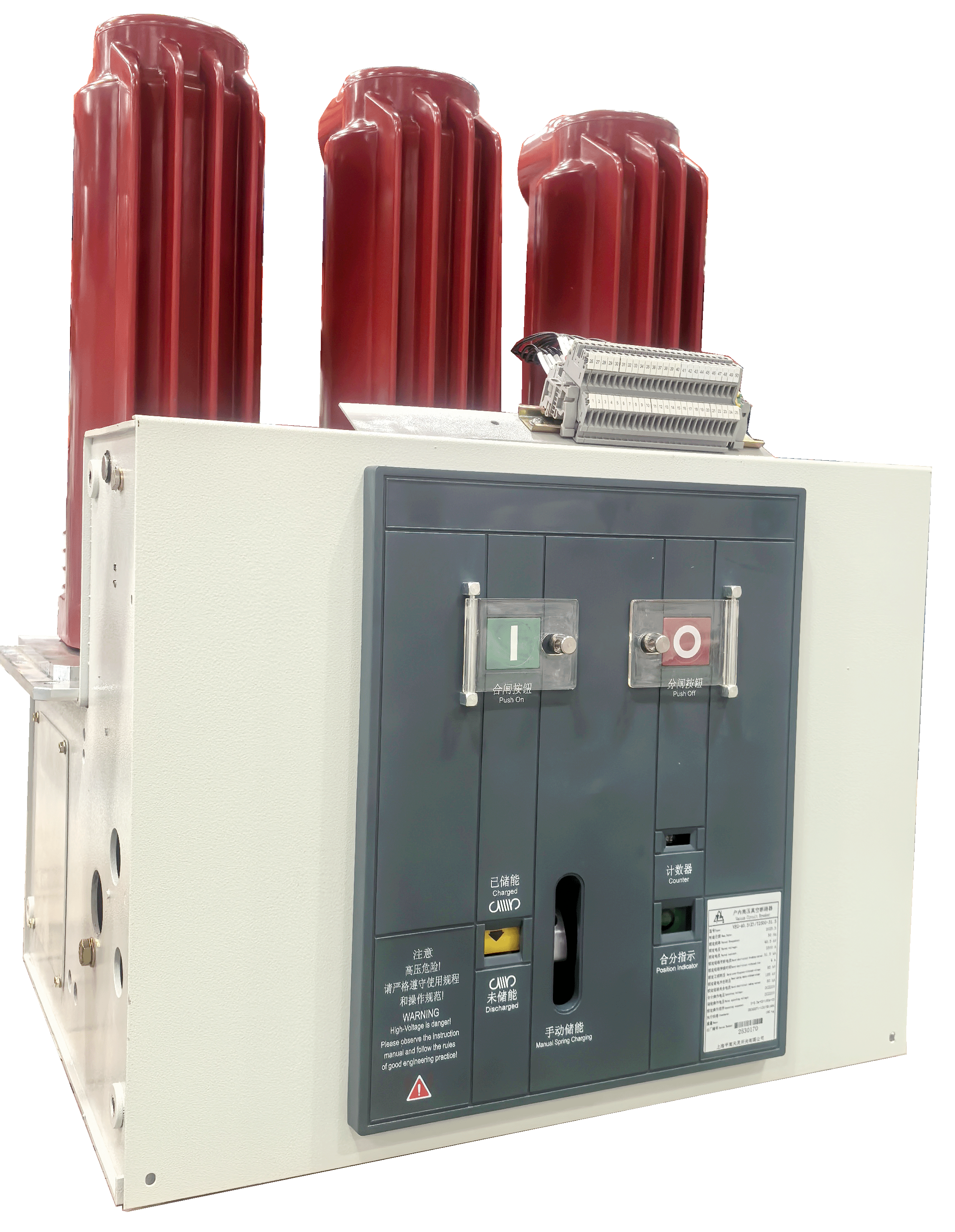
VEG-12/24/40.5 Series Vacuum Circuit Breaker
SHANGHAI PINGGAO TIANLING SWITCHGEAR CO., LTD.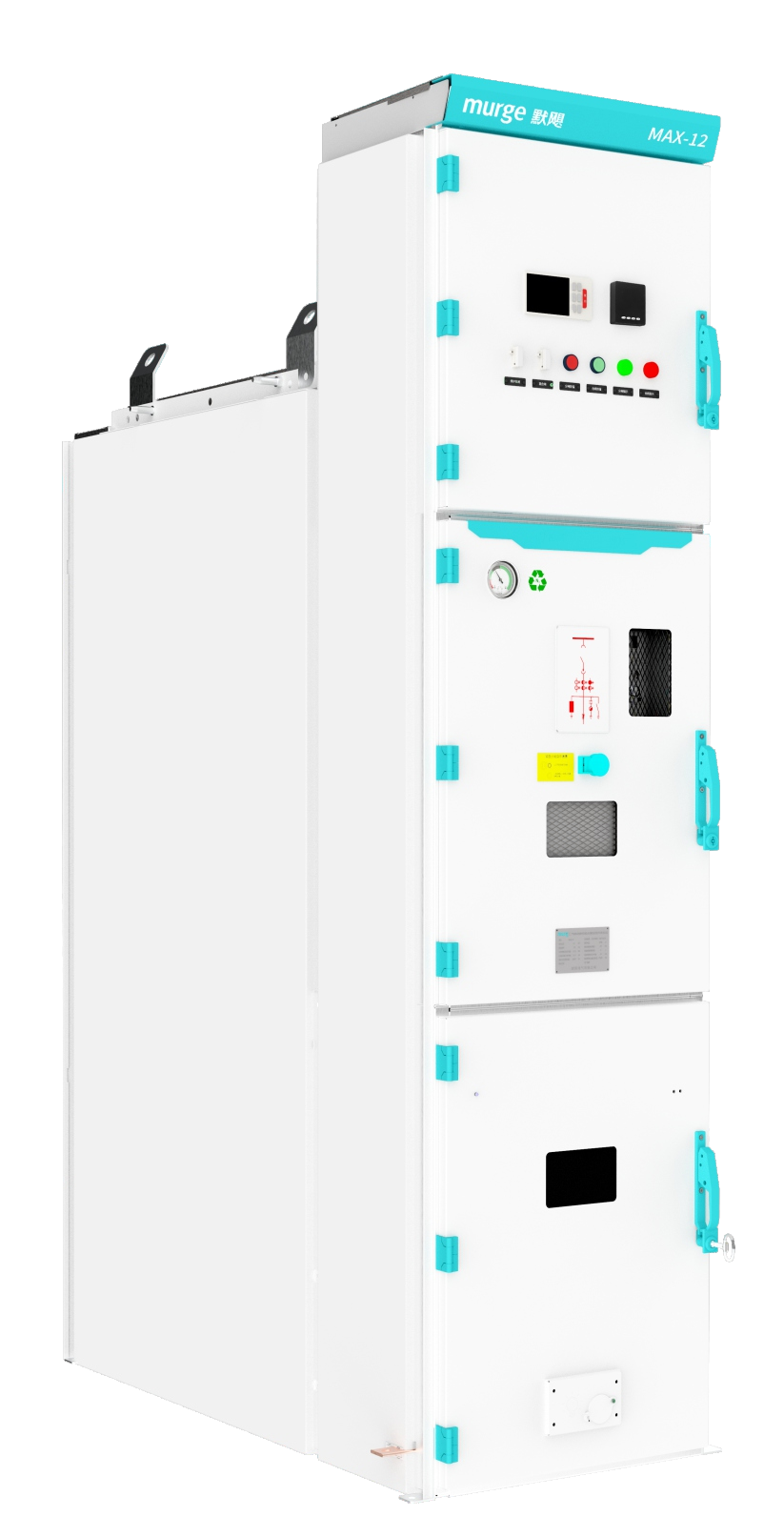
MAX-12 series Environmental Protection/SF6 gas insulated switchgear (C-GIS)
Murge Electric Co.,Ltd.