Samsung develops 4nm GAIA chip, testing with Lenovo and HP
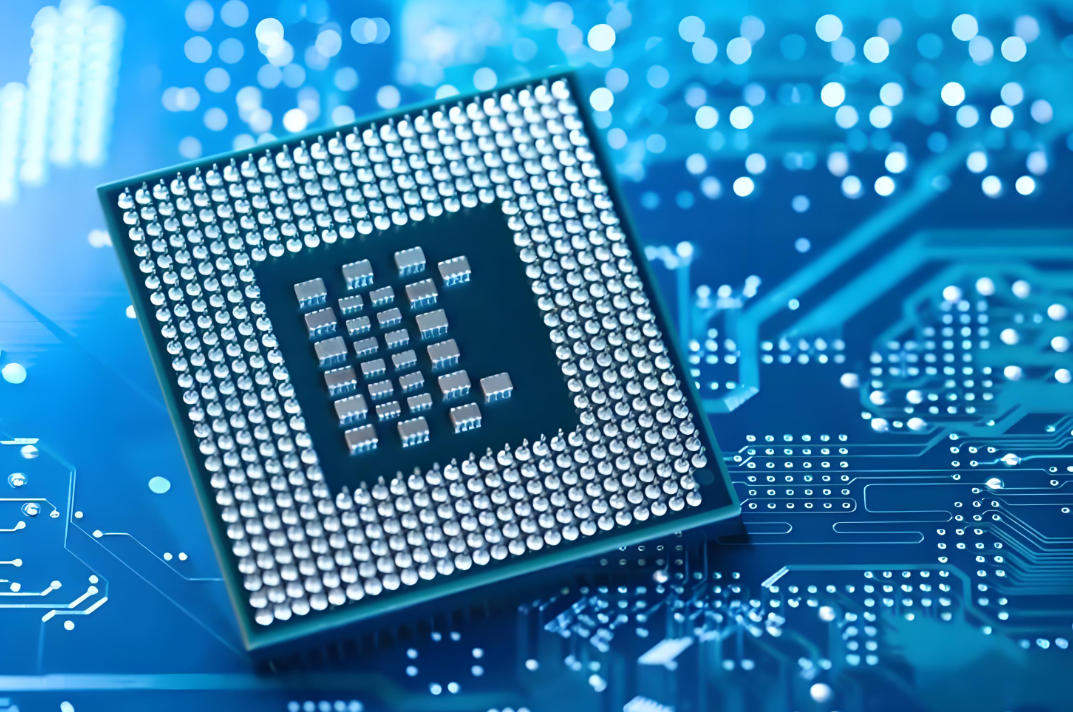
en.Wedoany.com Reported - Samsung Electronics is developing a dedicated accelerator chip called GAIA for AI PCs, and has provided prototype products to Lenovo and HP for performance verification, with mass production planned as early as 2027. The chip is built on a 4nm process and optimized around a neural processing unit, primarily handling generative artificial intelligence and on-device inference tasks.
GAIA is not a general-purpose chip designed to replace the central processor, but rather an accelerator installed inside the PC specifically for AI computing. Traditional PCs rely mainly on the CPU for operating system, office software, and general program operations, with some graphics and parallel tasks handled by the GPU. With the addition of a dedicated NPU, tasks such as speech recognition, image processing, video conference optimization, document summarization, content generation, and personal AI agents can be executed more locally, reducing the device's continuous reliance on cloud servers.
The NPU is hardware-optimized for matrix multiplication, neural network inference, and low-precision computing, making it generally more suitable than general-purpose processors for sustained AI model operation under the same power consumption. For laptops, the chip must not only provide inference speed but also manage heat generation and battery consumption. GAIA uses a 4nm process, allowing more computing units to be integrated within a limited chip area, and providing PC manufacturers with flexibility in balancing overall heat dissipation, battery life, and chassis thickness.
The chip is also planned to work in conjunction with PIM (Processing-in-Memory) technology. During generative AI operation, frequent reading of model weights and intermediate data is required, and data transfer between the processor and memory consumes bandwidth and power. PIM places some computing capabilities inside or near the memory storage units, allowing data to avoid repeated long-distance transmission between the processor and memory, thereby alleviating memory bandwidth bottlenecks. Samsung's previously developed PIM technology also focuses on reducing data movement and improving AI computing performance and energy efficiency.
The involvement of Lenovo and HP in sample testing indicates that GAIA has entered the system integration and performance verification stage. Before the chip enters AI PCs, it must undergo testing for motherboard interfaces, operating systems, drivers, model frameworks, power management, and thermal systems, as well as verification of performance across different models in terms of startup speed, token generation, image processing, multitasking, and offline inference. Test results will influence chip specification adjustments, software optimization, and the final PC product lines adopted.
Samsung has previously accumulated NPU design experience in its Exynos mobile processors, and GAIA extends this on-device AI capability to PCs. Mobile models are typically limited by memory, power consumption, and device size, whereas PCs have larger batteries, more cooling space, and greater memory capacity, enabling them to run local models with larger parameter sizes and longer task chains. Combined with PIM memory, GAIA's technology chain will cover 4nm chip manufacturing, NPU inference, model data reading, on-device memory bandwidth, and AI PC system integration.
Related Products



Multi-function Marine Monitoring Low-altitude Detection Radar Sea-air Boundary Ocean Dynamic Environment Measurement
Chengdu Dixin Technology Co., Ltd.
Industrial and Commercial Point-Type Gas Detector
Jinan Benan Technology Development Co., Ltd.
G.652.D Wavelength-extended Non-dispersion Shifted Single-mode Optical Fiber
HONGAN GROUP CO., LTD.

Hot Selling 10 Inch Intel N5100 I5 I7 FHD 8 +128GB 16+256GB Win10 Pro Win11 Pro 4G 5G Rugged Tablet PC Pad with NFC Barcode
Highton Electronics Co., Ltd.
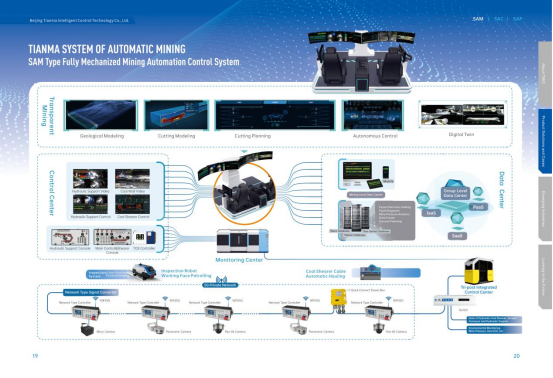
Comprehensive Mining Automation Control System
Beijing Tianma Intelligent Control Technology Co., Ltd.
MUX Series Communication Interface Device for Security and Stability Control System
Nanjing NR Electric Co., Ltd.