India's Bharti Airtel Accelerates Construction of 1GW Data Center and Sovereign Cloud
en.Wedoany.com Reported - On July 12, India's Bharti Airtel outlined the next phase of its digital infrastructure development priorities, focusing on accelerating data center deployment, the Airtel Cloud sovereign cloud, and enterprise digital service capabilities, while continuing to expand its mobile communications and fiber optic networks. Over the past decade, the company has invested over 3.3 trillion Indian rupees in building infrastructure including mobile networks, 5G sites, fiber optic transmission, home broadband, enterprise communications, and data centers, forming a digital network covering major Indian cities and industrial regions.
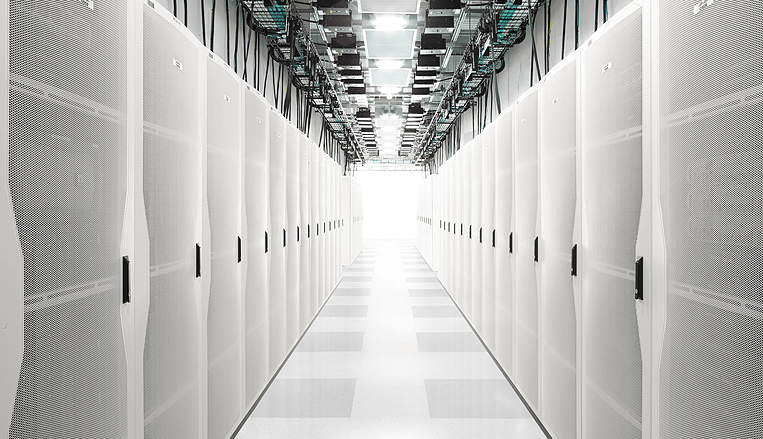
Data centers will be the core of this new wave of construction. Bharti Airtel's subsidiary Nxtra plans to expand its data center capacity to 1 gigawatt over the next few years. The construction scope includes not only server rooms but also high-voltage power access, on-site substations, backup power, cooling systems, rack deployment, fiber optic interconnection, and operational management platforms. As AI training, model inference, cloud computing, and large-scale internet businesses demand higher power density per rack, new facilities must also support both traditional air cooling and liquid cooling loads to prevent high-density computing equipment from being rendered inoperable due to insufficient heat dissipation.
Nxtra currently operates 15 hyperscale data centers in India, with a total power capacity exceeding 230 megawatts. These facilities cover 8 major markets and have edge nodes deployed in 66 cities. Its data center network already connects to cloud platforms, content delivery networks, internet exchange points, and telecom operators, providing colocation, interconnection, migration, and customized data center services to banks, internet platforms, IT service providers, and multinational corporations. Expanding to 1 gigawatt capacity will significantly increase the scale of new construction beyond the existing base, requiring simultaneous additions in land, power, transformers, switchgear, uninterruptible power supplies, diesel alternative energy sources, cooling units, and high-speed network equipment.
The data center expansion will proceed in tandem with Bharti Airtel's own communication network. In the 2025-2026 fiscal year, the company added approximately 7,800 network sites and laid nearly 43,000 kilometers of fiber optic cable to expand mobile network capacity, home broadband coverage, and enterprise dedicated line connections. Data centers can only deliver server computing power stably to enterprise customers and end users if they are connected to sufficiently dense backbone fiber and metropolitan transmission networks. Therefore, new data center construction is not an independent project but part of a continuous infrastructure system formed together with 5G, fiber optics, cloud platforms, and edge nodes.
Bharti Airtel is also advancing its existing network towards a 5G standalone architecture. Standalone deployment requires building a new 5G core network, cloud-native network functions, and automated operations and maintenance systems, enabling network slicing, low-latency connections, and enterprise private networks to operate independently of the 4G core network. Data centers and edge nodes will host parts of the core network, service platforms, and enterprise applications, allowing manufacturing plants, logistics parks, financial institutions, and internet companies to process data closer to their business locations, reducing latency and congestion caused by routing all traffic to a single central node.
Airtel Cloud is another key focus of this infrastructure expansion. This platform adopts a carrier-grade sovereign cloud architecture, with its control plane, operational management, and data processing all deployed within India and operated in compliance with Indian laws and data management requirements. It offers enterprises Infrastructure as a Service (IaaS), platform services, data migration, elastic scaling, and cloud resource management. The platform secured 24 projects in the 2025-2026 fiscal year and continues to add customers after the fiscal year ended, currently focusing on expanding deployment among financial, manufacturing, telecommunications, and large enterprise clients.
The underlying capabilities of Airtel Cloud are not built from scratch but are based on Bharti Airtel's long-running large-scale communication and computing systems. The company previously managed over 10,000 servers, with related resources distributed across large data centers and edge facilities. These facilities were originally used to host telecom networks, billing systems, customer service, and internal digital platforms. After cloudification, they can provide computing, storage, and network resources to external enterprises. Key construction priorities include unified resource scheduling, virtualization, data security, disaster recovery, and multi-region deployment, enabling customers to migrate workloads between different data centers without being locked into a single hardware or cloud platform.
Artificial intelligence workloads are changing the configuration of data center equipment. While typical enterprise applications focus on server count and storage capacity, AI training and inference require higher-power accelerator cards, high-speed memory, low-latency networks, and efficient cooling systems. Nxtra has positioned its new facilities as data centers capable of hosting large-scale AI computing clusters, planning to support racks with varying power densities through a hybrid design of air cooling and liquid cooling. It is also expanding renewable energy access; its current renewable energy capacity already exceeds 390 megawatts, and it will continue to reduce reliance on diesel backup power for data centers and communication sites.
Financial services will be pursued as a complementary business to the existing digital network but will not replace data center and cloud platform construction. Bharti Airtel's subsidiary Airtel Money has obtained a license to operate as a non-deposit-taking non-banking financial company (NBFC-ND). Future services will leverage the existing user base, data analytics platforms, and digital channels. Physical infrastructure expansion remains focused on the 1GW data center, Airtel Cloud, 5G network, and fiber optic transmission systems.
Currently, Bharti Airtel has not disclosed the full project list, individual campus capacities, construction timelines, or specific operational milestones for the 1GW data center. Confirmed directions include expanding Nxtra's data center power capacity, increasing AI-ready data center space, continuing fiber optic deployment, advancing 5G standalone architecture, and deploying Airtel Cloud into more enterprise production environments, aiming to integrate mobile communication networks, data centers, and cloud computing platforms into a unified digital infrastructure.
Related Products



Comprehensive Mining Automation Control System
Beijing Tianma Intelligent Control Technology Co., Ltd.
Conveyor Belt Intelligent Monitoring System
LUO YANG WIRE ROPE INSPECTION TECHNOLOGY CO., LTD.



Industrial and Commercial Point-Type Gas Detector
Jinan Benan Technology Development Co., Ltd.
Hot Selling 10 Inch Intel N5100 I5 I7 FHD 8 +128GB 16+256GB Win10 Pro Win11 Pro 4G 5G Rugged Tablet PC Pad with NFC Barcode
Highton Electronics Co., Ltd.
GYTA Type Non-Self-Supporting Aerial/Duct Optical Cable
TONGDING INTERCONNECTION INFORMATION CO., LTD.