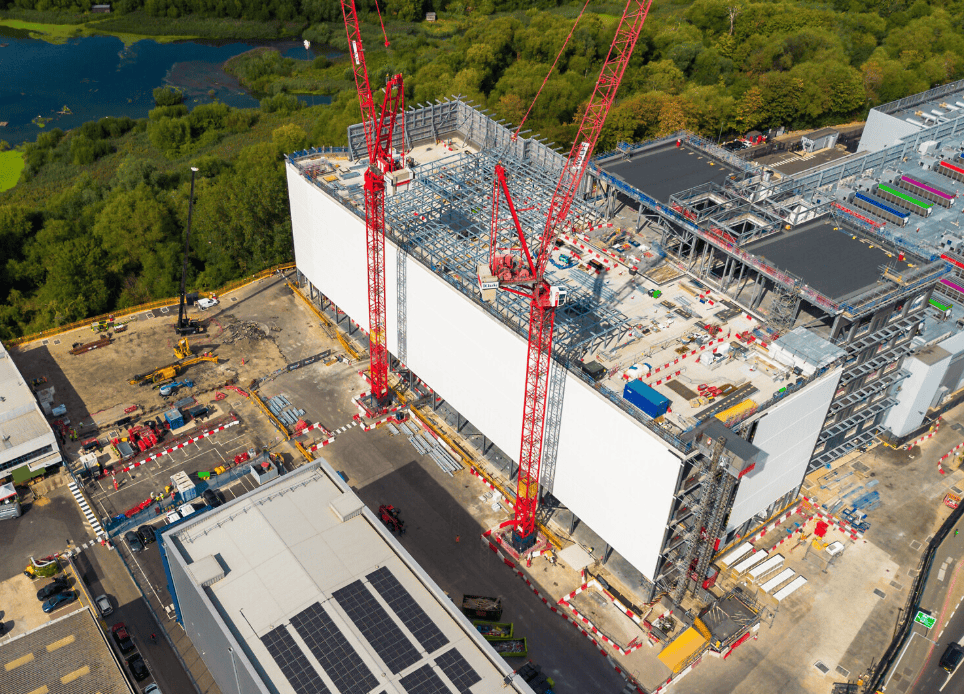
Strivr Launches Frontline Intelligence Platform for Real-Time Error Correction at Work
en.Wedoany.com Reported - Strivr believes that pre-work training has its limits, and that intelligence provided during work is a more valuable product. The enterprise training platform company recently launched its Frontline Intelligence platform, marking a shift from VR training to real-time work assistance. The platform is based on a custom visual language model and delivered through smart glasses. Instead of simulating training before a task begins, the system detects errors in real time as employees perform tasks and provides hands-free corrective guidance.
Founded at Stanford University, Strivr’s CEO Derek Belch wrote his thesis there on the impact of VR on athletic performance, validated the concept with football players, and then brought it to enterprises. Its business model has always revolved around behavior change, not content delivery. From its inception, the platform has collected over 100 data points per learner per second, tracking gaze, movement, posture, voice, and emotion—not just completion status. This behavioral data foundation now serves as the cornerstone for a larger vision. Frontline Intelligence uses smart glasses to capture real-world execution—video, audio, workflow context, and task progress—and processes it through a visual language model specifically trained for each customer environment. When a warehouse operator mis-sorts goods, misses a scan, or skips an inspection step, the system flags it in real time and provides hands-free corrective guidance before errors accumulate.
The platform targets the significant operational costs of high-frequency execution errors. Strivr cites third-party data: warehouse picking errors account for 23% of operational fulfillment inefficiencies; human error causes approximately 20% of unplanned manufacturing downtime, costing industrial manufacturers an estimated $50 billion annually; nearly 25% of field service visits require repeat dispatches; limited-service restaurants face 110% annual employee turnover; and preventable medical errors cost the U.S. healthcare system an estimated $20 billion each year. The 110% annual turnover rate in the fast-food industry is particularly telling—at such high turnover, training becomes a perpetual cost with an extremely short shelf life. An always-on intelligence layer that can guide any worker through any task, regardless of tenure, changes the unit economics of frontline operations.
The technical architecture of the Frontline Intelligence platform consists of four steps. Step one captures frontline workflows via smart glasses; step two trains a visual language model for each customer’s specific tools, environments, and processes; step three detects errors in real time and provides hands-free corrective guidance; step four claims continuous improvement as more execution data accumulates. This customer-customized VLM approach addresses a real limitation of general AI in enterprise operations: models trained on generic warehouse data cannot reliably identify a specific customer’s assembly sequence, proprietary tooling, or facility layout. However, this also raises questions about the minimum data volume needed for the model to achieve operational reliability, the timeline for deployment, and how accuracy is verified before go-live. The platform page describes the result of step two as "an AI model specifically trained on how work gets done in your environment." Buyers in the procurement phase should specifically ask how long model training takes, how much captured workflow data is required, and what accuracy benchmarks Strivr commits to before deployment into real operational environments.
Strivr’s VR training track record is well-documented. Walmart’s onboarding training was reduced from 8 hours to 15 minutes; Verizon employees reported a 97% increase in feeling prepared after active shooter training. A Walmart employee publicly stated that after the VR experience, they felt as if they had actually made those decisions in the store, so they were very comfortable going straight to the sales floor. Frontline Intelligence is delivered via smart glasses, and device comfort over full shifts, hygiene of shared devices, mobile device management integration, and employee acceptance all need to be validated in each specific environment. Although Strivr’s enterprise infrastructure already covers mobile device management support, enterprise integration, and security and compliance, the policy layer regarding what is recorded from always-on capture, where it is stored, and who has access requires governance work on the customer side.
Strivr has made a logically coherent bet in the immersive work space. The shift from pre-work training to in-work intelligence is the right direction, the customer-customized VLM architecture is the right approach, and the problem framing across verticals is based on real operational cost data. However, it has not yet publicly disclosed Frontline Intelligence outcome data comparable to the evidence standards established by its VR training legacy. This aligns with the platform’s early access stage. Buyers with high-volume frontline operations, significant execution error costs, and a willingness to adopt early are suitable targets; buyers who need fully documented deployment records before committing should watch closely and reassess in 12 months.
Related Products


Comprehensive Mining Automation Control System
Beijing Tianma Intelligent Control Technology Co., Ltd.
20 Inch 1600*900 Full HD 60Hz TFT LED Monitor with VGA and DP Interfaces for Desktop Computers-Business Use
Guangzhou Zanying Optoelectronics Technology Co., Ltd.

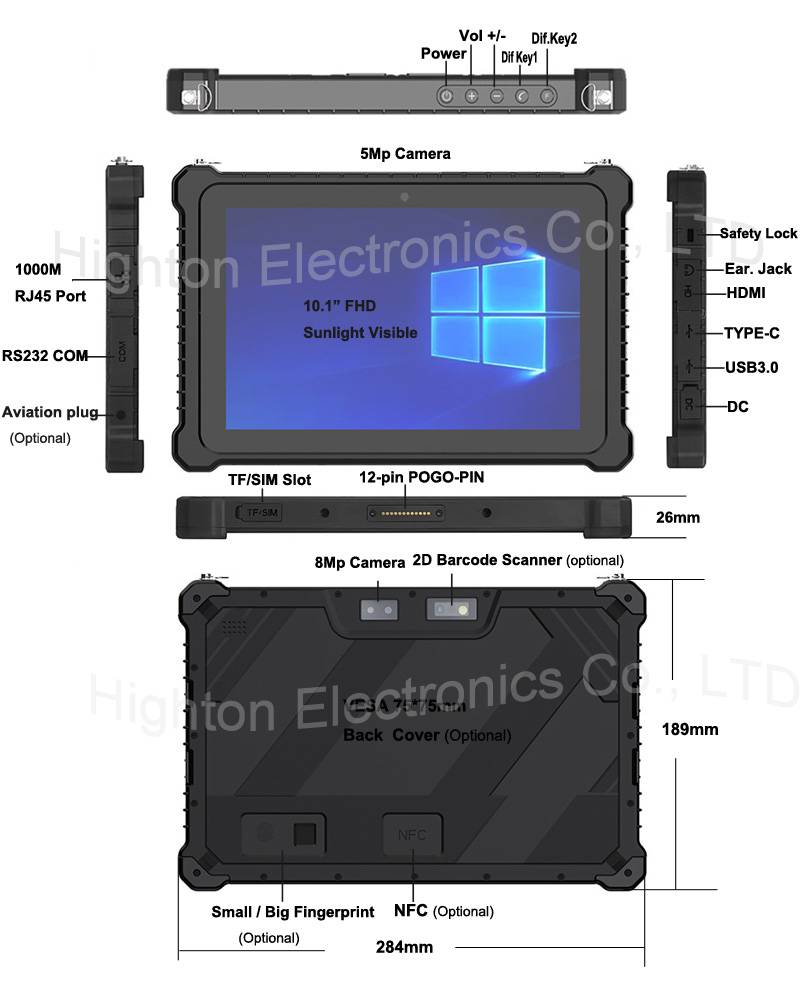
Hot Selling 10 Inch Intel N5100 I5 I7 FHD 8 +128GB 16+256GB Win10 Pro Win11 Pro 4G 5G Rugged Tablet PC Pad with NFC Barcode
Highton Electronics Co., Ltd.

Multi-function Marine Monitoring Low-altitude Detection Radar Sea-air Boundary Ocean Dynamic Environment Measurement
Chengdu Dixin Technology Co., Ltd.
Automatic Aiming Laser Remote Obstacle Removal Robot
Pinggao Group Weihai High-Voltage Apparatus Co., Ltd.
Industrial and Commercial Point-Type Gas Detector
Jinan Benan Technology Development Co., Ltd.
Conveyor Belt Intelligent Monitoring System
LUO YANG WIRE ROPE INSPECTION TECHNOLOGY CO., LTD.
GYTA Type Non-Self-Supporting Aerial/Duct Optical Cable
TONGDING INTERCONNECTION INFORMATION CO., LTD.