en.Wedoany.com Reported - Recently, the Economic Community of West African States (ECOWAS) organized representatives from relevant countries in Abuja, Nigeria to evaluate the technical proposals and financial quotations for the Amílcar Cabral submarine fiber optic cable project. The project has moved from preliminary preparations such as feasibility studies and cross-border coordination into the selection phase for construction contractors, followed by the design, manufacturing, laying, and landing facility construction of the submarine cable.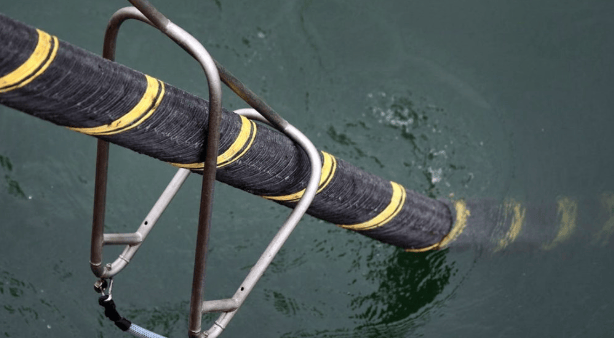
The planned length of the Amílcar Cabral submarine cable is approximately 3,555 kilometers, with Cape Verde serving as a regional connection node, extending to Gambia, Guinea, Guinea-Bissau, Sierra Leone, and Liberia, and is planned to connect to the EllaLink submarine cable system linking Europe, Cape Verde, and Brazil. Upon completion, the project will add an independent international communication channel among the six West African countries.
Currently, the international communication connections of Gambia, Guinea, Guinea-Bissau, Sierra Leone, and Liberia are highly dependent on the ACE submarine cable. When a single submarine cable fails, mobile communications, bank transactions, government networks, and enterprise data services may be affected. According to World Bank project documents, the Amílcar Cabral cable will adopt a public-private partnership model, with the first phase including submarine communication infrastructure for Gambia and Guinea, as well as transaction and construction preparations for subsequent regional routes.
This evaluation covers aspects such as cable route design, submarine laying, landing station access, operation and maintenance, and fault switching. Once the contractor plan is determined, the project will transition from administrative preparation to physical engineering implementation, generating demand for submarine cable equipment, landing station systems, optical transmission equipment, and supporting power facilities in markets with relatively weak communication infrastructure, such as Guinea-Bissau, Liberia, and Sierra Leone.