U.S. Thinking Machines Lab Releases 975 Billion Parameter Open-Source Model Inkling
en.Wedoany.com Reported - Thinking Machines Lab, founded by former OpenAI Chief Technology Officer Mira Murati, has released the open-weight model Inkling. The model has a total of 975 billion parameters, adopts a mixture-of-experts architecture, activates approximately 41 billion parameters for a given task, supports a context window of up to 1 million tokens, and was trained on 45 trillion tokens of text, image, audio, and video data. Inkling can handle reasoning across text, images, and audio, but currently only outputs text, including code and structured data.
Thinking Machines Lab does not claim Inkling tops the performance charts. Its own materials describe it as "not the strongest model currently available, whether closed-source or open-source." The lab prioritizes breadth and adaptability, positioning Inkling as a foundational model that organizations can fine-tune independently, rather than a finished chatbot. Users can balance accuracy and speed by adjusting the "thinking effort." The company states that in one coding test, Inkling achieved the same level of performance while consuming only one-third of the tokens used by Nvidia's Nemotron 3 Ultra. The lab also previewed a lightweight version, Inkling-Small, which has 12 billion active parameters and is designed for cost- and speed-prioritized tasks.
The entire release is based on a core assumption: artificial intelligence trained and frozen in a single location will lose to models that each organization can shape according to its own expertise. Clients fine-tune Inkling through Thinking Machines Lab's customization platform, Tinker, own the resulting outputs, and bear the safety risks of what they build. The lab cites a collaboration with hedge fund Bridgewater Associates as an example, where the two parties trained an open-source model based on Bridgewater's financial knowledge. The model scored 84.7% on a financial reasoning test, outperforming top proprietary models at a fraction of the cost. This data comes from the two companies' own evaluations, not an independent third party.
Thinking Machines Lab emphasizes its development speed. TechCrunch notes that OpenAI took about five years to launch and become profitable, Anthropic took about three years, while Murati's lab claims to have done so in about nine months. To achieve this speed, the lab took some shortcuts: to initiate Inkling's training, it relied on other open-source models, including Moonshot's Kimi K2.5, a practice known as distillation. The lab says its next model will be trained entirely autonomously. Inkling runs on Nvidia GB300 systems, part of a deal in March involving 1 gigawatt of Nvidia computing power.
Currently, Thinking Machines Lab offers Inkling completely free of charge, generating revenue from the customization platform Tinker. The lab's funding and personnel have experienced turbulence: it raised $2 billion at a $12 billion valuation last year, while a reported $50 billion funding round fell through; two co-founders left earlier this year, and the current headcount has recovered to about 200 employees. In its published manifesto, the lab writes: "We believe in staying weird."
Related Products



G.652.D Wavelength-extended Non-dispersion Shifted Single-mode Optical Fiber
HONGAN GROUP CO., LTD.
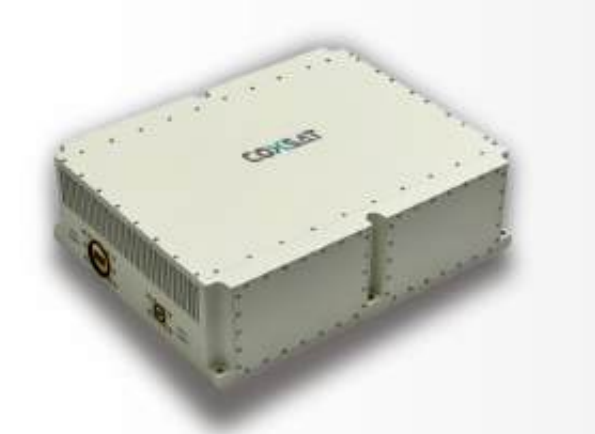

Comprehensive Mining Automation Control System
Beijing Tianma Intelligent Control Technology Co., Ltd.
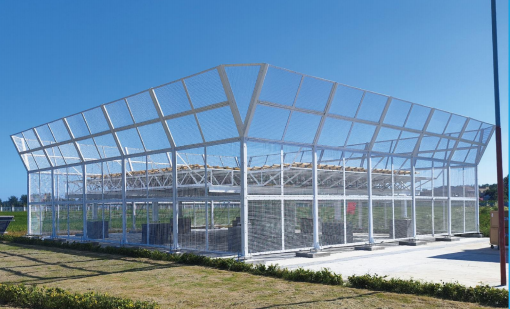
TWP16 P-Band Tropospheric Wind Profile Radar
China Huayun Meteorological Technology Group Co., Ltd.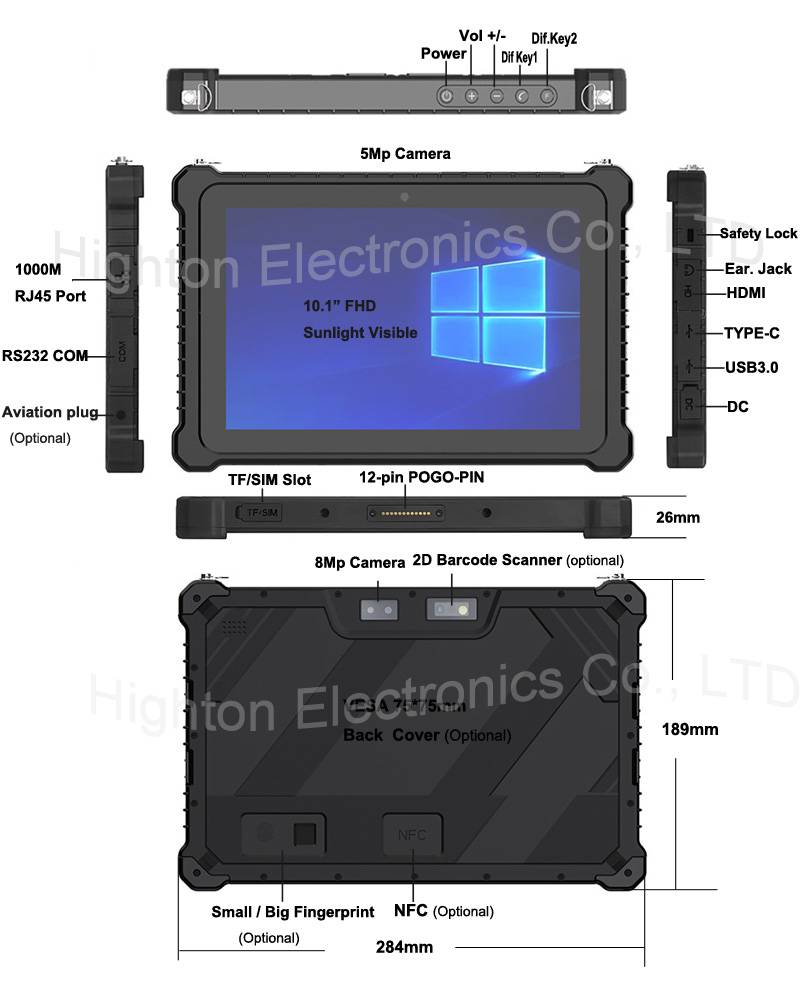
Hot Selling 10 Inch Intel N5100 I5 I7 FHD 8 +128GB 16+256GB Win10 Pro Win11 Pro 4G 5G Rugged Tablet PC Pad with NFC Barcode
Highton Electronics Co., Ltd.
Flat Portable Satellite Terminal 0.35m Aperture Manual Portable Terminal
China Starwin Science & Technology Co., Ltd.
Automatic Aiming Laser Remote Obstacle Removal Robot
Pinggao Group Weihai High-Voltage Apparatus Co., Ltd.