U.S. Space Development Agency Plans to Launch 21 Transport Layer Satellites
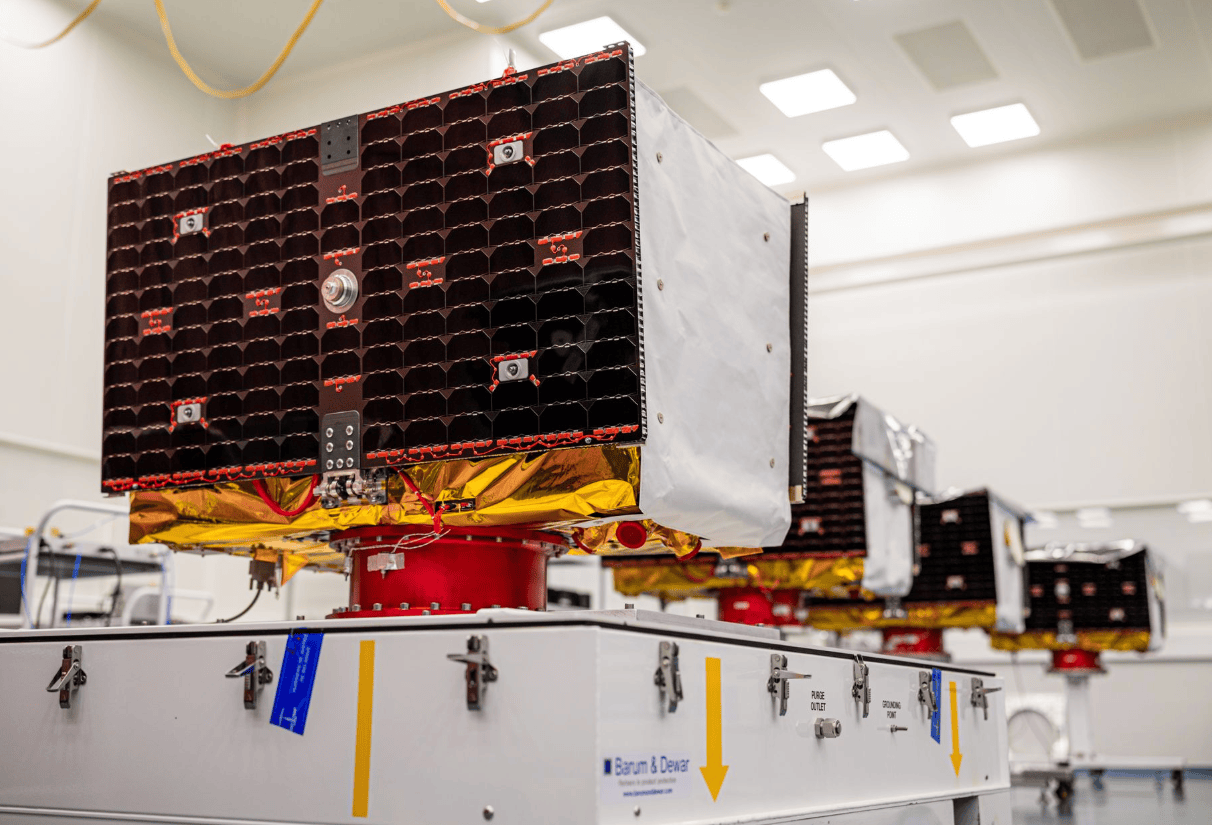
en.Wedoany.com Reported - The U.S. Space Development Agency (SDA) plans to launch 21 Transport Layer satellites built by York Space Systems on Thursday, marking an attempt by the agency to resume the deployment pace of its Proliferated Warfighter Space Architecture (PWSA) after a nine-month pause in launches.
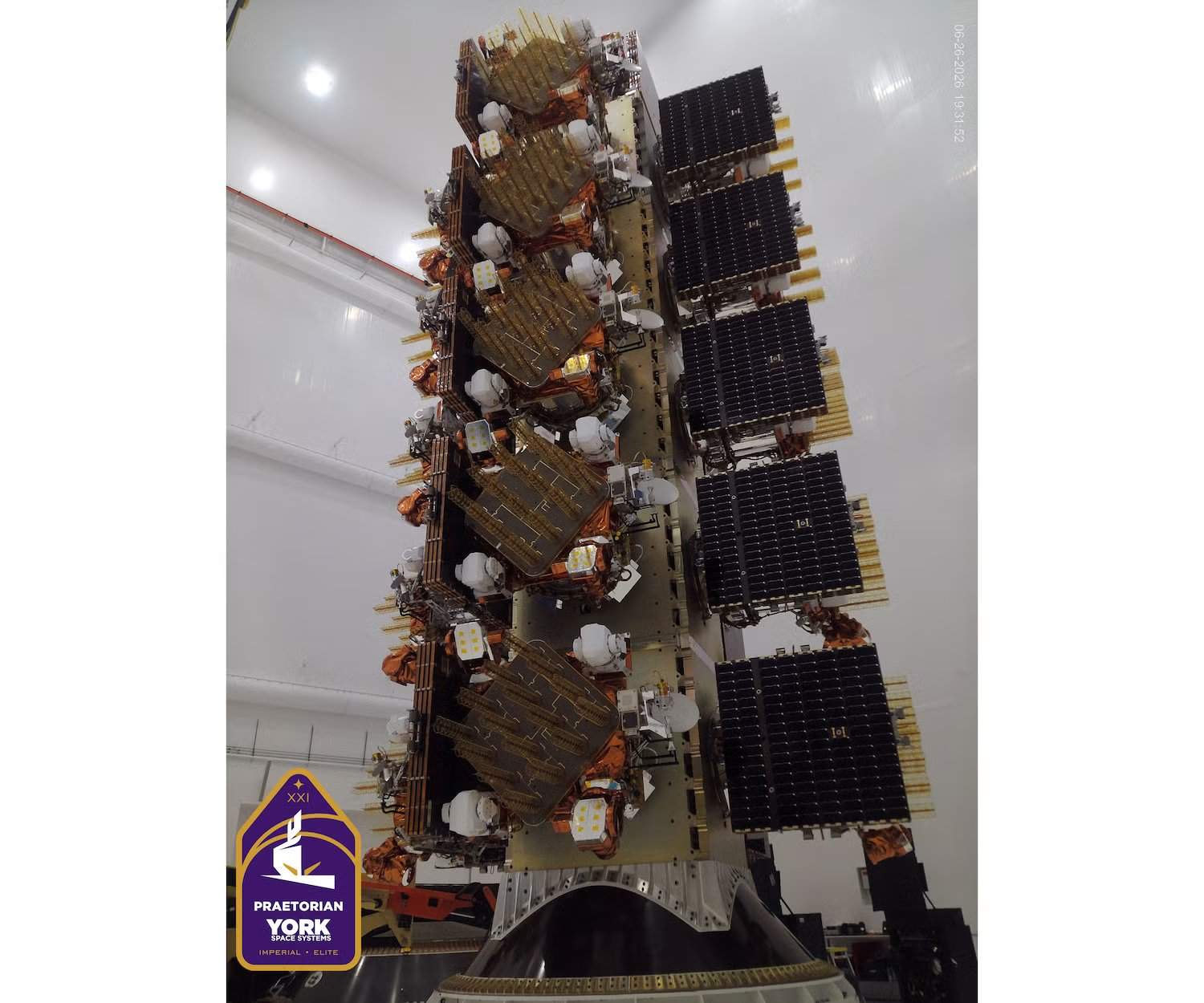
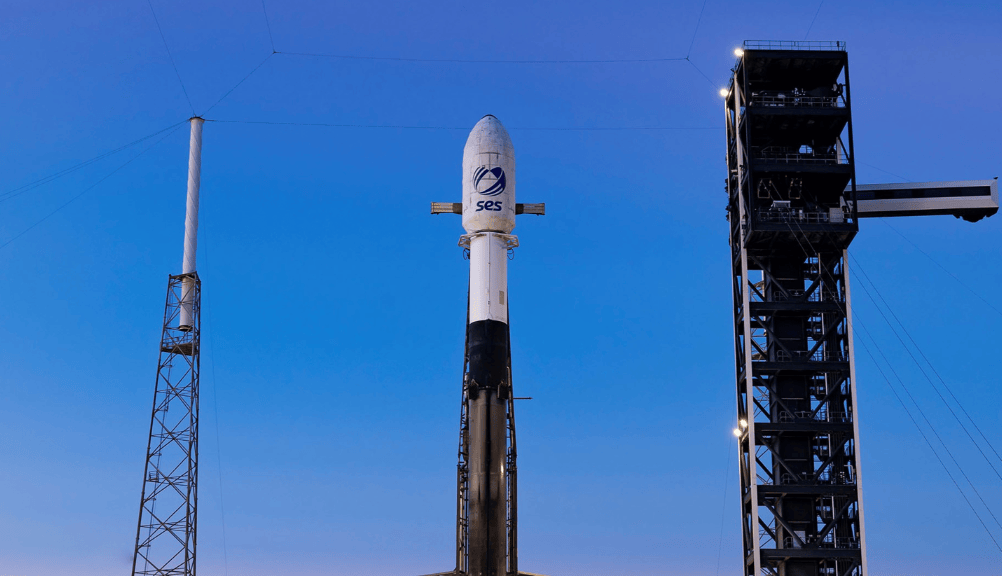
The launch will be carried out by a SpaceX Falcon 9 rocket, scheduled to lift off from Space Launch Complex 4 East at Vandenberg Space Force Base in California at 4:32 p.m. Eastern Time. The rocket's first stage will attempt to land on a recovery ship in the Pacific Ocean.
SDA Director Gurpartap “GP” Sandhoo said Tuesday evening that once these Tranche 1 (T1) Transport Layer spacecraft are in orbit, half of the planned Transport Layer satellite constellation for this phase will be on orbit, providing "real capability" to warfighters. The T1 constellation consists of 126 Transport Layer spacecraft, 28 Tracking Layer satellites for missile warning and tracking, and four missile defense demonstration spacecraft. Sandhoo explained that the Transport Layer satellites are equipped with Link 16 tactical data link capabilities and optical communication terminals, designed to operate within the PWSA architecture to rapidly transmit advanced and hypersonic threat data from Tracking Layer satellites to warfighters.
The SDA launched the first batch of 21 York T1 Transport Layer satellites in September last year, followed by 21 Lockheed Martin T1 Transport Layer spacecraft in October. The SDA, which had originally planned to maintain a monthly launch cadence, then entered a "strategic pause" to address issues discovered with the on-orbit satellites. Sandhoo said that after reaching orbit, the SDA and York found "thermal model discrepancies" in the first batch of satellites, requiring "thermal mitigation." Additionally, during the early checkout phase, it was discovered that more ground entry points were needed to push software updates to the satellites as they move at high speed in low Earth orbit. The satellites also underwent some planned hardware changes. Satellites in the first two orbital planes are still undergoing on-orbit checkout, but Sandhoo expects this checkout to be "smoother" and faster.
Regarding the York T1 satellites already in orbit, Sandhoo noted that due to "propulsion system issues," not all of them are in their "ideal" orbital planes. The SDA plans to connect these satellites to its operations center in the coming weeks to months. As for one of Lockheed Martin's on-orbit satellites, it has been "out of contact for some time," but Sandhoo emphasized that the PWSA is designed with resilience, stating, "I do expect some failures, but we have enough resilience in the architecture that we don't need all satellites to be working." He reiterated that the purpose of adopting a proliferated architecture is to anticipate being able to absorb hits and continue the mission.
Sandhoo said in March that due to issues with on-orbit satellites, the SDA had not been able to establish the optical mesh network as planned. He confirmed on Tuesday that a mesh network has still not been established with any of the on-orbit orbital planes. The team's goal is to first establish networks within each orbital plane before attempting cross-plane connections. "These 21 satellites will first establish (a mesh network) among themselves, and we are having the other two planes establish their in-plane mesh networks first, then we will do cross-plane connections." Before the T1 launches, the SDA launched a small demonstration constellation, Tranche 0. Sandhoo said that contact was lost with some of those satellites for three to five months, but they "came back."
After this week's launch, there are seven more launches planned for the T1 phase, involving three Transport Layer and four Tracking Layer missions. Northrop Grumman is building 42 T1 Transport Layer spacecraft, while L3Harris Technologies and Northrop Grumman are responsible for manufacturing the T1 Tracking Layer satellites. Sandhoo said that the supply chain for optical communication terminals (OCTs) remains one of the factors causing delays in satellite launches. He emphasized that having "confidence" in the ability to check out satellites after launch and bring them into operation is more important than adhering to a monthly launch schedule. "I would rather endure a three-week launch delay than a four-month checkout delay," Sandhoo said. "The goal is to get them operational as quickly as possible after reaching orbit."
Related Products


TWP16 P-Band Tropospheric Wind Profile Radar
China Huayun Meteorological Technology Group Co., Ltd.
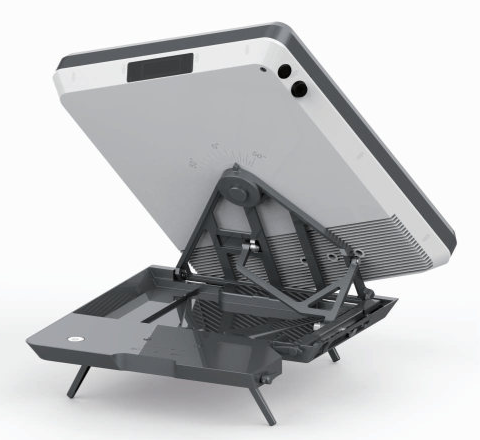
Flat Portable Satellite Terminal 0.35m Aperture Manual Portable Terminal
China Starwin Science & Technology Co., Ltd.
Comprehensive Mining Automation Control System
Beijing Tianma Intelligent Control Technology Co., Ltd.
One-Stop Steward Service for the Entire Logistics System Integration Chain
Zhongding Intelligent (Wuxi) Technology Co., Ltd.

20 Inch 1600*900 Full HD 60Hz TFT LED Monitor with VGA and DP Interfaces for Desktop Computers-Business Use
Guangzhou Zanying Optoelectronics Technology Co., Ltd.

MUX Series Communication Interface Device for Security and Stability Control System
Nanjing NR Electric Co., Ltd.
GYTA Type Non-Self-Supporting Aerial/Duct Optical Cable
TONGDING INTERCONNECTION INFORMATION CO., LTD.