en.Wedoany.com Reported - Google DeepMind is deploying the open AI model Gemma 4 E2B directly to smartphones. The model has been optimized for the Tensor Processing Unit (TPU) in Pixel devices, so it is currently only available on the Pixel 10 series. This Gemma model can perform various tasks directly on the device without any need for a cloud connection. The "E" in E2B stands for "effective." The model uses approximately 2.3 billion effective parameters, totaling 5.1 billion parameters including the embedding layer.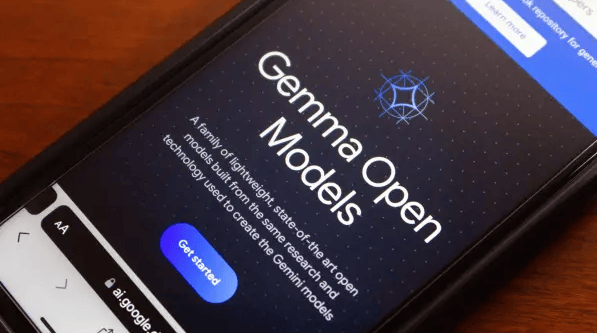
The advantage of the new AI model is that applications and other functions can still operate normally without an internet connection, while sensitive data remains on the device. This new AI model is not the only one from Google; as early as early June, the company launched Gemma 4 12B, a 12 billion parameter model that can run on a standard laptop with 16 GB of RAM without requiring dedicated AI hardware.
Unlike the already released Gemini Intelligence, Google has also introduced "Quantization-Aware Training (QAT)" versions of Gemma 4. These versions are designed to reduce memory requirements while maintaining model quality, making them more suitable for a wider range of consumer devices. Google has set high hardware requirements for future Android smartphones equipped with Gemini Intelligence.
During Google I/O India, Google demonstrated the capabilities of on-device AI on the Pixel 10. For example, the offline AI can use agents to help plan trips, recommend recipes, and control smart home devices. With AI, "Mobile Actions" can be performed to activate or deactivate core smartphone functions such as Wi-Fi, and control Google Maps via voice commands or text messages.
Google further stated that on-device AI should enable "seamless, internet-free reasoning across text, images, and audio files." Additionally, the AI should provide "in-depth offline conversations (even at 30,000 feet (about 9 kilometers) altitude)," answer questions about image content (such as objects and plants), and help solve problems. Through the "Ask Audio" feature, the AI can also transcribe audio content.
Google not only aims to bring these on-device AI features to its own applications but also plans to provide new tools for third-party app developers, enabling them to build applications that run locally on Pixel devices, thereby achieving faster response times, higher data privacy protection, and offline access.